Penciling.inPlay. Practice. Progress.

Free Printable PDFs

Free Printable Colouring Pages for Kids
Print · Colour · Create

Download free printable colouring pages in PDF for kids. Explore animals, dinosaurs, unicorns, festivals, alphabet, and mandala categories for home and classroom use.

82 colouring pages10 category collectionsAges 2-10Instant PDF download

Latest collection

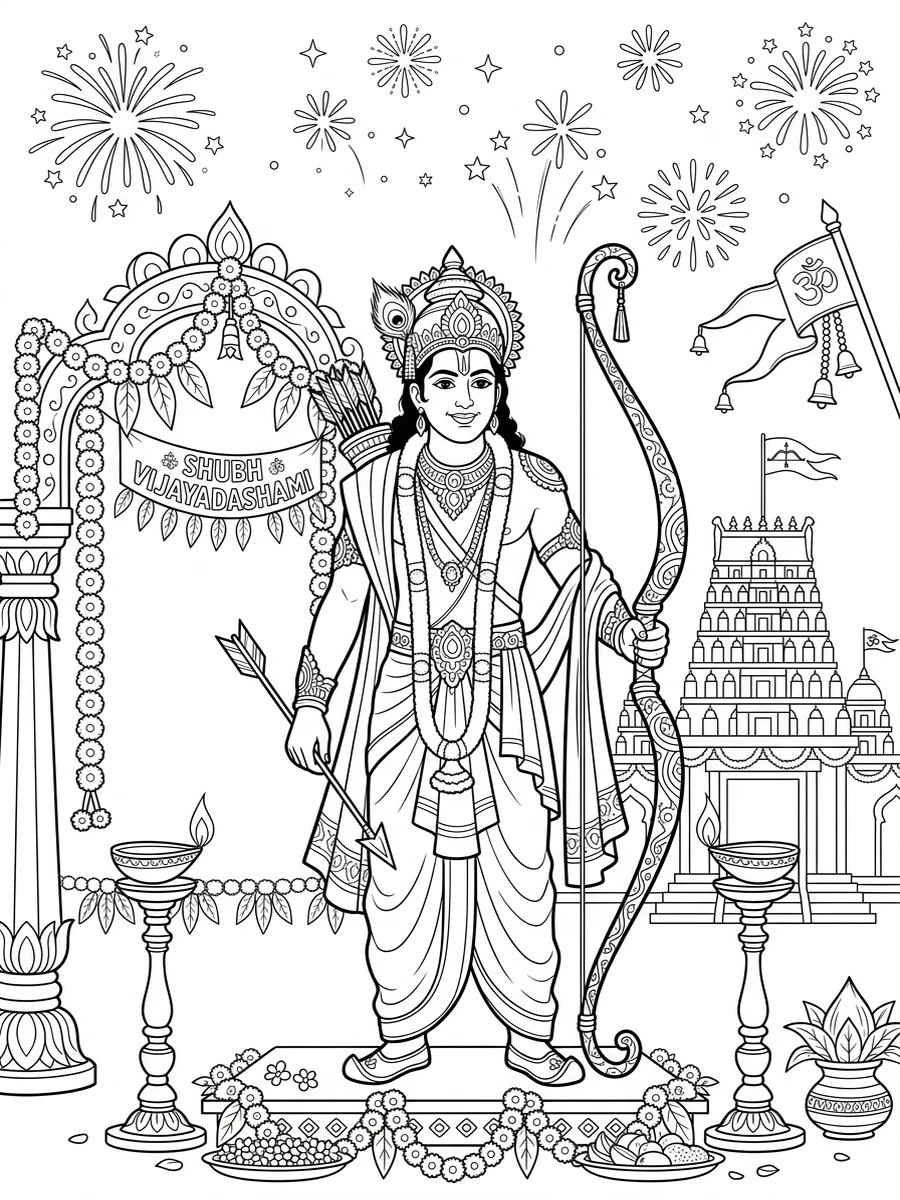
Happy Dussehra Festive Special

Dussehra Festive Special

Celebrate Vijayadashami and the triumph of good over evil with this grand colouring printable featuring Lord Rama with the divine Kodanda bow, auspicious marigold torans, and glowing diyas.

Festival Colouring1 pages

What you will find

Printable colouring for calm, playful screen-free time

Browse bold, easy-to-print pages for animals, dinosaurs, unicorns, festivals, and more. Pick a favourite theme, download the PDF, and start colouring in minutes.

Pick Your Collection

Choose your theme and age group, then download in one tap.

Printing TipImportant

For the best quality, we recommend opening downloads in a dedicated PDF app on your computer or mobile device. If printing directly from your browser, ensure "Fit to Page" is checked and the orientation matches the artwork.

Quick answer

Free printable colouring PDFs for children aged 2-10

Printable PDF colouring pages for home and classroom use. No sign-up required.

Audience: families and teachersFormat: printable PDFsAccess: free instant download

Colouring of the Day - Nov 20, 2026

World Children's Day Block Play
age-2-41 pages
Daily ColouringBest for Crayons and markers

World Children's Day Block Play

Two cheerful toddlers sit happily on a soft playroom rug, giggling as they stack bright wooden toy alphabet blocks to build a miniature castle tower. A smiling wooden toy train rests on wooden tracks nearby surrounded by plush teddy bears and floating star sparkles, designed with bold, rounded outlines for toddlers. Celebrated globally on November 20, World Children’s Day marks the historic adoption of the Declaration of the Rights of the Child in 1959 and the Convention on the Rights of the Child (CRC) in 1989. The United Nations observance advocates for every child’s right to education, play, safety, and family love across all communities.

Clean Solar Energy Farm
age-5-61 pages
Daily ColouringBest for Crayons and markers

Clean Solar Energy Farm

Rows of gleaming, grid-patterned photovoltaic solar panels stand neatly tilted toward a cheerful smiling sun in a rolling green countryside meadow. Cheerful sheep graze peacefully among blooming wildflowers beneath spinning wind turbine towers in the distance, teaching young children how sunlight transforms into clean electric power. Solar photovoltaic technology harnesses abundant radiant sunlight and converts it directly into electricity without creating greenhouse emissions or pollution. Renewable solar farms protect our global atmosphere, provide clean power for schools and homes, and inspire early learners to care for Earth’s sustainable energy future.

International Space Station Zarya
age-7-81 pages
Daily ColouringBest for Crayons and markers

International Space Station Zarya

The monumental 42-foot Zarya functional cargo block spacecraft glides through low Earth orbit with its two gigantic rectangular solar array wings catching the radiant golden glare of the Sun. Below the space module, the swirling white cloud bands and deep blue oceans of Earth curve gracefully into the starry black vacuum of outer space. On November 20, 1998, a Russian Proton rocket launched Zarya ('Sunrise') from Baikonur Cosmodrome, placing the very first module of the International Space Station (ISS) into orbit. Built through international cooperation between NASA and Roscosmos, Zarya provided battery power, attitude control, and docking ports, anchoring humanity’s permanent outpost in space.

B-2 Spirit Flying Wing Aeronautics
age-9-101 pages
Daily ColouringBest for Crayons and markers

B-2 Spirit Flying Wing Aeronautics

A sleek, dramatic top-down view of the revolutionary B-2 Spirit flying wing aircraft banking sharply through high-altitude cloud canyons. Its razor-sharp continuous leading edge, distinctive sawtooth trailing edge, and radar-absorbent matte composite skin showcase the pinnacle of advanced low-observable aerospace engineering. On November 20, 1988, the Northrop B-2 Spirit stealth bomber was officially rolled out for public viewing for the first time at Air Force Plant 42 in Palmdale, California. With its unique tailless 'flying wing' design and blended radar-deflecting geometries, the B-2 demonstrated unprecedented aerodynamic efficiency and revolutionized modern military aviation.

Colouring of the Day - Nov 19, 2026

Bubbly Soap & World Sanitation Day
age-2-41 pages
Daily ColouringBest for Crayons and markers

Bubbly Soap & World Sanitation Day

A round, cheerful smiling bar of soap with rosy cheeks floats happily in a porcelain bathroom sink surrounded by swirling iridescent bubbles and flowing warm water. Playful rubber ducks float nearby while clean hand towels and twinkling sparkle stars encourage young toddlers to wash their hands happily with bold, rounded outlines. Designated by the United Nations and celebrated on November 19, World Toilet Day raises awareness about global sanitation, clean water access, and public hygiene. Teaching children good handwashing habits with soap prevents the spread of germs, safeguarding growing bodies and creating clean, thriving schools worldwide.

Planting Trees for Tomorrow & Indira Gandhi
age-5-61 pages
Daily ColouringBest for Crayons and markers

Planting Trees for Tomorrow & Indira Gandhi

Two smiling school friends work together in a sun-drenched village schoolyard, carefully patting fertile soil around the root ball of a newly planted young shade tree. A cheerful watering can sits on the grass beside sprouting wildflowers and fluttering butterflies, with green rolling hills and village trees framed under a smiling sun. Born on November 19, 1917, in Prayagraj, Indira Priyadarshini Gandhi served as India’s first female Prime Minister. Celebrated annually across India on November 19 as National Integration Day (Quami Ekta Diwas), her birthday honors national unity, social harmony, and pioneering environmental protection initiatives like Project Tiger launched in 1973.

Historic Partial Lunar Eclipse
age-7-81 pages
Daily ColouringBest for Crayons and markers

Historic Partial Lunar Eclipse

A dramatic celestial rendering showing the full Moon partially immersed in Earth's dark umbral shadow, with 97 percent of the lunar surface glowing with a rich, coppery-red tint. Surrounding the eclipsed lunar disc are sparkling star constellations, wispy midnight clouds, and an observation telescope set up on a grassy hilltop. On November 19, 2021, skywatchers witnessed the longest partial lunar eclipse in 580 years, lasting 3 hours, 28 minutes, and 23 seconds. Often called the 'Beaver Moon Eclipse,' sunlight refracted through Earth's atmosphere filtered out blue wavelengths and bathed the lunar surface in warm reddish light, demonstrating orbital mechanics in spectacular fashion.

Mars Sample Return Robotic Drill
age-9-101 pages
Daily ColouringBest for Crayons and markers

Mars Sample Return Robotic Drill

NASA’s six-wheeled Perseverance rover extends its heavy five-jointed robotic arm against an ancient Martian mudstone outcrop on the dry floor of Jezero Crater. The rotary percussive coring drill bit is pressed firmly against the layered bedrock while dust clears, with panoramic cameras and MMRTG nuclear generator visible against the distant red crater rim. As part of the joint NASA-ESA Mars Sample Return campaign, the Perseverance rover uses a sophisticated rotary percussive drill and automated sample caching system to extract intact cylindrical rock cores from Mars. Hermetically sealed inside titanium tubes and deposited on the Martian surface, these samples will be retrieved by future missions to search for ancient microbial biosignatures.

Colouring of the Day - Nov 18, 2026

Cheerful Steamboat Adventure & National Archives
age-2-41 pages
Daily ColouringBest for Crayons and markers

Cheerful Steamboat Adventure & National Archives

A cheerful cartoon mouse captain wearing a little sailor cap whistles happily while gripping the spokes of a large wooden ship steering wheel. Beside the pilot deck, twin steamboat funnels puff cheerful cloud rings into a bright sky while friendly jumping fish and gentle river waves welcome toddlers to early coloring fun. On November 18, 1928, Walt Disney’s groundbreaking animated short film Steamboat Willie premiered at the Colony Theatre in New York City. Marking the theatrical debut of Mickey Mouse and Minnie Mouse, it was the first widely distributed cartoon featuring fully synchronized sound, music, and voice effects, revolutionizing global cinematic animation.

Indian Railway Heritage Train
age-5-61 pages
Daily ColouringBest for Crayons and markers

Indian Railway Heritage Train

A charming vintage steam locomotive with polished brass headlamps and a smiling cowcatcher chugs along curving tracks past a sunlit colonial hill railway station. Lush green tea bushes, flowering jacaranda trees, and waving station masters with green flags create a joyful travel adventure designed with clean linework for kindergarteners. Preserved mountain and heritage railway lines across India, such as the Darjeeling Himalayan Railway and Nilgiri Mountain Railway, represent extraordinary engineering triumphs celebrated by UNESCO. Transporting millions of families across mountains and plains, railways connect diverse cultures and foster national unity across the subcontinent.

Standard Time Grandfather Clockwork
age-7-81 pages
Daily ColouringBest for Crayons and markers

Standard Time Grandfather Clockwork

An intricate, antique grandfather clock with an open pendulum cabinet showing interlocking brass cogwheels, escapement gears, and twin counterweights swinging in steady rhythm. Mounted on the mahogany station wall behind it are four synchronized railway station clocks displaying Eastern, Central, Mountain, and Pacific time zones across North America. On November 18, 1883, known historically as the 'Day of Two Noons,' American and Canadian railroads officially abandoned hundreds of confusing local solar times and instituted four standardized continental time zones. Spearheaded by railway officials like William F. Allen, standard time eliminated scheduling chaos, prevented train collisions, and laid the foundation for modern global timekeeping.

Pluto & Kuiper Belt Orbital Astronomy
age-9-101 pages
Daily ColouringBest for Crayons and markers

Pluto & Kuiper Belt Orbital Astronomy

A high-contrast astronomical rendering showing NASA’s New Horizons spacecraft sweeping past the dwarf planet Pluto and its large moon Charon. Below the spacecraft, Pluto’s vast heart-shaped nitrogen ice plain Tombaugh Regio gleams under distant solar rays against the pitch-black backdrop of the Kuiper Belt and distant star fields. Discovered in 1930 by American astronomer Clyde Tombaugh at Lowell Observatory, Pluto opened humanity’s eyes to the vast, uncharted frontier of the Kuiper Belt. In July 2015, the New Horizons probe completed a historic flyby, revealing towering water-ice mountain ranges, exotic glacial flows, and a dynamic frozen world on the edge of our solar system.

Colouring of the Day - Nov 17, 2026

Little Student Learning Adventure & International Students' Day
age-2-41 pages
Daily ColouringBest for Crayons and markers

Little Student Learning Adventure & International Students' Day

A happy, smiling little school kid wearing a cozy backpack sits proudly at a friendly wooden classroom desk holding a brightly colored drawing pencil. On the desk are open picture books, a jar of wax crayons, and clean wooden counting blocks, surrounded by smiling alphabets and friendly sunbeams drawn in broad, rounded shapes for early toddlers. Celebrated globally on November 17, International Students' Day honors youth education, academic freedom, and the universal joy of learning. Fostering early curiosity, creativity, and cooperative play in preschool and nursery classrooms prepares young minds to become lifelong learners and thoughtful global citizens.

Lunokhod 1 Moon Rover Mission
age-5-61 pages
Daily ColouringBest for Crayons and markers

Lunokhod 1 Moon Rover Mission

A charming, bathtub-shaped robotic lunar rover with eight mesh wire wheels rolls smoothly across powdery gray moon dust, leaving clear parallel tire tracks behind it. Its domed lid is open to catch warm solar rays with solar panels while a smiling Earth shines in the starry lunar sky above rugged impact craters and moon boulders. On November 17, 1970, the Soviet Luna 17 spacecraft landed on the Moon’s Sea of Rains (Mare Imbrium) and deployed Lunokhod 1—the very first remote-controlled robotic roving vehicle to explore another celestial body. Operating for over ten months, it traveled over 10 kilometers across the lunar surface, transmitting over 20,000 television pictures and analyzing lunar soil.

Suez Canal Historic Opening Passage
age-7-81 pages
Daily ColouringBest for Crayons and markers

Suez Canal Historic Opening Passage

A majestic procession of 19th-century royal paddle steamers and sailing schooners decorated with colorful national flags and festive signal pennants cruises slowly through a deep blue desert waterway. On the sandy Egyptian canal banks, mounted desert escorts and cheering spectators watch the historic passage beneath a brilliant sunlit sky. On November 17, 1869, the Suez Canal was officially opened to international navigation, linking the Mediterranean Sea directly with the Red Sea across the Isthmus of Suez in Egypt. Engineered under Ferdinand de Lesseps, the 120-mile artificial waterway eliminated the treacherous 4,300-mile voyage around the southern tip of Africa, transforming world trade and global navigation.

Artificial Heart Biomedical Innovation
age-9-101 pages
Daily ColouringBest for Crayons and markers

Artificial Heart Biomedical Innovation

A state-of-the-art cardiovascular biomedical engineering laboratory showing a pulsating total artificial heart model suspended inside a transparent glass fluid dynamics test chamber. Illuminated LCD monitors display real-time pressure waveforms, blood flow velocity vectors, and biocompatible titanium-polyurethane valve diagrams, capturing the pinnacle of life-saving medical engineering. Biomedical engineering pioneers like Willem Kolff and Robert Jarvik spent decades developing mechanical circulatory support systems, leading to historic regulatory approvals in the 1980s. Total artificial hearts and ventricular assist devices (VADs) sustain thousands of patients suffering from severe end-stage heart failure while awaiting heart transplants, standing as one of medicine’s greatest technical triumphs.

Colouring of the Day - Nov 16, 2026

Friendship Circle of Smiles & International Day for Tolerance
age-2-41 pages
Daily ColouringBest for Crayons and markers

Friendship Circle of Smiles & International Day for Tolerance

A cheerful circle of friendly animal pals—a baby bear, a joyful bunny rabbit, a smiling puppy, and a gentle deer—hold hands and paws in a happy dancing ring on a grassy meadow. Floating overhead are gentle rainbow arcs, blooming daisy flowers, and smiling sunshine, drawn with thick, simple lines to guide young toddlers in sharing and friendship. Designated by the United Nations and UNESCO, the International Day for Tolerance is celebrated annually on November 16. The day teaches children that every person is unique and special, fostering mutual understanding, kindness, and joyful respect for diverse languages, cultures, and traditions worldwide.

US Yellowstone Geyser & Friendly Bear
age-5-61 pages
Daily ColouringBest for Crayons and markers

US Yellowstone Geyser & Friendly Bear

A friendly, smiling cartoon brown bear in a park ranger hat waves happily from a wooden boardwalk while the mighty Old Faithful geyser erupts in a tall, majestic column of steaming water behind him. Surrounding the hydrothermal basin are colorful thermal spring pools, lodgepole pine trees, and grazing bison under a big blue sky. Established in 1872 as the world’s very first national park, Yellowstone National Park preserves over 2.2 million acres of pristine volcanic wilderness across Wyoming, Montana, and Idaho. Home to more than half of the world's active geysers, Yellowstone protects vital populations of free-roaming bison, grizzly bears, and gray wolves.

Venera 3 Journey to Venus
age-7-81 pages
Daily ColouringBest for Crayons and markers

Venera 3 Journey to Venus

The cylindrical Soviet interplanetary robotic spacecraft Venera 3 cruises silently through deep interplanetary space with its twin solar panels extended and parabolic high-gain radio antenna pointed toward Earth. Looming ahead is the glowing crescent disc of the cloud-covered planet Venus, set against a backdrop of distant sparkling nebulae and distant stars. On November 16, 1965, the Soviet Union launched the Venera 3 space probe from Baikonur Cosmodrome on a historic interplanetary mission. Carrying entry probes and scientific instruments to analyze the extreme atmosphere and temperature of Venus, Venera 3 became the first spacecraft in human history to physically reach and impact the surface of another planet when it reached Venus on March 1, 1966.

UNESCO World Heritage Architecture
age-9-101 pages
Daily ColouringBest for Crayons and markers

UNESCO World Heritage Architecture

A composite architectural drawing showcasing iconic UNESCO World Heritage monuments from around the globe: the soaring marble dome and minarets of the Taj Mahal, the ancient stone columns of the Parthenon in Athens, and the terraced citadel walls of Machu Picchu. Flanking the monuments are classical olive branches and the universal emblem of cultural conservation. On November 16, 1945, thirty-seven nations signed the Constitution of UNESCO (the United Nations Educational, Scientific and Cultural Organization) in London, creating an international body dedicated to building the defenses of peace in the minds of men. Through the World Heritage Convention, UNESCO safeguards over 1,100 irreplaceable cultural and natural monuments for all humankind.

Colouring of the Day - Nov 15, 2026

Baby Panda & Sweet Bamboo Conservation
age-2-41 pages
Daily ColouringBest for Crayons and markers

Baby Panda & Sweet Bamboo Conservation

A round, fluffy baby giant panda cub sits happily on a grassy forest floor, playfully holding a crisp green stalk of bamboo leaves between both front paws. Smiling butterflies flutter around blooming mountain wildflowers while smooth round pebbles and leafy bamboo groves create an enchanting natural habitat drawn with thick, bold lines for toddlers. Giant panda conservation is celebrated globally as one of the greatest triumphs of wildlife biology, inspiring children to appreciate wildlife sanctuaries. Protected within national reserves in southwestern China and studied at international breeding centers, giant pandas rely on healthy, flourishing bamboo forests for food and shelter.

Bhagwan Birsa Munda & Janjatiya Gaurav Divas
age-5-61 pages
Daily ColouringBest for Crayons and markers

Bhagwan Birsa Munda & Janjatiya Gaurav Divas

A proud, courageous young tribal freedom fighter wearing traditional handwoven white dhoti attire stands beneath a tall sal tree holding a carved wooden bow and arrow. Surrounding the peaceful forest clearing are singing songbirds, blooming forest marigolds, and distant rolling hills of the Chotanagpur plateau, inspiring kindergarteners to honor indigenous heritage. Born on November 15, 1875, in Ulihatu, Jharkhand, Bhagwan Birsa Munda was a legendary tribal freedom fighter, religious leader, and folk hero. He led the historic 'Ulgulan' (The Great Tumult) movement against colonial land exploitation, defending tribal forest rights (Jal, Jangal, Zameen). India observes November 15 annually as Janjatiya Gaurav Divas (Tribal Pride Day) in his honor.

Transatlantic Cable Steamship & Deep-Sea Telegraph
age-7-81 pages
Daily ColouringBest for Crayons and markers

Transatlantic Cable Steamship & Deep-Sea Telegraph

The monumental iron steamship SS Great Eastern ploughs through white-capped Atlantic waves, spooling miles of heavy copper telegraph cable from gigantic stern cable drums into the deep ocean. Seabirds soar overhead against billowing smokestack plumes as crewmen monitor tension gauges and underwater bathymetric soundings across the wide ocean expanse. Engineered in the mid-19th century, laying telegraph cables across the stormy floor of the Atlantic Ocean linked continents in near-instantaneous telecommunication for the first time in human history. Completed in the 1860s, these heroic maritime engineering feats reduced message transmission times between Europe and North America from two weeks by ship to mere minutes.

Brooklyn Bridge First Span Walk & Cable Engineering
age-9-101 pages
Daily ColouringBest for Crayons and markers

Brooklyn Bridge First Span Walk & Cable Engineering

A dramatic high-altitude view above the East River as master mechanic E.F. Farrington glides across a slender steel guide wire suspended 250 feet above the water in a simple wooden boatswain's chair. Below, steam tugboats and sailing schooners pack the harbor as spectators wave handkerchiefs toward the monumental granite Neo-Gothic bridge towers. In mid-November 1876, engineers completed the first direct physical cable link connecting the colossal Brooklyn and Manhattan towers across the East River. Mechanical engineer E.F. Farrington completed the historic first solo aerial crossing on a messenger wire, proving the safety of the steel cable spinning system that made the Brooklyn Bridge the world's longest suspension bridge when opened in 1883.

Colouring of the Day - Nov 14, 2026

Children's Day Balloon Fun & Bal Diwas
age-2-41 pages
Daily ColouringBest for Crayons and markers

Children's Day Balloon Fun & Bal Diwas

Two cheerful young toddlers laugh happily on a sunny garden lawn, holding strings to buoyant star-shaped and heart-shaped helium balloons that bob gently in the breeze. A spinning toy pinwheel rests in a flower planter beside blooming tulips, with smiling sunshine and friendly bumblebees drawn with thick, simple lines for young coloring. Celebrated across India on November 14 as Bal Diwas (Children's Day), the festival commemorates the birth anniversary of India's first Prime Minister, Jawaharlal Nehru. The day is dedicated to championing the welfare, happiness, and rights of children, encouraging families and schools to nurture every child's boundless potential.

Chacha Nehru & Indian Children's Day
age-5-61 pages
Daily ColouringBest for Crayons and markers

Chacha Nehru & Indian Children's Day

A warm, smiling Pandit Jawaharlal Nehru wearing his distinguished achkan coat with a fresh red rose pinned to his lapel gently hands a storybook to an enthusiastic young schoolgirl. Surrounding the cheerful garden gathering are children carrying drawing notebooks and flying paper airplanes, with festive floral bunting strung across shady banyan trees. Born on November 14, 1889, in Prayagraj (Allahabad), Pandit Jawaharlal Nehru served as the first Prime Minister of independent India from 1947 to 1964. Affectionately called 'Chacha Nehru' by children across the country, he believed that the children of today make the India of tomorrow, establishing nationwide institutions of primary education, healthcare, and science.

Nellie Bly's Around the World Voyage
age-7-81 pages
Daily ColouringBest for Crayons and markers

Nellie Bly's Around the World Voyage

Pioneering journalist Nellie Bly stands poised and confident on a wooden ocean steamship pier wearing her trademark checkered wool travel coat and holding a single leather Gladstone travel bag. In the background, a massive twin-smokestack transatlantic passenger liner prepares to cast off with churning paddle wheels and billowing steam clouds against the New York harbor skyline. On November 14, 1889, investigative reporter Nellie Bly (Elizabeth Cochrane) set sail from Hoboken, New Jersey, on an ambitious mission for Joseph Pulitzer’s New York World to circle the globe faster than Jules Verne’s fictional hero Phileas Fogg. Traveling entirely by steamships and locomotives, she completed the 24,899-mile circumnavigation in just 72 days, setting a world record and revolutionizing modern journalism.

Discovery of Insulin Laboratory & Frederick Banting
age-9-101 pages
Daily ColouringBest for Crayons and markers

Discovery of Insulin Laboratory & Frederick Banting

A 1920s biomedical laboratory scene showing Dr. Frederick Banting and medical student Charles Best observing a centrifuge test tube containing purified pancreatic extracts beside a monocular microscope. Sturdy wooden worktables hold distillation retorts, hypodermic glass syringes, and medical journals documenting glucose titration curves, capturing the breakthrough that conquered juvenile diabetes. Born on November 14, 1891, Canadian physician Sir Frederick Banting co-discovered the hormone insulin at the University of Toronto in 1921 alongside Charles Best, J.J.R. Macleod, and James Collip. Awarded the 1923 Nobel Prize in Physiology or Medicine, Banting’s discovery turned diabetes from an inevitably fatal diagnosis into a manageable condition, inspiring World Diabetes Day on his birthday every November 14.

Colouring of the Day - Nov 13, 2026

The Cheerful Smiling Lightbulb & Thomas Edison
age-2-41 pages
Daily ColouringBest for Crayons and markers

The Cheerful Smiling Lightbulb & Thomas Edison

A round, cheerful cartoon incandescent lightbulb with wide, sparkling eyes and rosy cheeks stands happily on its screw-cap base, radiating soft glowing beams of light. Surrounding the bulb are floating smiling stars, friendly hearts, and bright confetti sparkles, rendered with thick, bold linework tailored for early toddler coloring. Celebrated globally on November 13, World Kindness Day highlights how small acts of empathy, sharing, and love illuminate communities just like a warm lamp. It also evokes Thomas Edison’s pioneering work in developing practical incandescent lighting at Menlo Park, which transformed nocturnal safety and family life worldwide.

Opening of the Holland Tunnel
age-5-61 pages
Daily ColouringBest for Crayons and markers

Opening of the Holland Tunnel

Two cheerful vintage 1920s motor cars with smiling grilles and round headlights drive happily down two lanes of a clean, tiled underwater highway tunnel. Overhead rectangular air vents, bright glowing ceiling light fixtures, and gleaming white ceramic wall tiles create an orderly and exciting engineering setting for kindergarteners. On November 13, 1927, the Holland Tunnel opened to vehicular traffic beneath the Hudson River, connecting Manhattan in New York City with Jersey City, New Jersey. Designed by chief engineer Clifford M. Holland, it was the world’s first mechanically ventilated underwater vehicular tunnel, using giant four-story ventilation fans to safely expel vehicle exhaust.

First Rotary Aircraft Flight & Paul Cornu
age-7-81 pages
Daily ColouringBest for Crayons and markers

First Rotary Aircraft Flight & Paul Cornu

An open tubular steel frame helicopter with twin counter-rotating horizontal fabric propeller rotors hovering about one foot above an open grassy field in Normandy, France. A smiling, daring early aviator sits in the central pilot chair manipulating control levers beside a 24-horsepower Antoinette engine, with spectators waving caps in excitement. On November 13, 1907, French bicycle engineer and inventor Paul Cornu achieved what is widely recognized as the world’s first free, piloted flight in a rotary-wing aircraft near Lisieux, France. Cornu’s twin-rotor contraption lifted him approximately 1 foot (0.3 meters) off the ground for 20 seconds, proving the mechanical feasibility of vertical lift.

Maharaja Ranjit Singh & Amritsar Heritage
age-9-101 pages
Daily ColouringBest for Crayons and markers

Maharaja Ranjit Singh & Amritsar Heritage

A grand royal court scene depicting the renowned ruler Maharaja Ranjit Singh seated majestically beneath an ornate carved marble pavilion supported by scalloped arches and inlaid floral stonework. In the sunlit background, the sacred golden dome of Sri Harmandir Sahib reflects across the serene waters of the Sarovar in Amritsar, surrounded by Sikh cavalry banners. Born on November 13, 1780, in Gujranwala, Maharaja Ranjit Singh—known respectfully as Sher-e-Punjab ('Lion of Punjab')—united the diverse regional misls into the powerful Sikh Empire. Renowned for his secular, inclusive governance, patron of arts and defense modernization, he famously gilded the upper marble sanctum of the Golden Temple with gold foil in the 1830s.

Colouring of the Day - Nov 12, 2026

Friendly Baby Elephant & World Pneumonia Day
age-2-41 pages
Daily ColouringBest for Crayons and markers

Friendly Baby Elephant & World Pneumonia Day

A happy, playful cartoon baby elephant with big floppy ears and a smiling trunk wades joyfully through shallow river shallows, playfully squirting sparkling water droplets overhead. Beside the riverbank, smooth round river rocks, blooming lotus pads, and gentle hovering dragonflies create a peaceful jungle sanctuary drawn with bold, rounded outlines for toddlers. Observed worldwide on November 12, World Pneumonia Day raises global awareness about childhood respiratory health and clean indoor air. Ensuring clean environments, good nutrition, and accessible healthcare helps young children and wildlife grow strong and resilient in communities across the globe.

Cheerful Vintage Radio & Public Service Broadcasting Day
age-5-61 pages
Daily ColouringBest for Crayons and markers

Cheerful Vintage Radio & Public Service Broadcasting Day

A charming, smiling retro 1940s tabletop radio with twin rotary tuning dials and a woven speaker grille rests on a cozy wooden parlor table. Floating from its speaker are playful dancing musical notes, gentle concentric soundwaves, and bright twinkling stars, inviting young kindergarteners to color the magic of broadcast sound. Celebrated in India on November 12 as Public Service Broadcasting Day, the date commemorates Mahatma Gandhi’s historic first and only live radio address delivered from the All India Radio studio in New Delhi on November 12, 1947. Gandhi spoke with compassion and solace to over 300,000 displaced refugees staying at the Kurukshetra camp following partition.

Deep-Sea Submarine Voyage & Ocean Exploration
age-7-81 pages
Daily ColouringBest for Crayons and markers

Deep-Sea Submarine Voyage & Ocean Exploration

A futuristic bright yellow deep-sea exploration submersible equipped with panoramic acrylic viewports, mechanical robotic claw arms, and twin halogen searchlights hovers above an uncharted oceanic trench. Illuminated in the deep abyss are delicate branching deep-sea corals, inquisitive octopus tentacles, and bioluminescent lanternfish gliding through dark ocean depths. Ocean exploration vessels operated by organizations like NOAA Ocean Exploration uncover mysterious undersea ecosystems thousands of meters below the surface. Equipped with multibeam sonar mapping and remotely operated vehicles (ROVs), ocean scientists discover hydrothermal vent communities, deep-water coral gardens, and vital geological marine formations that regulate Earth’s climate.

Dr. Sálim Ali: Birdman of India
age-9-101 pages
Daily ColouringBest for Crayons and markers

Dr. Sálim Ali: Birdman of India

The distinguished Indian ornithologist Dr. Sálim Ali stands patiently behind a field tripod with brass binoculars in hand, sketching bird plumage in an open field notebook beneath the dense canopy of Keoladeo Ghana National Park. Perched among flowering marshland branches are a vibrant blue kingfisher, a majestic great hornbill, and a painted stork wading through wetland reeds. Born on November 12, 1896, in Mumbai, Dr. Sálim Moizuddin Abdul Ali was India’s preeminent naturalist, widely celebrated as the 'Birdman of India.' His systematic bird surveys and landmark multi-volume books transformed Indian ornithology, and his passionate advocacy was instrumental in the creation of the Keoladeo National Park in Bharatpur and saving the pristine rainforests of Silent Valley in Kerala.

Colouring of the Day - Nov 11, 2026

The Gentle Peace Dove & Armistice Day
age-2-41 pages
Daily ColouringBest for Crayons and markers

The Gentle Peace Dove & Armistice Day

A gentle, cheerful cartoon dove with wide joyful eyes glides through a bright sunlit sky, carrying a fresh leafy olive branch in its beak. Below, a smiling garden of rounded daisy blossoms, soft clover patches, and floating heart sparkles welcome early toddlers to colour peaceful nature with broad, easy outlines. On November 11, 1918, the historic Armistice took effect at the 11th hour of the 11th day of the 11th month, bringing an end to the fighting of World War I. Celebrated globally as Remembrance Day, Veterans Day, and Armistice Day, the date symbolizes international peace, harmony, and community unity across all nations.

US Washington State Evergreen Forest
age-5-61 pages
Daily ColouringBest for Crayons and markers

US Washington State Evergreen Forest

A friendly Roosevelt elk with smooth curved antlers stands proudly in a lush Pacific Northwest woodland surrounded by towering evergreen fir trees and fragrant cedar boughs. A bubbling woodland creek winds through smooth river stones where cheerful squirrels gather pine cones, set against the snow-dusted volcanic peak of Mount Rainier in the background. On November 11, 1889, Washington was officially admitted to the Union as the 42nd U.S. State. Renowned as the 'Evergreen State,' Washington is celebrated for its deep rainforest valleys, dramatic coastal fjords, and protected state parks that provide safe havens for native wildlife and ancient temperate woodlands.

Historic Transit of Mercury across the Sun
age-7-81 pages
Daily ColouringBest for Crayons and markers

Historic Transit of Mercury across the Sun

A dramatic astronomical observatory view looking through a specialized solar projection telescope at the glowing golden disc of the Sun. Moving slowly across the brilliant solar surface is the tiny, sharp black circular dot of the planet Mercury in transit, accompanied by delicate solar flares and swirling solar granulite magnetic patterns. Transits of Mercury across the face of the Sun are rare astronomical events occurring only about 13 to 14 times per century, frequently in early November (such as the historic transits observed on November 11, 2019, and November 10, 1973). First scientifically tracked in 1631 by French astronomer Pierre Gassendi, Mercury transits helped astronomers measure the physical scale of our solar system.

Indian National Education Day & Maulana Azad
age-9-101 pages
Daily ColouringBest for Crayons and markers

Indian National Education Day & Maulana Azad

A stately heritage university library scene featuring an open wooden study desk illuminated by a green banker's lamp, flanked by stacks of encyclopedias, globes, and calligraphy scrolls. Behind the study area, tall arched colonial windows look out onto an academic campus courtyard where students gather, surrounded by carved teak bookshelves filled with scientific treatises. Celebrated across India on November 11 since 2008, National Education Day commemorates the birth anniversary of freedom fighter and scholar Maulana Abul Kalam Azad (born November 11, 1888). Serving as independent India’s first Minister of Education from 1947 to 1958, Azad spearheaded the founding of the Indian Institutes of Technology (IITs), the University Grants Commission (UGC), and national academies of art and literature.

Colouring of the Day - Nov 10, 2026

The Friendly Sea Turtle & World Science Day
age-2-41 pages
Daily ColouringBest for Crayons and markers

The Friendly Sea Turtle & World Science Day

A cheerful baby green sea turtle with large curious eyes and a beautifully patterned shell swims gracefully through clear ocean waters over smooth river pebbles. A smiling starfish rests happily on the seafloor nearby beside gentle wavy kelp fronds and rising air bubbles, with large, simple shapes designed for toddlers taking their first creative steps. Designated by UNESCO and celebrated worldwide on November 10, World Science Day for Peace and Development highlights the vital role of science in society and in safeguarding our planet. Observing sea turtles teaches young children how marine biology and ocean conservation protect delicate coral reefs and aquatic wildlife.

Sesame Street Premiere & Early Learning
age-5-61 pages
Daily ColouringBest for Crayons and markers

Sesame Street Premiere & Early Learning

A cheerful, nostalgic neighborhood sidewalk scene featuring a green street signpost on a brick corner beside a stack of oversized children's wooden alphabet blocks showing letters A, B, and C. A playful puppy wags its tail happily beside an open storybook and crayon box on the front brownstone stoop, welcoming kindergarteners to celebrate the joy of reading and friendly community. On November 10, 1969, the groundbreaking educational children’s television program Sesame Street premiered on public television stations across the United States. Created by Joan Ganz Cooney and Lloyd Morrisett with Jim Henson’s iconic Muppets, the show transformed early childhood education by combining puppetry, laughter, and music to teach preschool literacy, counting, and kindness to generations of children.

Historic Pratapgad Hill Fort & Shivaji Maharaj
age-7-81 pages
Daily ColouringBest for Crayons and markers

Historic Pratapgad Hill Fort & Shivaji Maharaj

The imposing stone bastions, high curtain walls, and fortified watchtowers of Pratapgad Hill Fort crest a towering mountain spur above the mist-covered valleys of the Western Ghats. Stone rampart staircases, carved arched entrance gateways, and fluttering saffron battle flags stand proudly against dramatic mountain storm clouds and rugged Mahabaleshwar forest terrain. On November 10, 1659, the historic Battle of Pratapgad was fought at the foot of this formidable fortress in Maharashtra. Demonstrating brilliant military strategy and personal courage, the young Maratha leader Chhatrapati Shivaji Maharaj defeated the much larger invading Bijapur army led by Afzal Khan, establishing Maratha sovereignty and inspiring generations of Indian history.

Discovery of the Noble Gases & William Ramsay
age-9-101 pages
Daily ColouringBest for Crayons and markers

Discovery of the Noble Gases & William Ramsay

A detailed 19th-century chemistry research laboratory featuring glass Geissler discharge tubes emitting vibrant glowing beams of ionized inert gas connected to copper Ruhmkorff induction coils. Sturdy wooden tables are covered with mercury barometers, fractional distillation flasks, and early periodic tables showing blank gaps, capturing the pioneering isolation of noble gases. In the 1890s, Scottish chemist Sir William Ramsay made one of the most astonishing discoveries in chemistry when he discovered and isolated an entirely new, unreactive periodic group of gaseous elements: argon, helium, neon, krypton, and xenon. Ramsay presented key isolation findings to the Royal Society in early November, earning the 1904 Nobel Prize in Chemistry for establishing a whole new column of the periodic table.

Colouring of the Day - Nov 9, 2026

Happy Little Tree Sprout & Carl Sagan Day
age-2-41 pages
Daily ColouringBest for Crayons and markers

Happy Little Tree Sprout & Carl Sagan Day

A cheerful, smiling little green sapling pops out of a rich mound of garden soil with two wide oval leaves reaching up toward a warm smiling sun. Resting on the grass beside the baby tree is a friendly watering can sprinkling gentle droplets of water, with fluttering butterflies and blooming daisies drawn in bold, easy-to-color outlines for young preschoolers. Celebrated on November 9 in honor of astronomer and educator Carl Sagan’s birthday (born 1934), Carl Sagan Day encourages children to look up at the stars and care for our 'pale blue dot' planet. Teaching toddlers to plant seeds and nurture seedlings fosters early environmental stewardship and lifelong scientific curiosity.

Cheerful Metro Subway Train
age-5-61 pages
Daily ColouringBest for Crayons and markers

Cheerful Metro Subway Train

A friendly, aerodynamic electric subway train with wide smiling eyes and clean passenger windows glides smoothly along underground tracks into a brightly lit modern metro station. Happy animal commuters wave from the station platform beneath digital arrival signs, while clean tile pillars and overhead signal lights create an exciting urban transportation setting for early learners. Metropolitan subway and rapid transit networks represent a triumph of civic engineering, whisking millions of people across bustling cities every day with energy-efficient electric power. From the world's oldest underground lines in London to ultra-modern metros in Delhi and Tokyo, subways reduce traffic congestion and connect diverse urban communities.

Apollo 4 Saturn V Rocket Launch
age-7-81 pages
Daily ColouringBest for Crayons and markers

Apollo 4 Saturn V Rocket Launch

The monumental 363-foot Apollo 4 Saturn V rocket rises majestically off Launch Complex 39A on a billowing column of fire, smoke, and thunderous vapor. Giant launch umbilical swing arms retract from the towering launch gantry as the three-stage booster ascends toward clear skies, surrounded by coastal waterways, marshland pelicans, and distant spectator grandstands. On November 9, 1967, NASA launched Apollo 4 from Kennedy Space Center in Florida—the very first uncrewed flight test of the colossal Saturn V rocket. Successfully testing all three stages and re-entering the Apollo command module at lunar return speeds of 25,000 mph, Apollo 4 proved the rocket’s immense 7.5-million-pound thrust capability, paving the direct path for humanity to land on the Moon.

Uttarakhand Himalayan Peaks & Statehood
age-9-101 pages
Daily ColouringBest for Crayons and markers

Uttarakhand Himalayan Peaks & Statehood

A breathtaking mountain panorama showcasing the majestic serrated, snow-covered crests of Nanda Devi and Trishul rising into high-altitude clouds above the Garhwal and Kumaon Himalayas. Far below the glaciers, glacial river torrents carve through emerald valleys terraced with mountain step-farms, blooming rhododendron groves, and native deodar cedar forests. On November 9, 2000, Uttarakhand was officially established as the 27th state of the Republic of India. Celebrated annually as Uttarakhand Foundation Day, the 'Land of the Gods' (Devbhoomi) is celebrated for its sacred alpine pilgrimage sites, glacier origins of the holy Ganga and Yamuna rivers, and India’s oldest national park, Jim Corbett National Park.

Colouring of the Day - Nov 8, 2026

Friendly Hand X-Ray & World Radiography Day
age-2-41 pages
Daily ColouringBest for Crayons and markers

Friendly Hand X-Ray & World Radiography Day

A friendly, glowing outline of an open child hand rests centered inside a smooth display screen, showing clear, simple rounded finger bones and gentle wrist joints. Floating playfully around the radiograph screen are smiling little star shapes, soft sparkle bursts, and clean medical doctor emblems, drawn with thick, bold line art that makes early tracing and coloring accessible for young toddlers. Celebrated globally on November 8, World Radiography Day marks the historic anniversary of Wilhelm Conrad Röntgen discovering X-rays in 1895. Radiography allows healthcare workers, pediatricians, and dentists to peek safely inside our bodies to help heal broken bones and keep growing smiles strong and healthy.

Halley's Happy Comet & Edmond Halley
age-5-61 pages
Daily ColouringBest for Crayons and markers

Halley's Happy Comet & Edmond Halley

A cheerful, smiling cartoon comet with big curious eyes zooms gracefully through a midnight sky filled with twinkling celestial bodies and spiral nebulas. Flowing behind its rocky icy nucleus is a long, sparkling plume of streaming gas and glowing stardust, passing by smiling crescent moons and ringed planets to inspire kindergarteners to explore the wonders of the cosmos. On November 8, 1656, English astronomer and mathematician Edmond Halley was born in Haggerston, London. By applying Sir Isaac Newton’s laws of gravity to historic comet sightings, Halley calculated that comets seen in 1531, 1607, and 1682 were the same recurring visitor, correctly predicting its return in 1758 and proving that comets follow regular elliptical orbits around our Sun.

Diwali: Festival of Lights & Joy
age-7-81 pages
Daily ColouringBest for Crayons and markers

Diwali: Festival of Lights & Joy

Two joyful Indian children dressed in festive traditional kurta and lehenga celebrate the auspicious festival of Diwali in an open veranda courtyard, smiling happily as they place warm clay oil lamps (diyas) beside a grand lotus rangoli mandala. Surrounding their festive celebration is a decorative brass thali filled with sweet laddus and fresh flower petals, framed by hanging marigold torans, a radiant paper akash kandil lantern, and delicate starlight sparklers dancing in the open sky. Celebrated across India and by communities worldwide, Diwali (Deepavali) is the glorious five-day Festival of Lights commemorating the triumph of light over darkness, wisdom over ignorance, and new beginnings. Families illuminate their homes with rows of glowing terracotta diyas, create colorful geometric rangoli patterns, and share delicious sweets to welcome prosperity, good health, and joyful harmony for the coming year.

Dapoorie Viaduct & Early Indian Railways
age-9-101 pages
Daily ColouringBest for Crayons and markers

Dapoorie Viaduct & Early Indian Railways

A detailed vintage steam train from the 1850s chugs proudly across the high stone masonry arches of the historic Dapoorie Viaduct spanning a wide river basin. Dense plume clouds billow from its tall chimney stack, passenger carriages showcase decorative wooden paneling, and the surrounding riverbanks feature native palmyra palms, rocky Deccan outcrops, and distant rolling hills of western India. Engineered in the early 1850s by the Great Indian Peninsula Railway (now Central Railway), the Dapoorie Viaduct was among the earliest major railway bridge structures built on the Indian subcontinent. Connecting Bombay (Mumbai) across river systems toward Pune and the Deccan Plateau, these pioneering viaducts overcame steep ghat topography and laid the bedrock for India’s national railway network.

Colouring of the Day - Nov 7, 2026

Friendly Nurse Bear & India's National Cancer Awareness Day
age-2-41 pages
Daily ColouringBest for Crayons and markers

Friendly Nurse Bear & India's National Cancer Awareness Day

A comforting, smiling teddy bear nurse wearing a traditional folded nurse cap sits happily on a wooden stool, holding a cheerful bouquet of fresh daisies and tulip blossoms. Beside the friendly bear is an open first-aid basket filled with soft bandages and clean medicine bottles, surrounded by gentle floating hearts and twinkling sunshine designed with bold, rounded outlines for toddlers to colour. Observed annually across India on November 7 since its national declaration in 2014, India's National Cancer Awareness Day commemorates the birth anniversary of Nobel laureate Marie Curie while promoting community wellness, healthy nutrition, and early medical screening to protect families and children everywhere.

Young Marie Curie's Science Laboratory
age-5-61 pages
Daily ColouringBest for Crayons and markers

Young Marie Curie's Science Laboratory

A curious and smiling young girl scientist wearing a protective apron and lab spectacles carefully pours sparkling liquid from a glass test tube into a round boiling flask resting on a laboratory tripod. Clustered across her sturdy wooden lab bench are graduated cylinders, glass droppers, and bubbling beakers with soft rising steam bubbles, set against tall wooden bookshelves filled with chemistry books. On November 7, 1867, pioneering physicist and chemist Marie Skłodowska Curie was born in Warsaw, Poland. Overcoming immense hardships to pursue scientific education, she became the first woman to win a Nobel Prize, the first person to win Nobel Prizes in two different sciences (Physics in 1903 and Chemistry in 1911), and discovered the radioactive elements polonium and radium.

Sir C.V. Raman & The Scattering of Light
age-7-81 pages
Daily ColouringBest for Crayons and markers

Sir C.V. Raman & The Scattering of Light

An enthusiastic young physicist points proudly toward a triangular glass prism sitting on a laboratory workbench, directing a bright sunbeam into a vibrant fanned spectrum of rainbow colors. Surrounding the experimental demonstration are precision glass spectrometer lenses, copper adjustment knobs, and a chalkboard diagram displaying wave frequencies and scattered photons, capturing the thrill of optical discovery. On November 7, 1888, legendary Indian physicist Sir Chandrasekhara Venkata Raman was born in Tiruchirappalli, Tamil Nadu, India. While conducting groundbreaking experiments on the optics of transparent liquids and gases in Kolkata, he discovered that scattered light changes wavelength—a revolutionary phenomenon known as the Raman Effect that earned him the 1930 Nobel Prize in Physics, making him the first Asian scientist to win a Nobel Prize in science.

Fermilab Tevatron Particle Accelerator
age-9-101 pages
Daily ColouringBest for Crayons and markers

Fermilab Tevatron Particle Accelerator

A dramatic interior perspective looking down a curved, futuristic underground tunnel lined with massive cylindrical particle beam pipes, vacuum cryostats, and blue superconducting dipole electromagnets. Overhead wire conduits and maintenance catwalks lead toward a gargantuan multi-layered particle detector with concentric rings of scintillation sensors, capturing the immense scale of modern subatomic physics research. In November 1983, the four-mile Tevatron synchrotron at Fermilab in Batavia, Illinois achieved operational milestones as the world’s first large-scale superconducting particle accelerator. Operating for nearly three decades, it propelled protons and antiprotons to near the speed of light, culminating in the historic 1995 discovery of the top quark—the final predicted fundamental quark of the Standard Model of particle physics.

Colouring of the Day - Nov 6, 2026

Friendly Oak Tree & The Charter of the Forest
age-2-41 pages
Daily ColouringBest for Crayons and markers

Friendly Oak Tree & The Charter of the Forest

A friendly, smiling grand old oak tree stands warmly in a sunny forest clearing with cheerful eyes and an inviting leafy canopy. Perched safely upon one of its sturdy curved branches, a mother songbird tends to her cozy twig nest where two chirping baby chicks wait eagerly, while an inquisitive little squirrel sits happily by the tree's roots among blooming woodland wildflowers and radiant sunshine. On November 6, 1217, King Henry III of England sealed the historic Charter of the Forest alongside Magna Carta, establishing legal rights for common folk to access royal woodlands, graze animals, and gather timber. This landmark medieval charter represents one of humanity's earliest legal protections for natural ecosystems, celebrated alongside the United Nations International Day for Preventing the Exploitation of the Environment to inspire young children to love and protect grand trees, singing birds, and forest habitats.

Birth of James Naismith & The Invention of Basketball
age-5-61 pages
Daily ColouringBest for Crayons and markers

Birth of James Naismith & The Invention of Basketball

A cheerful, energetic young monkey athlete dribbles a round basketball across an outdoor community park court, smiling brightly as he sets up a shot toward a sturdy wooden backboard and net hoop. Cheering enthusiastically from wooden spectator benches are his friendly animal teammates—a clapping little bunny, a joyful baby elephant, a playful lion cub, and a waving fox kit—celebrating fun teamwork, sportsmanship, and outdoor physical play. On November 6, 1861, Canadian-American physical educator and physician Dr. James Naismith was born in Ontario, Canada. In December 1891, while teaching at the YMCA International Training School in Springfield, Massachusetts, Naismith was challenged to invent a vigorous indoor athletic game to keep students active during harsh New England winters, nailing two peach baskets to gymnasium balcony railings and writing the original 13 rules of basketball, which has grown into one of the world's most beloved team sports.

Wilhelm Röntgen & The Discovery of X-Rays
age-7-81 pages
Daily ColouringBest for Crayons and markers

Wilhelm Röntgen & The Discovery of X-Rays

An inquisitive young student scientist wearing a tidy white laboratory coat stands at a sturdy wooden physics experiment bench, carefully examining a glowing framed radiograph that reveals the intricate bones of a human hand. The vintage laboratory surrounding him is filled with fascinating scientific apparatus, including a glass cathode ray Crookes tube connected by coiled copper induction wires, glass chemical flasks, an analog voltage meter, and tall wooden library shelves stacked with leather-bound physics journals. In November 1895, German physicist Wilhelm Conrad Röntgen made a monumental breakthrough at the University of Würzburg when he discovered invisible, penetrating electromagnetic radiation capable of passing through human flesh and casting shadows of living bones onto fluorescent barium screens. Naming them 'X-rays' after the mathematical symbol for the unknown, Röntgen's world-changing discovery revolutionized medical diagnosis and modern physics, earning him the very first Nobel Prize in Physics in 1901.

EDSAC & Early Stored-Program Computing
age-9-101 pages
Daily ColouringBest for Crayons and markers

EDSAC & Early Stored-Program Computing

A dedicated mid-century computer engineer in a lab coat and tie carefully inspects delicate wiring connectors and vacuum tube sockets inside a vast, room-sized mainframe computer installation. Towering floor-to-ceiling metal equipment racks are filled with hundreds of glowing glass thermionic vacuum tubes and braided cable harnesses, leading down to an angled master control console outfitted with rotary dial meters, toggle switches, and a continuous paper tape punch reader feeding instructions into the machine. Developed in the late 1940s and early 1950s by pioneering British computer scientist Sir Maurice Wilkes and his team at the University of Cambridge Mathematical Laboratory, the EDSAC (Electronic Delay Storage Automatic Calculator) made history as one of the world's very first practical, fully operational stored-program electronic digital computers. Using ultrasonic acoustic mercury delay lines to hold programs and data in working memory, EDSAC established fundamental computing principles—such as subroutines and program libraries—that laid the foundation for the entire modern digital computer revolution.

Colouring of the Day - Nov 5, 2026

Friendly Sea Turtle & World Tsunami Awareness Day
age-2-41 pages
Daily ColouringBest for Crayons and markers

Friendly Sea Turtle & World Tsunami Awareness Day

A joyful sea turtle glides gracefully through warm ocean currents, surrounded by gentle water ripples and friendly sea creatures. Clustered around the turtle are branching coral reefs, blooming sea anemones, a cheerful clownfish, and a smiling starfish perched on the ocean floor, inviting toddlers and preschoolers to colour wide, welcoming ocean shapes. Commemorated annually on November 5 since its official designation by the United Nations in 2015, World Tsunami Awareness Day honors the legendary 1854 Japanese story of 'Inamura-no-hi' (the burning of rice sheaves to alert villagers of an impending tsunami) while raising global awareness about early warning systems, coastal disaster readiness, and caring for ocean reefs and marine life.

Central Railway Zone of Indian Railways
age-5-61 pages
Daily ColouringBest for Crayons and markers

Central Railway Zone of Indian Railways

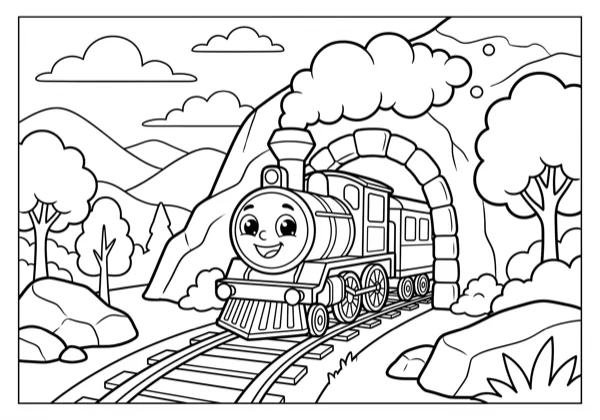
A cheerful, smiling vintage steam locomotive chugs happily along glistening iron tracks winding through lush green hills and swaying palm trees. Playful billows of soft puffy smoke rise into the sunny sky as smiling school children wave excitedly from open passenger carriage windows while a grazing cow and chirping songbirds greet the train from the countryside. On November 5, 1951, Indian Railways officially established the Central Railway zone, headquartered at the historic Victorian Gothic Chhatrapati Shivaji Maharaj Terminus (formerly Victoria Terminus) in Mumbai. This historic zone incorporated the pioneering Great Indian Peninsula Railway, which famously inaugurated India's very first passenger railway journey on April 16, 1853, between Bori Bunder and Thane, establishing one of the world's largest and most vital transportation networks.

Transatlantic Telegraph Cable Expedition
age-7-81 pages
Daily ColouringBest for Crayons and markers

Transatlantic Telegraph Cable Expedition

A sturdy, rounded deep-sea exploration submarine navigates the mysterious ocean floor, casting bright dual beams of light across dramatic underwater volcanic vents and rocky abyssal trenches. Two articulated robotic arms carefully steady and unspool a heavily insulated underwater telecommunications cable onto the seabed, accompanied by curious floating jellyfish and friendly octopuses observing this marvel of human engineering. In November 1856 (formalized November 5–6, 1856), American entrepreneur Cyrus West Field and British telegraph engineers founded the Atlantic Telegraph Company in London, initiating the historic transatlantic telegraph cable project. After overcoming extraordinary nautical and electrical challenges across thousands of miles of Atlantic ocean floor, permanent high-speed telegraph communication between North America and Europe was triumphantly established in 1866 using the immense steamship SS Great Eastern.

Mangalyaan Mars Orbiter Mission
age-9-101 pages
Daily ColouringBest for Crayons and markers

Mangalyaan Mars Orbiter Mission

The majestic Mangalyaan Mars Orbiter spacecraft glides silently through interplanetary space high above the curved horizon of the Red Planet. Its wide three-panel solar array reflects sunlight, its gold-foil multi-layer insulation gleams, and its prominent parabolic high-gain antenna faces Earth, set against a magnificent cosmic panorama of distant spiral galaxies, Saturn with its rings, and shimmering star constellations. On November 5, 2013, the Indian Space Research Organisation (ISRO) launched the Mars Orbiter Mission (MOM), affectionately known as Mangalyaan, aboard a Polar Satellite Launch Vehicle (PSLV-C25) from the Satish Dhawan Space Centre in Sriharikota, India. Entering Martian orbit on September 24, 2014, India made history as the first nation in the world to achieve Mars orbit on its maiden attempt and the fourth space agency ever to reach the Red Planet, operating for over seven years to capture breathtaking global maps and study Mars's atmosphere.

Colouring of the Day - Nov 4, 2026

Wise Storybook Owl
age-2-41 pages
Daily ColouringBest for Crayons and markers

Wise Storybook Owl

A friendly, wide-eyed little owl wearing round scholarly spectacles sits cheerfully atop a giant open storybook spread across a wooden library table. Surrounded by stacks of leather-bound books, a shiny polished apple, twinkling bedtime stars, and tall bookshelves filled with colorful adventure tales, this heartwarming scene features bold, rounded outlines and spacious open coloring areas tailored for young toddlers embarking on their early creative journey. Owls have symbolized wisdom, patience, and the love of learning across global storytelling and folklore for thousands of years. From ancient Aesop's fables to modern childhood literature, the owl represents quiet curiosity and keen observation. Today, wildlife conservation centers like the Smithsonian's National Zoo care for native owl species such as the Barred Owl, inspiring young children to explore the natural world and develop a lifelong love for reading and books.

First Helicopter Flight
age-5-61 pages
Daily ColouringBest for Crayons and markers

First Helicopter Flight

A cheerful, adventurous little frog pilot wearing vintage leather aviator goggles and a flight scarf smiles enthusiastically from the cabin of a bright, buzzing helicopter hovering above a canopy of leafy green treetops. With spinning overhead main rotor blades creating a gentle breeze, a whirling tail stabilizer, and friendly songbirds fluttering nearby through puffy cloud banks, this whimsical aerial scene provides clear, engaging line art designed for budding kindergarten colorists. Helicopters represent one of humanity's most ingenious mechanical breakthroughs in aviation, harnessing rotating airfoils to generate lift and propulsion for vertical takeoff, landing, and hovering in mid-air. Developed through pioneering rotary experiments by early inventors like Paul Cornu and Igor Sikorsky, rotorcraft have transformed search-and-rescue, firefighting, and planetary exploration—exemplified by NASA's Ingenuity helicopter making history as the first powered aircraft to fly on Mars.

Discovery of King Tut's Tomb (1922)
age-7-81 pages
Daily ColouringBest for Crayons and markers

Discovery of King Tut's Tomb (1922)

An adventurous young archaeologist wearing a classic pith sun helmet and field uniform kneels carefully inside a majestic stone subterranean vault, using a soft-bristled brush to gently sweep fine desert sand away from an ornate carved sarcophagus adorned with winged Isis figures. Golden alabaster canopic jars, ceremonial jackal guardian statues, rolled papyrus scrolls, and walls covered in intricate Egyptian hieroglyphics surround the excavation site, illuminated by dramatic sunbeams streaming through an arched stone doorway. On November 4, 1922, British archaeologist Howard Carter and his team made one of the most astonishing archaeological discoveries in human history when they uncovered the entrance steps leading to the intact tomb of Pharaoh Tutankhamun (KV62) in Egypt's Valley of the Kings. Hidden beneath ancient workmen's huts for over three millennia, the boy pharaoh's four-chamber burial suite held more than 5,000 priceless golden artifacts, royal chariots, and the famous golden death mask, providing historians with an unprecedented window into the wealth, art, and burial traditions of ancient Egypt's Eighteenth Dynasty.

Invention of the Computer Mouse (1964)
age-9-101 pages
Daily ColouringBest for Crayons and markers

Invention of the Computer Mouse (1964)

A close-up perspective of an electronics research workbench where an engineer's hand guides an early wooden computer mouse prototype connected by a thick coiled cable to a retro CRT monitor displaying geometric window interfaces and an on-screen cursor arrow. The surrounding laboratory setting is packed with vintage test equipment, including glowing dual-beam oscilloscopes, vacuum tube amplifier chassis, analog dial meters, and spooling magnetic tape drives, capturing the inventive dawn of personal computing in rich technical detail. In the mid-1960s at the Stanford Research Institute (SRI), visionary computer scientist Douglas Engelbart and lead engineer Bill English invented the computer mouse—a handheld pointing device carved from red pine wood housing two perpendicular metal wheels that tracked X and Y coordinate motion. Officially demonstrated to the world in Engelbart's legendary 1968 'Mother of All Demos,' this revolutionary invention transformed human-computer interaction, replacing complex text command lines with intuitive graphical desktop navigation that powers every modern personal computer, tablet, and smartphone today.

Colouring of the Day - Nov 3, 2026

World Jellyfish Day
age-2-41 pages
Daily ColouringBest for Crayons and markers

World Jellyfish Day

A cheerful, wide-eyed baby jellyfish with a happy smiling face floats gently through a sunlit tropical sea, trailing soft wavy tentacles among clusters of bubbling sea anemones, tubular coral branches, and a friendly little starfish resting on the ocean floor. Surrounded by floating water bubbles, drifting ocean currents, and playful underwater plants, this enchanting scene features thick, bold outlines and generous open coloring spaces crafted especially for toddlers enjoying their very first coloring adventures. Observed globally each year on November 3, World Jellyfish Day celebrates one of Earth's most ancient and remarkable marine invertebrates. Jellyfish have drifted through Earth's oceans for over 500 million years—predating dinosaurs, trees, and flowering plants. Lacking bones, a heart, blood, or a centralized brain, their delicate bell-shaped bodies are composed of approximately 95 percent water, serving as vital ecological indicators of ocean health and providing essential shelter and nourishment for diverse marine life worldwide.

First Animal in Orbit: Laika on Sputnik 2 (1957)
age-5-61 pages
Daily ColouringBest for Crayons and markers

First Animal in Orbit: Laika on Sputnik 2 (1957)

A cheerful, brave little dog wearing a custom-molded bubble astronaut helmet peers curiously through the circular viewing window of her spacecraft cabin into the vast starry cosmos. Outside the porthole, Planet Earth glows gently with visible continents and swirling white cloud spirals, while playful floating bone treats, twinkling celestial stars, and retro spaceship control consoles with toggle switches and dial meters fill the cozy cabin with storybook charm and clean, medium-weight outlines. On November 3, 1957, the Soviet Union launched the Sputnik 2 spacecraft into Earth orbit, carrying Laika, a calm and resilient stray dog rescued from the streets of Moscow, who made history as the very first living creature to orbit our planet. Traveling at more than 17,000 miles per hour, Laika's historic orbital flight provided early space scientists with the first vital biometric data demonstrating that living organisms could endure the weightlessness and extreme acceleration of spaceflight, ultimately opening the gateway for human space exploration.

Panama Independence Day (1903)
age-7-81 pages
Daily ColouringBest for Crayons and markers

Panama Independence Day (1903)

A magnificent three-masted historical galleon with billowed canvas sails, flying masthead pennants, and intricate rope rigging glides gracefully through turquoise tropical coastal waters toward a lush verdant coastline. In the foreground, two playful dolphins leap joyfully over foaming ocean waves, while palm tree groves, rugged coastal headlands, and swooping coastal seagulls frame an adventurous maritime panorama filled with rich nautical detail for curious young artists. On November 3, 1903, the people of Panama officially declared their separation and independence from Colombia, establishing the sovereign Republic of Panama across the narrow, strategically vital Isthmus of Panama. Led by revolutionary leader Manuel Amador Guerrero and supported diplomatically by the United States under President Theodore Roosevelt, this pivotal declaration paved the way for the historic construction of the Panama Canal, transforming global maritime trade by linking the Atlantic and Pacific Oceans.

NASA Launches Mariner 10 to Mercury (1973)
age-9-101 pages
Daily ColouringBest for Crayons and markers

NASA Launches Mariner 10 to Mercury (1973)

An imposing multi-stage Atlas-Centaur rocket ignites its powerful propulsion engines, lifting off majestically from a coastal launchpad service gantry amidst towering billows of rolling exhaust clouds and steam plumes. High above the Atlantic shoreline, the rocket soars into a crisp starry twilight sky, carrying NASA's Mariner 10 robotic spacecraft toward the inner solar system, drawn with intricate architectural trusses, gantry swing arms, fuel conduits, and realistic aerospace contours designed for advanced coloring enthusiasts. On November 3, 1973, NASA launched the Mariner 10 planetary exploration probe from Cape Canaveral, Florida, on a revolutionary deep-space mission to explore Venus and Mercury. Mariner 10 became the first spacecraft in human history to utilize an interplanetary gravitational slingshot—using the gravity of Venus to alter its trajectory and speed toward Mercury—and the first probe to visit and photograph the heavily cratered, scorched surface of Mercury, capturing over 7,000 photographs and unlocking foundational secrets of our inner solar system.

Colouring of the Day - Nov 2, 2026

Friendly Puppy Buddies & Canine Companions
age-2-41 pages
Daily ColouringBest for Crayons and markers

Friendly Puppy Buddies & Canine Companions

Two adorable puppy buddies with big smiling eyes, floppy ears, and wagging tails sit side-by-side on a cozy grass blanket in a sunlit backyard. Between their front paws rests an oversized dog chew bone decorated with playful spots and hearts, while fluffy clouds and little fluttering butterflies dance gently in the open air, drawn with bold, rounded outlines designed specifically for toddlers learning their very first coloring strokes. Celebrated across generations in family homes and historic literature, dogs are cherished as humankind's most faithful companions, teaching young children empathy, gentle touch, and responsible animal care. From working sheepdogs on 18th-century farms to beloved household pets preserved in early 1900s family portrait archives at the Library of Congress, the special bond between children and their playful canine friends brings boundless joy, protection, and unconditional friendship to communities all over the world.

First Commercial Radio Broadcast (1920)
age-5-61 pages
Daily ColouringBest for Crayons and markers

First Commercial Radio Broadcast (1920)

A charming vintage wooden tabletop radio with rounded deco corners, a glowing dial needle, and ornate speaker grillwork sends cheerful musical notes and zigzag sound waves dancing merrily into the air. Beside the vintage receiver rests a pair of padded operator headphones and an antenna wire catching unseen signals, sketched with clear, inviting contours perfect for early readers discovering the magic of sound. On the evening of November 2, 1920, radio station KDKA in Pittsburgh, Pennsylvania, made broadcast history by airing the world's first licensed commercial radio broadcast, delivering live returns of the 1920 United States presidential election between Warren G. Harding and James M. Cox. Built by Westinghouse engineer Frank Conrad and operated from a makeshift rooftop transmitter shack, KDKA transformed wireless technology from a private maritime morse code tool into a revolutionary public medium that brought breaking news, educational stories, and music directly into millions of family living rooms.

Chicago's First Permanent Settlement (1779)
age-7-81 pages
Daily ColouringBest for Crayons and markers

Chicago's First Permanent Settlement (1779)

A sturdy hand-hewn log cabin trading post with a smoking stone chimney, wooden water barrel, and split-rail fence stands proudly along the lush green banks of a winding river where it meets a sparkling lake. Birchbark canoes drift gently along the reedy water's edge, surrounded by tall oak trees, prairie wildflowers, and rolling clouds, creating an engaging frontier landscape with crisp, immersive details for young explorers. In 1779, during the American Revolutionary era, trader and pioneer Jean Baptiste Point du Sable established the first permanent non-Indigenous settlement and trading post at the mouth of the Chicago River, on land known to the Indigenous Potawatomi nation as Eschecagou. Born in Saint-Domingue (present-day Haiti) of African and French descent, Du Sable and his Potawatomi wife Kitihawa developed a thriving agricultural and mercantile center equipped with a mill, smokehouse, and dairy, laying the foundational roots of what would grow into the modern metropolis of Chicago.

Voyager 1: Humanity's Interstellar Explorer (1977)
age-9-101 pages
Daily ColouringBest for Crayons and markers

Voyager 1: Humanity's Interstellar Explorer (1977)

The robotic Voyager spacecraft glides silently across the deep cosmic void, its gleaming 3.7-meter high-gain dish antenna pointed steadily back toward a distant pinpoint Sun. Glowing plasma ripples, swirling cosmic ray particles, and starry celestial constellations surround the probe's scientific booms, magnetometers, and gold-plated phonograph record, providing a rich, scientifically detailed aerospace coloring challenge for older students. Launched by NASA on September 5, 1977, Voyager 1 embarked on a historic journey across the solar system, capturing breathtaking close-up images of Jupiter's active volcanic moon Io and Saturn's complex icy ring system before heading northward toward uncharted territory. Traveling at over 38,000 miles per hour, Voyager 1 crossed the heliosphere's turbulent termination shock and officially entered interstellar space in August 2012, making it the farthest human-made object in history as it continues transmitting vital scientific discoveries from beyond our Sun's protective magnetic bubble.

Colouring of the Day - Nov 1, 2026

India's Karnataka Formation Day (Kannada Rajyotsava)
age-2-41 pages
Daily ColouringBest for Crayons and markers

India's Karnataka Formation Day (Kannada Rajyotsava)

A cheerful baby elephant with giant smiling eyes and playful flapping ears stands joyfully in calm river shallows, surrounded by magnificent blooming lotus flowers and gentle fluttering butterflies. Rolling green hills and a warm morning sun frame the peaceful water scene, drawn with extra-bold, rounded contours specifically created for toddlers and preschoolers building hand-eye coordination with their first crayons. Celebrated across southern India every year on November 1, Karnataka Formation Day (Kannada Rajyotsava) commemorates the historic date in 1956 when all Kannada-speaking regions were officially unified into a single state under the States Reorganisation Act (initially named Mysore State, and proudly rechristened Karnataka on November 1, 1973). The Asian Elephant is honored as Karnataka's official State Animal, and the sacred Lotus is celebrated as the official State Flower, symbolizing beauty, perseverance, and ecological heritage.

Nature Conservation & Historic National Parks (1872)
age-5-61 pages
Daily ColouringBest for Crayons and markers

Nature Conservation & Historic National Parks (1872)

A friendly brown bear with a welcoming smile and cheerful wave stands beside a rustic wooden ranger trail sign along a sun-dappled mountain pathway. Towering evergreen pine trees, rugged snow-dusted peaks, and a curious little squirrel peeking from behind an oak trunk create an inviting woodland sanctuary designed with clean, expressive storybook lines for early elementary colorists. National parks protect Earth's most breathtaking wilderness habitats, preserving critical natural ecosystems, majestic geological wonders, and native wildlife like bears, wolves, and bison. Championed initially with the establishment of Yellowstone National Park on March 1, 1872, the global public parkland movement inspired countries across the world to safeguard pristine forests. On November 1, park rangers throughout North America mark the seasonal transition to winter sanctuary mode, securing peaceful migration corridors and protected ranges for hibernating wildlife.

Astronomical Telescopes & The Sun's Corona (1851 / 1917)
age-7-81 pages
Daily ColouringBest for Crayons and markers

Astronomical Telescopes & The Sun's Corona (1851 / 1917)

A curious young skywatcher in an explorer vest peers intently through a long brass refracting telescope mounted on a sturdy tripod under a dazzling twilight sky. An illustrated celestial star map rolls open on the rocky terrain beside an antique instrument trunk, revealing sparkling constellations, distant galaxies, and a radiant celestial eclipse orb drawn with crisp, engaging lines for young astronomers. Historically captured during total solar eclipses, the Sun's mysterious corona—its glowing, ultra-hot outer plasma atmosphere—was first recorded in photography on July 28, 1851, using an early daguerreotype plate at the Royal Observatory in Königsberg. Telescopes transformed human understanding of space, and on November 1, 1917, the legendary 100-inch Hooker Telescope at Mount Wilson Observatory saw 'first light' as the world's largest telescope, enabling astronomers to chart distant star systems and discover that our universe is vast and expanding.

The First Sub-Orbital Spaceplane Concept (1959 / 1981)
age-9-101 pages
Daily ColouringBest for Crayons and markers

The First Sub-Orbital Spaceplane Concept (1959 / 1981)

An aerodynamic, heat-shielded winged spaceplane glides gracefully above the blue curved horizon of planet Earth, accompanied by an orbital telecommunications satellite with extended solar panel arrays. Detailed thermal protection tiles, wing control surfaces, and panoramic planetary coastlines provide an intricate, inspiring aerospace coloring challenge for older students and future rocket scientists. On November 1, 1959, the United States Air Force and aerospace engineers completed the formal multi-step development roadmap for the Boeing X-20 Dyna-Soar ('Dynamic Soarer'), the world's pioneering crewed reusable spaceplane program designed to launch into space atop a rocket and glide back to a horizontal runway landing. Though never flown to orbit, the thermal protection, aerodynamic hypersonic research, and pilot testing conducted for Dyna-Soar laid the direct technical foundations for NASA's iconic Space Shuttle fleet.

Colouring of the Day - Oct 31, 2026

Friendly Little Pumpkin
age-2-41 pages
Daily ColouringBest for Crayons and markers

Friendly Little Pumpkin

A cheerful, round pumpkin with big smiling eyes, curved autumn vines, and a friendly scalloped oak leaf rests happily on a gentle rolling hilltop. Playful twinkling stars dot the clear evening sky above, creating a warm, comforting autumn farm scene drawn with extra-thick, bold outlines tailored for toddlers and preschoolers practicing their first crayon marks. Celebrated every year on October 31, Halloween has ancient roots in autumnal harvest festivals where communities gathered to mark the end of the agricultural growing season. Across centuries of folklore and seasonal tradition, pumpkins native to the Americas became the beloved universal symbol of autumn harvest and friendly festive fun, inspiring families around the world to carve smiling jack-o'-lanterns and share sweet holiday treats.

India's National Unity Day (Sardar Patel)
age-5-61 pages
Daily ColouringBest for Crayons and markers

India's National Unity Day (Sardar Patel)

The towering Statue of Unity stands proudly against rolling mountain ridges along the Narmada River in Gujarat, while decorative festive ribbons flutter gently across the open sky. In the foreground, a joyful group of diverse children hold hands across a riverbank lined with blooming lotus flowers, creating an uplifting storybook scene of friendship, cooperation, and national unity designed with clear, expressive linework for early learners. Observed annually across India on October 31, National Unity Day (Rashtriya Ekta Diwas) commemorates the birth anniversary of Sardar Vallabhbhai Patel, born on October 31, 1875. As India's first Deputy Prime Minister and Home Minister, Patel skillfully united more than 560 diverse princely states into a single democratic republic, earning the title 'Iron Man of India'. In 2018, the 182-meter Statue of Unity—the world's tallest statue—was dedicated on his birthday to honor his enduring legacy of harmony and national strength.

Discovery of Uranus's Moon Umbriel (1851)
age-7-81 pages
Daily ColouringBest for Crayons and markers

Discovery of Uranus's Moon Umbriel (1851)

A friendly young astronaut in a futuristic spacesuit conducts a spacewalk alongside an orbital research satellite, reaching out toward the mysterious, crater-pocked surface of Umbriel. In the cosmic distance, the magnificent ringed globe of Uranus glows beside shooting comets, swirling celestial nebulae, and twinkling constellation star maps, presenting an action-packed space exploration coloring sheet for curious elementary learners. On October 31, 1851, English astronomer William Lassell made history by discovering two new moons orbiting the distant ice giant planet Uranus: Ariel and Umbriel. Using a powerful custom-built reflecting telescope, Lassell peered billions of miles into the outer solar system to locate these icy worlds. Later named after literary spirits and imaged up-close by NASA's Voyager 2 spacecraft in 1986, Umbriel remains one of the darkest and most heavily cratered moons in our planetary neighborhood.

Completion of Mount Rushmore National Memorial (1941)
age-9-101 pages
Daily ColouringBest for Crayons and markers

Completion of Mount Rushmore National Memorial (1941)

The colossal granite portraits of George Washington, Thomas Jefferson, Theodore Roosevelt, and Abraham Lincoln gaze resolutely from the towering cliffs of Mount Rushmore, surrounded by dense Black Hills pine forests, rugged granite crags, and soaring bald eagles. Intricate hatching and multi-layered textural line art capture the monumental grandeur of this iconic American landmark, offering an inspiring, detailed coloring challenge for older students. On October 31, 1941, fourteen years of monumental carving came to an official close at Mount Rushmore National Memorial in South Dakota. Directed by visionary sculptor Gutzon Borglum and completed by his son Lincoln Borglum alongside hundreds of skilled stonecutters, workers removed roughly 450,000 tons of solid granite using dynamite and pneumatic drills to sculpt the sixty-foot-tall presidential faces, creating a permanent tribute to American history, democracy, and engineering perseverance.

Colouring of the Day - Oct 30, 2026

Happy Little Duckling
age-2-41 pages
Daily ColouringBest for Crayons and markers

Happy Little Duckling

A cheerful, fluffy little duckling glides gently across the clear surface of a sunlit freshwater pond, surrounded by floating water lily pads and tall, graceful cattails. With wide curious eyes, a friendly smiling beak, and tiny feathered wings, this peaceful wetland scene is created with thick, extra-bold outlines crafted specifically for toddlers and preschoolers to practice early crayon grip and coloring. Freshwater wetlands and marshes provide essential sanctuaries for baby ducklings and migrating waterfowl across North America. To protect these vital aquatic habitats, conservation programs such as the Federal Duck Stamp—reinforced by federal wildlife legislation on October 30, 1978 (Public Law 95-552)—have dedicated critical funding to preserve millions of acres of wetlands within the National Wildlife Refuge System, ensuring future generations of young ducklings thrive in safe, healthy waters.

The First Ford Model T Assembly (1913)
age-5-61 pages
Daily ColouringBest for Crayons and markers

The First Ford Model T Assembly (1913)

A cheerful vintage automobile with expressive cartoon eyes, spoked wheels, and a bright friendly radiator grille rolls smoothly along a moving mechanical conveyor belt inside a busy workshop. Oversized wrenches, screwdrivers, and sturdy turning gears frame the background, turning complex manufacturing machinery into an inviting, approachable world of innovation designed with clean storybook linework for early learners. In October 1913, American industrialist Henry Ford and his engineering team introduced the world's first moving assembly line for automobile production at the Highland Park plant in Michigan. By bringing the car chassis directly to stationary workers along a moving track, assembly time for a single Ford Model T plummeted from over twelve hours to just ninety-three minutes. This revolutionary breakthrough made cars affordable for everyday families and forever transformed modern manufacturing and engineering.

Orson Welles' War of the Worlds (1938)
age-7-81 pages
Daily ColouringBest for Crayons and markers

Orson Welles' War of the Worlds (1938)

A magnificent cathedral-arched wooden tabletop radio sits center-stage in a cozy 1930s living room, surrounded by an armchair, a ticking grandfather clock, and overflowing bookshelves. Whimsical swirling musical notes, playful lightning bolts, and an imaginative little flying saucer with antennae emerge magically from the speaker grille, capturing the wonder and drama of classic golden-age radio storytelling. On the evening of October 30, 1938, twenty-three-year-old theatrical director Orson Welles and The Mercury Theatre on the Air broadcast a simulated radio news bulletin adaptation of H. G. Wells' science fiction novel, The War of the Worlds, over the CBS Radio network. Featuring realistic breaking news interruptions describing imaginary Martian machines landing in Grover's Mill, New Jersey, the broadcast demonstrated the immense persuasive power of mass media and remains one of the most famous broadcasts in radio history.

Pan Am First Commercial Jet Flight (1958)
age-9-101 pages
Daily ColouringBest for Crayons and markers

Pan Am First Commercial Jet Flight (1958)

A sleek four-engine Boeing 707 jet airliner banks gracefully through a moonlit evening sky, soaring effortlessly high above rolling layers of textured cumulus clouds and twinkling stars. Twin contrails stream behind swept wings, while finely detailed cockpit windows, passenger portholes, and jet turbines provide rich, intricate linework tailored for older children and budding aviation enthusiasts using colored pencils or gel pens. In late October 1958, Pan American World Airways inaugurated daily transatlantic commercial jet service with the Boeing 707-121, flying passengers from New York's Idlewild Airport (now JFK) to Paris Le Bourget. Operating at speeds exceeding five hundred miles per hour and cutting transatlantic flight times nearly in half compared to older propeller aircraft, the Boeing 707 ushered in the commercial Jet Age, revolutionizing international travel, trade, and cultural connection across the globe.

Colouring of the Day - Oct 29, 2026

US National Cat Day (2005)
age-2-41 pages
Daily ColouringBest for Crayons and markers

US National Cat Day (2005)

A happy little kitten with curious eyes, perky ears, and a gently curled tail sits peacefully on a warm wooden post-and-rail fence. A friendly smiling sun shines down over rolling autumn meadows and gentle hilltops, creating an inviting, comforting farm scene designed with clean, bold outlines for toddlers and preschoolers to color with thick crayons. Celebrated annually in the United States on October 29, US National Cat Day was founded in 2005 by animal welfare advocate Colleen Paige to raise awareness about pet adoption and celebrate the special bond between families and their feline companions. From barn cats that help protect farm harvests to affectionate house pets, domestic cats have lived alongside humans for thousands of years, bringing comfort, warmth, and gentle joy to homes across the globe.

Founding of the International Red Cross (1863)
age-5-61 pages
Daily ColouringBest for Crayons and markers

Founding of the International Red Cross (1863)

A friendly, compassionate nurse wearing a traditional cap and uniform stands proudly on a stone path holding a sturdy protective emblem shield. Beside her rests a vintage medical first-aid satchel bearing the famous humanitarian cross emblem, welcoming visitors to a clean brick hospital surrounded by leafy trees, fluttering love hearts, and blooming garden flowers. On October 29, 1863, delegates from sixteen nations gathered in Geneva, Switzerland, to establish the International Committee of the Red Cross, inspired by humanitarian Henry Dunant. The conference adopted a red cross on a white background—reversing the colors of the Swiss flag—as a universal, neutral symbol to protect doctors, nurses, and medical personnel assisting the wounded on battlefields. Today, the International Red Cross and Red Crescent Movement unites millions of volunteers providing emergency medical care, disaster relief, and humanitarian aid worldwide.

First Host-to-Host ARPANET Message (1969)
age-7-81 pages
Daily ColouringBest for Crayons and markers

First Host-to-Host ARPANET Message (1969)

A smiling retro computer workstation with a monitor, mechanical keyboard, and system chassis sits on a research desk beside a large classroom globe of the Earth. Swirls of glowing binary numbers—ones and zeros—leap from the computer screen across network paths to connect computer terminals all around the world, surrounded by chalkboard equations, network topology diagrams, and tall library bookshelves. On October 29, 1969, computer scientists established the world's very first host-to-host internet connection between UCLA and the Stanford Research Institute (SRI) using ARPANET. Student programmer Charley Kline attempted to type the word 'LOGIN' across the network, but the system crashed after transmitting just the first two letters—'L' and 'O'. That pioneering two-letter transmission, 'LO' (as in 'Lo and behold!'), launched the architecture of packet-switching that forms the foundation of today's global internet.

Convention of Constantinople & the Suez Canal (1888)
age-9-101 pages
Daily ColouringBest for Crayons and markers

Convention of Constantinople & the Suez Canal (1888)

A massive modern container cargo ship laden with stacked shipping crates sails gracefully along the calm waters of the Suez Canal beneath a radiant morning sunrise. Channel buoys bob gently in the waterway as a brick lighthouse, swaying date palm trees, blooming desert vegetation, sand dunes, and passing seagulls line the vibrant Egyptian maritime route. On October 29, 1888, the major maritime powers of Europe and the Ottoman Empire signed the historic Convention of Constantinople, guaranteeing that the Suez Canal would remain permanently free and open to commercial and naval vessels of all nations in times of peace as in war. By connecting the Mediterranean Sea directly to the Red Sea, the 120-mile canal eliminated the perilous journey around the southern tip of Africa, revolutionizing international trade and remaining one of the most vital arteries of global commerce.

Colouring of the Day - Oct 28, 2026

Dedication of the Statue of Liberty (1886)
age-2-41 pages
Daily ColouringBest for Crayons and markers

Dedication of the Statue of Liberty (1886)

A cheerful, smiling cartoon Lady Liberty holding a glowing ice-cream-cone torch stands proudly upon her stone pedestal in New York Harbor. Puffy clouds, a bright smiling sun, and a friendly sailboat bobbing on gentle harbor waves complete this warm, welcoming monument scene designed with thick, bold outlines for toddlers to color with chunky crayons. On October 28, 1886, United States President Grover Cleveland officially dedicated the Statue of Liberty—titled 'Liberty Enlightening the World'—as a historic gift of friendship from the people of France. Designed by sculptor Frédéric-Auguste Bartholdi with an internal iron framework engineered by Gustave Eiffel, the 151-foot copper statue has welcomed millions of immigrants and visitors as a universal symbol of freedom and hope.

Sister Nivedita's Birthday Celebration (1867)
age-5-61 pages
Daily ColouringBest for Crayons and markers

Sister Nivedita's Birthday Celebration (1867)

A dignified portrait of Sister Nivedita seated gracefully in her flowing traditional robes and sash, wearing simple prayer beads, her serene and determined expression framed by her head covering, beside an architectural pillar and lush leafy garden foliage ready for creative coloring. Born Margaret Elizabeth Noble on October 28, 1867, in Dungannon, Ireland, Sister Nivedita was an influential educator, author, and social reformer who moved to India in 1898 after meeting Swami Vivekananda, dedicating her life to women's education, founding a pioneering school for girls in Bagbazar, Kolkata, leading selfless relief efforts during the 1899 plague epidemic, and inspiring India's freedom movement and indigenous arts.

Jonas Salk's Birthday & Polio Vaccine Milestone (1914)
age-7-81 pages
Daily ColouringBest for Crayons and markers

Jonas Salk's Birthday & Polio Vaccine Milestone (1914)

Inside a classic scientific laboratory, Dr. Jonas Salk sits intently peering through a brass microscope at a specimen slide, surrounded by glass beakers, bubbling flasks, racks of test tubes, and open scientific notebooks detailing medical discoveries. Arched stone windows look out onto autumn trees, capturing the focused dedication of life-saving medical research. Born on October 28, 1914, in New York City, Dr. Jonas Salk was an American virologist who developed the world's first safe and effective inactivated polio vaccine. Announced to the world in 1955, his vaccine brought an end to terrifying global epidemics of infantile paralysis. Dr. Salk famously chose not to patent the vaccine, asking 'Could you patent the sun?', ensuring it remained freely and widely accessible to protect children everywhere.

Pioneering Graphical Computing & Personal Computers (1985)
age-9-101 pages
Daily ColouringBest for Crayons and markers

Pioneering Graphical Computing & Personal Computers (1985)

A retro personal computer workstation from the dawn of desktop computing features a heavy CRT monitor displaying overlapping graphical window boxes, an analog desktop clock, and simple geometric graphics. A mechanical keyboard with coiled cord, a two-button computer mouse on a mousepad, a caddy of floppy disks, reference binders, and electrical schematics pinned to a corkboard capture the exciting era of digital revolution. The mid-1980s transformed personal computing from cryptic command-line prompts into intuitive graphical user interfaces that anyone could navigate with a mouse. Commemorating key personal computing milestones and pioneers born on October 28—including Microsoft co-founder Bill Gates, born October 28, 1955—this artwork celebrates the software breakthroughs that democratized technology and placed creative digital tools into homes, schools, and offices worldwide.

Colouring of the Day - Oct 27, 2026

Opening of the New York City Subway (1904)
age-2-41 pages
Daily ColouringBest for Crayons and markers

Opening of the New York City Subway (1904)

A cheerful, smiling cartoon subway train with big bright eyes and an eager grin emerges joyfully from an underground tiled tunnel onto gleaming steel tracks. Sparkles of excitement twinkle around the train as bright trackside signal lanterns guide its way between decorative subway station pillars and arched brick vaults, creating an inviting, friendly transit scene designed with bold, clean outlines for toddler hands to color with chunky crayons. On October 27, 1904, the very first underground line of the New York City Subway officially opened to the public, transforming urban transportation forever. New York City Mayor George B. McClellan Jr. proudly took the controls at City Hall Station, driving the inaugural 9.1-mile run up Manhattan to 145th Street in Harlem. That evening, over 150,000 excited riders paid a five-cent nickel fare to experience the marvel of traveling beneath bustling city streets.

Theodore Roosevelt's Birthday Celebration (1858)
age-5-61 pages
Daily ColouringBest for Crayons and markers

Theodore Roosevelt's Birthday Celebration (1858)

A friendly, cuddly young bear explorer wearing a wide-brimmed ranger hat and a backpack wanders along a winding forest path holding a large magnifying glass. The curious bear pauses to greet a tiny fluffy chipmunk resting on a fallen pine log, surrounded by majestic evergreen trees, fallen autumn acorns and oak leaves, and snow-capped mountain peaks rising beneath a warm, cheerful sun. Born on October 27, 1858, Theodore Roosevelt became the 26th President of the United States and one of history's greatest champions of wildlife conservation. During his presidency, he protected approximately 230 million acres of public land, creating five national parks, 18 national monuments, and over 150 national forests. He also famously inspired the invention of the beloved childhood toy—the 'Teddy Bear'—after refusing to harm a defenseless bear during a 1902 hunting trip.

The De Havilland Comet and the Jet Age (1949–1952)
age-7-81 pages
Daily ColouringBest for Crayons and markers

The De Havilland Comet and the Jet Age (1949–1952)

A sleek, streamlined commercial passenger jet with swept-back wings and four jet engines buried inside its wing roots soars majestically above a sea of fluffy white cumulus clouds. A graceful curving vapor trail loops through the bright sky behind the airliner as rivers, farmland patchwork, and coastlines glisten far below, capturing the speed and wonder of early jet travel with crisp, dynamic contours. Developed in the United Kingdom by aviation pioneer de Havilland, the Comet made history as the world's very first commercial jet airliner, ushering in the modern jet age. Flying nearly twice as fast and twice as high as traditional propeller-driven airliners, the Comet introduced pressurized cabins and smooth turbojet flight, dramatically shrinking travel times across oceans and continents.

First Transmission on ARPANET (1969)
age-9-101 pages
Daily ColouringBest for Crayons and markers

First Transmission on ARPANET (1969)

Inside a pioneering university computer laboratory packed with vintage electronics, an ambitious student researcher sits before a heavy Teletype terminal connected to a massive Honeywell Interface Message Processor (IMP) cabinet and magnetic reel-to-reel tape drives. Bundles of thick data cables route across the raised tiled floor toward a detailed network topology diagram sketched on a wall chalkboard, capturing the tense, historic moment when digital networking was born. In late October 1969, researchers sent the very first message over ARPANET between UCLA and Stanford, launching the modern internet. On October 29, 1969, computer scientist Charley Kline typed the letters 'L' and 'O' before the system crashed, establishing the world's first packet-switching network and laying the foundational architecture of today's global web.

Colouring of the Day - Oct 26, 2026

Opening of the Erie Canal (1825)
age-2-41 pages
Daily ColouringBest for Crayons and markers

Opening of the Erie Canal (1825)

A cheerful cartoon canal horse trots happily along a sunny dirt towpath, gently pulling a wooden passenger canal boat across smooth, sparkling canal water. Blooming white water lilies drift peacefully alongside two fluffy baby ducklings swimming near tall cattails and rolling grassy hills, creating an inviting, friendly waterway scene made specially for early learners to color with big, bold crayons. On October 26, 1825, the historic Erie Canal officially opened across New York State as Governor DeWitt Clinton boarded the packet boat Seneca Chief in Buffalo for its maiden voyage toward New York City. Spanning 363 miles through dense wilderness and rugged hills, this miraculous hand-dug waterway connected the Great Lakes directly to the Atlantic Ocean, lowering shipping costs by ninety percent and helping build thriving towns, trade networks, and vibrant communities throughout early North America.

John Logie Baird's First Television Demonstration (1925)
age-5-61 pages
Daily ColouringBest for Crayons and markers

John Logie Baird's First Television Demonstration (1925)

Inside a bustling vintage invention laboratory, two curious children smile and point in amazement at a glowing tabletop wooden television console. Beside the wooden receiver box sits a spinning mechanical Nipkow disc punctured with tiny spiral holes, surrounded by gleaming vacuum tubes and coiled electrical wires that illuminate the cheerful, smiling face of a ventriloquist's dummy displayed brightly on the circular screen. On October 26, 1925, Scottish electrical engineer and inventor John Logie Baird achieved a monumental milestone in technological history by successfully transmitting the world's first grayscale moving television image in his London laboratory. Because studio lights were too blistering hot for human assistants to sit under during early tests, Baird famously used a painted ventriloquist's dummy nicknamed 'Stooky Bill' as his courageous test subject, laying the scientific groundwork for modern broadcast television.

Gunfight at the O.K. Corral in Tombstone (1881)
age-7-81 pages
Daily ColouringBest for Crayons and markers

Gunfight at the O.K. Corral in Tombstone (1881)

Standing proudly on a raised wooden boardwalk along the bustling dusty main street of a historic American frontier town, a friendly sheriff in a tall cowboy hat, leather vest, and shiny lawman star welcomes travelers to the desert southwest. Behind him stand the wooden clapboard Sheriff's Office and General Store with shaded porches, an authentic canvas-topped covered wagon, blooming saguaro cacti, rolling tumbleweeds, and majestic red-rock desert buttes rising beneath a wide-open western sky. On October 26, 1881, the most famous law enforcement standoff in the history of the American Old West took place in the boomtown of Tombstone, Arizona Territory, near a livery stable known as the O.K. Corral. Deputy U.S. Marshal Virgil Earp, along with his brothers Wyatt and Morgan Earp and former dentist Doc Holliday, confronted a gang of unruly frontier outlaws, creating an enduring historical legend that inspired countless books, folk songs, museum exhibits, and classic western films.

Architectural Foundations of the Taj Mahal (1632–1653)
age-9-101 pages
Daily ColouringBest for Crayons and markers

Architectural Foundations of the Taj Mahal (1632–1653)

Gathered around a heavy stone drafting table beneath intricately carved sandstone arches, three master Mughal architects in flowing traditional robes and turbans study a grand architectural blueprint using geometric brass dividers and drafting rulers. In the sunlit background across the tranquil Yamuna River, stonecutters and stonemasons carefully shape white marble blocks beside wooden scaffolding and ancient well-drilling pulleys as the iconic dome and graceful minarets of the majestic Taj Mahal rise toward the sky. Commissioned by Mughal Emperor Shah Jahan in memory of his beloved empress Mumtaz Mahal, the Taj Mahal is celebrated worldwide as a pinnacle of symmetrical Islamic and Indian architecture. To support the monumental weight of the white marble mausoleum on the shifting, sandy banks of the Yamuna River, 17th-century Mughal engineers pioneered an ingenious well-foundation system, sinking deep wooden caissons filled with rubble and mortar that have kept the grand monument perfectly stable and level for nearly four centuries.

Colouring of the Day - Oct 25, 2026

World Pasta Day Celebration (1995)
age-2-41 pages
Daily ColouringBest for Crayons and markers

World Pasta Day Celebration (1995)

A cheerful cartoon bowl overflowing with twirly, delicious spaghetti noodles beams with a happy smile while wearing a tall, puffy chef hat. Standing on a wooden kitchen counter beside friendly cartoon forks and spoons, dancing basil leaves, and cooking utensils hanging from the wall, this delightful kitchen scene welcomes young toddlers to color warm bowls, tasty noodles, and friendly culinary tools. Established on October 25, 1995, at the World Pasta Congress in Rome, Italy, World Pasta Day celebrates the universal joy, nutritional goodness, and cultural traditions of pasta enjoyed by families across the globe. From long spaghetti strands to butterfly-shaped farfalle and fun spiral rotini, this culinary celebration honors food agriculture, home cooking, and sharing joyful meals together around the family table.

Pablo Picasso's Art Studio: Creative Shapes & Colours (1881)
age-5-61 pages
Daily ColouringBest for Crayons and markers

Pablo Picasso's Art Studio: Creative Shapes & Colours (1881)

An inviting sunlit artist studio features a sturdy wooden easel holding a bright canvas filled with bold geometric cubes, floating spheres, triangles, and a cheerful smiling sun. A wooden painting palette speckled with paint dollops rests on a studio stool beside a glass jar filled with artist paintbrushes, while a gentle white dove of peace perches atop the easel under billowing curtains, inviting early learners to explore bold lines and imaginative coloring. Born in Málaga, Spain, on October 25, 1881, Pablo Picasso grew to become one of the most transformative and inventive visual artists in human history. Renowned as the co-founder of Cubism, Picasso revolutionized art by deconstructing everyday subjects into vibrant geometric forms, teaching the world to see familiar objects from multiple perspectives simultaneously and inspiring generations of children to create freely with bold imagination.

Dirk Hartog's Historic Landfall in Western Australia (1616)
age-7-81 pages
Daily ColouringBest for Crayons and markers

Dirk Hartog's Historic Landfall in Western Australia (1616)

Perched high on the rugged sandstone sea cliffs of Shark Bay, Dutch sea captain Dirk Hartog in a tailored seventeenth-century voyager's coat and feathered hat hammers an inscribed pewter plate onto an upright wooden post. An apprentice sailor kneels beside him offering metal nails, while in the tranquil turquoise bay below, their three-masted wooden sailing vessel, the Eendracht, rests peacefully at anchor as graceful seagulls soar across the expansive maritime sky. On October 25, 1616, Dutch navigator Dirk Hartog aboard the Dutch East India Company ship Eendracht made landfall on an uninhabited island off the western coast of Australia, marking the second recorded European landing on the Australian continent. Before resuming his voyage toward the Spice Islands, Hartog flattened a pewter dinner plate, chiseled the date and ship details into the metal, and nailed it to an oak post at Cape Inscription—creating the oldest known European artifact ever found on Australian soil.

Cassini Discovers Saturn's Two-Toned Moon Iapetus (1671)
age-9-101 pages
Daily ColouringBest for Crayons and markers

Cassini Discovers Saturn's Two-Toned Moon Iapetus (1671)

On the open stone balustrade of the Paris Observatory beneath a sprawling expanse of twinkling star constellations, Italian-French astronomer Giovanni Domenico Cassini gazes upward through a long brass aerial telescope mounted on a tall wooden tripod. A nearby scholarly table holds an authentic celestial globe, parchment star charts, and feather quills, while a decorative circular astronomical diagram showcases Saturn surrounded by its magnificent rings and its enigmatic moon Iapetus displaying its stark contrasting light and dark hemispheres. On October 25, 1671, astronomer Giovanni Domenico Cassini made a landmark celestial discovery when he observed a previously unknown moon orbiting Saturn, which he named Iapetus. Cassini soon noticed that Iapetus mysteriously vanished during half of its orbit, correctly deducing that the moon was tidally locked and had one hemisphere dramatically darker than the other—a Yin-and-Yang cosmic puzzle that NASA's Cassini spacecraft finally confirmed more than 330 years later.

Colouring of the Day - Oct 24, 2026

United Nations Day: Global Friendship and Peace
age-2-41 pages
Daily ColouringBest for Crayons and markers

United Nations Day: Global Friendship and Peace

Four smiling, cheerful young children holding hands stand in a joyful circle around a friendly, cartoon Earth globe with a warm smiling face. A bright smiling sun, puffy white clouds, and floating sparkle stars fill the sunny sky above rolling green hills, inviting toddlers to color the happy children and planet Earth with vibrant, cheerful crayons. Officially established on October 24, 1945, United Nations Day celebrates global friendship, international peace, and cooperation among all nations. Created after the entry into force of the historic UN Charter, this special day encourages children and families around the world to practice kindness, celebrate diverse cultures, and work together to care for our shared home.

Discovery of Uranus's Moons Ariel & Umbriel (1851)
age-5-61 pages
Daily ColouringBest for Crayons and markers

Discovery of Uranus's Moons Ariel & Umbriel (1851)

An intrepid young astronomer gazes through a grand Victorian brass telescope mounted on an open-air observatory balcony beneath a canopy of twinkling stars. Planet Uranus glows with faint, beautiful planetary rings as its two newly discovered moons, Ariel and Umbriel, shine brightly in orbit, inviting early learners to color the glowing cosmic world and distant starry constellations. On October 24, 1851, English astronomer William Lassell made history when he discovered Ariel and Umbriel, two of the major moons orbiting the ice giant Uranus. Using a powerful reflecting telescope that he designed and built himself, Lassell expanded our understanding of the outer solar system, paving the way for future robotic spacecraft like NASA's Voyager 2 to photograph these distant frozen worlds.

First Transcontinental Telegraph: Coast-to-Coast Wire (1861)
age-7-81 pages
Daily ColouringBest for Crayons and markers

First Transcontinental Telegraph: Coast-to-Coast Wire (1861)

Sturdy construction crews erect tall wooden telegraph poles across the open grassy plains, stringing shimmering copper wire that stretches toward the distant horizon. In the foreground, an authentic brass Morse code telegraph key and sounder rest on a wooden operator's desk with curled paper message tape, ready to transmit instant messages across thousands of miles of wilderness. On October 24, 1861, workers connected the final stretch of the first transcontinental telegraph line in Salt Lake City, Utah, linking the Atlantic and Pacific coasts of the United States for the very first time. By transmitting electrical Morse code messages in minutes rather than weeks, this revolutionary telecommunications network instantly united the nation during the Civil War and brought an immediate end to the historic Pony Express horseback relay.

NASA Deep Space 1: Advanced Ion Propulsion (1998)
age-9-101 pages
Daily ColouringBest for Crayons and markers

NASA Deep Space 1: Advanced Ion Propulsion (1998)

NASA's Deep Space 1 robotic spacecraft glides through the dark cosmic void, propelled by a brilliant blue xenon ion thruster beam glowing from its engine nozzle. Two expansive solar array wings flank the octagonal spacecraft body, while scientific cameras point toward the heavily cratered surface of asteroid 9969 Braille as sweeping orbital trajectories and distant nebulae radiate in deep space. Launched from Cape Canaveral on October 24, 1998, NASA's Deep Space 1 mission served as a pioneering testbed for 12 revolutionary space technologies, most notably solar electric ion propulsion and autonomous artificial intelligence navigation (AutoNav). By demonstrating that an ion engine could propel a probe efficiently across millions of miles, Deep Space 1 successfully flew past asteroid Braille and comet Borrelly, transforming modern deep space exploration.

Colouring of the Day - Oct 23, 2026

The Avogadro Constant: Mole Day Chemistry
age-2-41 pages
Daily ColouringBest for Crayons and markers

The Avogadro Constant: Mole Day Chemistry

A cheerful, cartoon mole wearing round science safety goggles and a tidy white laboratory coat smiles happily beside a bubbling glass chemistry flask. Floating soap-like bubbles and twinkling sparkles dance cheerfully through the air around a colorful toy block tower, inviting young toddlers to color the friendly scientist and bubbling test tubes with bright crayon strokes. Celebrated every year on October 23 from 6:02 AM to 6:02 PM, Mole Day commemorates Avogadro's Number (6.02 × 10²³)—a fundamental counting unit used by chemists to measure atoms and molecules. First organized in 1991 by American chemistry teacher Maurice Oehler, this whimsical holiday inspires young learners around the globe to explore the playful wonders of chemistry and laboratory science.

Discovery of the Taung Child Fossil
age-5-61 pages
Daily ColouringBest for Crayons and markers

Discovery of the Taung Child Fossil

A curious, gentle young ancestor with soft ruffled hair kneels happily on the grassy African savanna, carefully uncovering a rounded limestone rock that reveals an ancient fossilized child's skull. A friendly butterfly with patterned wings flutters playfully overhead, while a towering baobab tree and distant sunlit hills frame the peaceful discovery scene. Discovered in late 1924 in Taung, South Africa, the Taung Child fossil represents an early hominin species named Australopithecus africanus that lived over 2.5 million years ago. Anatomist Raymond Dart recognized that the position of its skull's spinal opening proved early ancestors walked upright on two feet, establishing Africa as the ancient cradle of human origins.

Soyuz 3: Historic Orbital Spaceflight
age-7-81 pages
Daily ColouringBest for Crayons and markers

Soyuz 3: Historic Orbital Spaceflight

A sleek, cylindrical Soyuz spacecraft glides peacefully across the vacuum of space, its wide solar panel wings absorbing radiant sunlight as delicate constellation outlines and shooting stars sparkle in the background. Looking through the circular cabin window, cosmonaut Georgy Beregovoy waves warmly toward Earth, whose swirling white weather clouds and blue oceans sweep across the planetary horizon below. Launched on October 26, 1968, from the Baikonur Cosmodrome, the Soyuz 3 mission safely resumed crewed space exploration for the Soviet space program following extensive spacecraft redesigns. Commanded by decorated 47-year-old aviator Georgy Beregovoy, the four-day flight successfully tested orbital navigation and spacecraft rendezvous systems over 81 orbits of Earth.

Johannes Gutenberg's Printing Press
age-9-101 pages
Daily ColouringBest for Crayons and markers

Johannes Gutenberg's Printing Press

Sunlight pours through Gothic arched leaded-glass windows into a busy 15th-century printing workshop, illuminating a massive wooden screw press constructed from solid oak beams. Wooden type cases filled with individual metal letter blocks, leather ink balls, ink rollers, and drying printed folios fill the room with rich architectural textures and historical craftsmanship. Invented around 1440–1450 in Mainz, Germany, by Johannes Gutenberg, the movable type mechanical printing press revolutionized human history and the spread of knowledge. By combining individual reusable metal alloy types, oil-based inks, and an adjustable wooden press, Gutenberg made books affordable and accessible, igniting the European Renaissance, the Scientific Revolution, and modern global literacy.

Colouring of the Day - Oct 22, 2026

Prehistoric Art: The Lascaux Cave Discoveries
age-2-41 pages
Daily ColouringBest for Crayons and markers

Prehistoric Art: The Lascaux Cave Discoveries

Four smiling, friendly young explorers holding glowing wooden torches discover whimsical prehistoric rock paintings inside a gentle limestone cavern. Cozy cartoon aurochs (ancient wild oxen), playful galloping horses, and cheerful stags dance across the curving stone walls, illustrated with extra-thick, bold outlines specially designed for toddler hands and beginner crayon grips. Discovered in September 1940 by teenagers in southwestern France, the Lascaux cave paintings date back over 17,000 years to the Upper Paleolithic era. Created using natural earth pigments like charcoal and red ochre, these magnificent animal portraits represent humanity's earliest artistic expressions and storytelling, inspiring artists and archaeologists around the globe.

Chandrayaan-1: India's Historic Moon Mission
age-5-61 pages
Daily ColouringBest for Crayons and markers

Chandrayaan-1: India's Historic Moon Mission

A brave, cheerful toy-like satellite with gleaming golden solar panel wings soars gracefully through twinkling starry skies toward a smiling crescent moon. Delicate orbit lines loop playfully around the Moon's craters, drawn with clear storybook outlines that encourage young artists to blend deep indigo space with warm golden yellows and celestial blues. On October 22, 2008, the Indian Space Research Organisation (ISRO) launched Chandrayaan-1 from Sriharikota, India, marking the nation's historic maiden mission to the Moon. Equipped with a suite of sensitive scientific instruments, Chandrayaan-1 revolutionized modern planetary science by discovering definitive evidence of water molecules locked within the lunar soil, forever changing our understanding of Earth's closest neighbor.

André-Jacques Garnerin: The First Parachute Descent
age-7-81 pages
Daily ColouringBest for Crayons and markers

André-Jacques Garnerin: The First Parachute Descent

A brave aviator in a sturdy wicker gondola basket waves enthusiastically to astonished spectators as he descends serenely from towering fluffy clouds beneath a colossal, umbrella-like silk parachute. Down below, the historic tree-lined avenues of Parc Monceau in Paris stretch across the landscape, captured in rich vintage 18th-century engraving details with fine, expressive linework. On October 22, 1797, French aeronaut André-Jacques Garnerin made history by completing the world's very first successful parachute jump from an altitude of over 3,000 feet (1,000 meters). Ascending in a hydrogen gas balloon over Paris, Garnerin courageously cut himself loose from the balloon, proving that a frameless silk canopy could slow a human descent safely to Earth and establishing the foundation for modern aviation rescue systems.

Karl Jansky: The Dawn of Radio Astronomy
age-9-101 pages
Daily ColouringBest for Crayons and markers

Karl Jansky: The Dawn of Radio Astronomy

A massive 100-foot-long wooden-and-brass rotatable antenna array—affectionately known as 'Jansky's Merry-go-Round'—stands proudly on a grassy field atop four Model T Ford wheels. Subtle glowing electromagnetic waves curve inward from the distant star clusters of the Milky Way into the antenna's receiver, detailed in intricate architectural and technical drafting lines. Born on October 22, 1905, American physicist and radio engineer Karl Guthe Jansky became the father of radio astronomy in the early 1930s while working at Bell Telephone Laboratories. Tasked with investigating static that disrupted transatlantic telephone calls, Jansky patiently tracked a persistent celestial hiss for months and proved it originated from the center of our Milky Way galaxy in the constellation Sagittarius, opening a brand-new window to observing the unseen universe.

Colouring of the Day - Oct 21, 2026

Save Energy Day: Little Leaf and the Sleeping Light Bulb
age-2-41 pages
Daily ColouringBest for Crayons and markers

Save Energy Day: Little Leaf and the Sleeping Light Bulb

A friendly green leaf character gently tucks in a cute cartoon light bulb with a cozy blanket as it sleeps peacefully under starry night skies. A smiling solar panel and little wind turbine wave warmly in the background, drawn with clean, bold outlines perfect for toddlers to color with bright greens and sunny yellows. National Energy Conservation observances remind families that turning off lights when leaving a room and using renewable energy from sun and wind protects our Earth. For early learners, this page creates a gentle introduction to eco-habits and cherishing nature.

National Reptile Awareness Day: The Amazing Chameleon
age-5-61 pages
Daily ColouringBest for Crayons and markers

National Reptile Awareness Day: The Amazing Chameleon

A delightful cartoon chameleon perches on a twisted tropical jungle vine with its curly tail wrapped securely around the branch. With big circular eyes looking in two directions at once and playful geometric polka dots across its body, young artists can unleash their imaginations with rainbow patterns and tropical hues. Celebrated annually on October 21, National Reptile Awareness Day in the United States promotes education, respect, and habitat conservation for reptiles worldwide. From chameleons with color-changing skin to turtles and geckos, reptiles play essential roles in keeping insect populations balanced in ecosystems.

Henri Giffard's Steam Airship: First Powered Flight
age-7-81 pages
Daily ColouringBest for Crayons and markers

Henri Giffard's Steam Airship: First Powered Flight

A charming cigar-shaped dirigible airship with a long fabric gas envelope floats gracefully over the French countryside. Suspended below the balloon, engineer Henri Giffard monitors a lightweight coal-fired steam boiler turning a large three-bladed propeller, illustrated with rich vintage Victorian engraving details. On September 24, 1852, French engineer Henri Giffard completed the world's very first powered and steerable airship flight. Propelled by a pioneering 3-horsepower steam engine weighing 250 pounds, Giffard flew 27 kilometres from the Paris Hippodrome to Élancourt at 9 kilometres per hour, demonstrating that humans could build steerable flying machines half a century before airplanes.

Redefining the Kilogram: The Planck Constant Revolution
age-9-101 pages
Daily ColouringBest for Crayons and markers

Redefining the Kilogram: The Planck Constant Revolution

A gleaming platinum-iridium cylinder rests under double vacuum glass bell jars alongside a high-precision electromagnetic Kibble balance. Glowing equations representing the Planck constant (h) and gravitational acceleration frame this historic transition from physical artifacts to fundamental universal constants in sharp scientific linework. In November 2018 (effective on World Metrology Day 2019), the General Conference on Weights and Measures unanimously voted to redefine the International System (SI) kilogram. Retiring 'Le Grand K'—a metal cylinder kept in a vault near Paris since 1889—scientists now define mass using quantum physics and the invariant Planck constant, ensuring measurements remain perfectly constant across the entire universe.

Colouring of the Day - Oct 20, 2026

Strong Bones Day: Healthy Calcium Champions
age-2-41 pages
Daily ColouringBest for Crayons and markers

Strong Bones Day: Healthy Calcium Champions

A cheerful cartoon glass of milk wearing a royal golden crown clinks glasses with a smiling bone character wearing sneakers! Fluffy yogurt cups, leafy green broccoli trees, and sunshine rays surround our playful characters with bold, thick outlines designed for joyful toddler coloring. World Osteoporosis Day is celebrated annually on October 20 to raise global awareness about bone health and nutrition. For toddlers and preschoolers, this day reinforces that drinking milk, enjoying dairy or calcium-rich vegetables, and jumping in the sunshine builds strong bones and healthy teeth for a lifetime of active play.

World Statistics Day: The Helpful Counting Robot
age-5-61 pages
Daily ColouringBest for Crayons and markers

World Statistics Day: The Helpful Counting Robot

A cheerful retro-futuristic robot with blinking antennas and a friendly LCD smile proudly holds up a colourful bar chart. Playful abacus beads, pie chart slices with polka dots, and numbered building blocks from 1 to 10 surround the robot in engaging early-math coloring patterns. First designated by the United Nations General Assembly on October 20, 2010, World Statistics Day highlights the importance of reliable data, accurate counting, and trustworthy numbers. Learning to count, sort items, and read simple charts helps young children develop critical thinking and understand how communities plan schools, parks, and hospitals.

First Commercial Boeing 707 Flight: The Jet Age Begins
age-7-81 pages
Daily ColouringBest for Crayons and markers

First Commercial Boeing 707 Flight: The Jet Age Begins

A graceful Boeing 707 airliner with four swept-wing turbojet engines soars smoothly above fluffy cumulus clouds on its inaugural transatlantic flight. Streamlined wings, passenger window rows, and iconic tail markings capture the elegance of mid-century aviation engineering in clean architectural linework. In October 1958, Pan American World Airways inaugurated scheduled commercial passenger transatlantic jet service with the Boeing 707 from New York to Paris. Slashing flight times across the Atlantic from twelve hours to just over six hours, the Boeing 707 democratized fast, reliable global travel and officially launched the modern 'Jet Age' for millions of travelers worldwide.

Opening of the Sydney Opera House: Architectural Wonder
age-9-101 pages
Daily ColouringBest for Crayons and markers

Opening of the Sydney Opera House: Architectural Wonder

The breathtaking white sail-shell roofs of the Sydney Opera House gleam majestically over the glistening waters of Sydney Harbour at sunset. The Sydney Harbour Bridge arches across the background, while gentle ferry wakes and granite podium details invite intermediate artists to master architectural shading. Formally opened on October 20, 1973 by Queen Elizabeth II, the Sydney Opera House is celebrated as a 20th-century masterpiece of late modern architecture. Designed by Danish architect Jørn Utzon with revolutionary precast concrete shells inspired by orange segments, this UNESCO World Heritage monument pushed structural engineering and acoustic design to historic heights.

Colouring of the Day - Oct 19, 2026

World Solidarity Day: Children Around the World
age-2-41 pages
Daily ColouringBest for Crayons and markers

World Solidarity Day: Children Around the World

Happy children from diverse cultures hold hands in a giant circle around a smiling planet Earth adorned with peace doves, blooming olive branches, and fluttering friendship ribbons. Simple geometric shapes and heartwarming expressions give toddlers plenty of open space for joyful, multi-colored crayon expressions. World Solidarity Day celebrates global cooperation, mutual respect, and friendship among all cultures and communities. Teaching children early about unity helps build a kind, peaceful world where everyone looks out for one another regardless of differences.

The Rosetta Stone: Key to Ancient Hieroglyphs
age-5-61 pages
Daily ColouringBest for Crayons and markers

The Rosetta Stone: Key to Ancient Hieroglyphs

A curious young explorer wearing a safari sun hat examines a grand carved stone slab with a magnifying glass. The stone features three neat distinct bands of ancient writing: Egyptian hieroglyphs with owls, beetles, and eyes at the top, Demotic script in the center, and classical Greek at the base, creating a fascinating historical tapestry to color. Discovered in July 1799 near the port town of Rashid (Rosetta) in Egypt, the Rosetta Stone became the world's most famous translation key. Because the royal decree of 196 BCE was inscribed in three different scripts, French linguist Jean-François Champollion finally deciphered ancient Egyptian hieroglyphics in 1822, unlocking thousands of years of lost pharaonic history for humanity.

Miss Veedol: First Non-Stop Flight Across the Pacific
age-7-81 pages
Daily ColouringBest for Crayons and markers

Miss Veedol: First Non-Stop Flight Across the Pacific

A bold orange-and-red Bellanca CH-400 Skyrocket monoplane named 'Miss Veedol' soars high above the turbulent waves of the vast Pacific Ocean. Pilot goggles, a spinning wooden propeller, wing fuel tanks, and wispy cloud formations give early elementary artists an exciting adventure in aviation history to bring to life. In October 1931, American aviators Clyde Pangborn and Hugh Herndon achieved the world's first non-stop transpacific flight. Taking off from Sabishiro Beach in Misawa, Japan, they jettisoned their landing gear to save fuel and flew 4,460 miles through fog and icy winds for 41 hours before safely belly-landing in Wenatchee, Washington, proving the viability of long-distance transoceanic air travel.

ISRO Chandrayaan-1: Discovering Lunar Water
age-9-101 pages
Daily ColouringBest for Crayons and markers

ISRO Chandrayaan-1: Discovering Lunar Water

India's Chandrayaan-1 lunar spacecraft glides above the crater-pocked southern hemisphere of the Moon, its solar array panel catching sunlight and gold foil insulation glinting against the black void of space. Down below, the Moon Impact Probe (MIP) descends toward the lunar South Pole in sharp scientific detail. Launched on October 22, 2008 from the Satish Dhawan Space Centre in Sriharikota, Chandrayaan-1 was India's historic maiden lunar exploration mission. Equipped with cutting-edge Indian instruments and international payloads including NASA's Moon Mineralogy Mapper, Chandrayaan-1 made the epochal discovery of water molecules (hydroxyl and H2O) embedded in lunar soil, completely rewriting our understanding of the Moon.

Colouring of the Day - Oct 18, 2026

Alaska Day: The Friendly Brown Bear
age-2-41 pages
Daily ColouringBest for Crayons and markers

Alaska Day: The Friendly Brown Bear

A cuddly, friendly brown bear cub with round ears and a joyful smile waves hello from a scenic meadow dotted with wild blueberries and evergreen spruce trees. Snow-capped Alaskan mountain peaks rise gently in the background, drawn with smooth, thick outlines tailored for preschool hands to fill with warm earthen browns and evergreen greens. Celebrated annually on October 18, Alaska Day marks the formal transfer of the Alaska territory in 1867. This coloring sheet introduces young children to Alaska's magnificent wilderness, vast northern landscapes, and beloved wildlife heroes like grizzly bears, bald eagles, and salmon.

The Invention of the Transistor: Tiny Tech Giant
age-5-61 pages
Daily ColouringBest for Crayons and markers

The Invention of the Transistor: Tiny Tech Giant

An adorable cartoon transistor with three shiny metal legs stands proudly on a high-tech green printed circuit board, smiling alongside friendly copper pathways, tiny capacitors, and playful glowing electrons. The clean, modern graphic elements make computer hardware feel accessible and fun for kindergarten colorists. In late 1947, physicists John Bardeen, Walter Brattain, and William Shockley invented the point-contact transistor at Bell Telephone Laboratories. Replacing bulky, fragile glass vacuum tubes, this tiny semiconductor device can amplify and switch electrical signals. Transistors became the foundational building blocks of every modern computer, smartphone, and video game console in existence.

Thomas Edison's Incandescent Light Bulb
age-7-81 pages
Daily ColouringBest for Crayons and markers

Thomas Edison's Incandescent Light Bulb

A classic glass incandescent light bulb glows brightly with radiant rays of light on a cluttered 19th-century inventor's workbench. Surrounding the bulb are glass beakers, copper wire coils, battery jars, and handwritten sketch notebooks, rendered with authentic historical depth for eager young creators to shade. In October 1879, American inventor Thomas Alva Edison and his research team in Menlo Park, New Jersey, successfully demonstrated a long-lasting incandescent lamp using a carbonized cotton thread filament inside a high-vacuum glass bulb. Burning continuously for over forty hours, Edison's invention illuminated homes and schools, turning night into safe, productive hours for reading and learning.

Discovery of 51 Pegasi b: The First Exoplanet
age-9-101 pages
Daily ColouringBest for Crayons and markers

Discovery of 51 Pegasi b: The First Exoplanet

A colossal gas giant planet dubbed 'Dimidium' orbits scorchingly close to its bright yellow parent star, 51 Pegasi, fifty light-years from Earth in the Pegasus constellation. Stylized radial velocity spectrograph lines and deep-space telescope optics frame this dramatic astronomical portrait in sophisticated cosmic linework. In October 1995, Swiss astrophysicists Michel Mayor and Didier Queloz announced the revolutionary discovery of 51 Pegasi b using high-precision Doppler spectroscopy at the Observatoire de Haute-Provence. As the very first confirmed planet orbiting a Sun-like star outside our solar system, this 'Hot Jupiter' launched the modern era of exoplanetary exploration and earned its discoverers the 2019 Nobel Prize in Physics.

Colouring of the Day - Oct 17, 2026

Ages 2–4: Helping Hands Day: Empathy, Sharing & Caring (1987 / 1992)
age-2-41 pages
Daily ColouringBest for Crayons and markers

Ages 2–4: Helping Hands Day: Empathy, Sharing & Caring (1987 / 1992)

Two cheerful cartoon hands gently hold each other inside a warm, radiating heart surrounded by blooming flowers, dancing musical notes, and twinkling stars. The ultra-clear, rounded linework provides generous coloring areas for toddlers to practice spreading warmth, love, and vibrant bright crayons. October 17 is recognized globally by the United Nations as the International Day for the Eradication of Poverty, originally commemorated in Paris in 1987 and officially declared by the UN in 1992. For early learners, this day introduces the universal values of empathy, compassion, sharing toys, and offering a helping hand to friends and family in need.

Ages 5–6: Mother Teresa Awarded the Nobel Peace Prize (1979)
age-5-61 pages
Daily ColouringBest for Crayons and markers

Ages 5–6: Mother Teresa Awarded the Nobel Peace Prize (1979)

A heartwarming children's illustration of Mother Teresa smiling kindly with open arms, draped in her iconic bordered sari. A gentle white peace dove perches nearby bearing an olive branch, while happy school children gather around holding hands, sharing a warm bowl of soup and storybooks beneath blooming sunflowers and gentle radiating rays of sunlight. On October 17, 1979, Mother Teresa was awarded the Nobel Peace Prize in Oslo, Norway, honoring her lifetime of compassionate service and humanitarian care for the poorest and most vulnerable people in Kolkata (Calcutta) and across the globe. Rather than holding an expensive ceremonial banquet, she requested that the funds be donated directly to feed hundreds of children and families in need, inspiring millions with the message that love and peace begin with simple daily acts of kindness.

Ages 7–8: Johannes Kepler Observes Kepler's Supernova (1604)
age-7-81 pages
Daily ColouringBest for Crayons and markers

Ages 7–8: Johannes Kepler Observes Kepler's Supernova (1604)

Astronomer Johannes Kepler stands on an arched stone observatory balcony at night, gazing upward in wonder at an extraordinarily brilliant new star radiating dramatic diamond spikes of light across the constellation Ophiuchus. Inside his candlelit study, an antique brass celestial globe, hand-drawn star maps, an astrolabe, and an inkpot with an open observation journal capture the excitement of scientific discovery. On October 17, 1604, German mathematician and astronomer Johannes Kepler began detailed observations of SN 1604 (now celebrated as 'Kepler's Supernova') from Prague. Shining brighter than all stars and planets except Venus, this exploding white dwarf star remained visible to the naked eye for over a year. Kepler's meticulous observations, published in his 1606 treatise 'De Stella Nova', challenged ancient Aristotlean beliefs that the distant heavens were unchanging, marking a foundational milestone in the Scientific Revolution and modern astrophysics as the last supernova observed in our Milky Way galaxy.

Ages 9–10: Discovery of the Omega-Minus: Proving the Quark Model (1964 / 1969)
age-9-101 pages
Daily ColouringBest for Crayons and markers

Ages 9–10: Discovery of the Omega-Minus: Proving the Quark Model (1964 / 1969)

A scientific bubble chamber collision track reveals the dramatic signature of subatomic particle decay! Crisp lines depict the incoming high-energy kaon beam, curling magnetic spiral paths of electrons and positrons, and the famous three-stage cascade decay of the exotic Omega-minus baryon in meticulous particle physics linework. In 1964, physicists at Brookhaven National Laboratory confirmed one of the greatest predictions in modern physics by detecting the Omega-minus baryon particle in an 80-inch liquid hydrogen bubble chamber. The breakthrough provided decisive proof for Murray Gell-Mann's 'Eightfold Way' classification—which earned him the October 1969 Nobel Prize in Physics—proving that protons, neutrons, and hyperons are made of fundamental quarks.

Colouring of the Day - Oct 16, 2026

Ages 2–4: World Food Day: The Healthy Harvest Basket (1945 / 1979)
age-2-41 pages
Daily ColouringBest for Crayons and markers

Ages 2–4: World Food Day: The Healthy Harvest Basket (1945 / 1979)

A delightful wicker basket overflows with cheerful garden friends! A smiling red apple, a bright orange carrot with leafy green tops, a sunny banana, and a golden loaf of bread sit happily together under warm sunshine, inviting toddler artists to practice primary colours with extra-thick, bold outlines. World Food Day was established in 1979 by the United Nations Food and Agriculture Organization (FAO) to commemorate its founding on October 16, 1945. Celebrated globally each year, this special day teaches young learners about healthy nutrition, farmers' hard work, and the importance of ensuring that every child around the world has nutritious food to grow strong.

Ages 5–6: Dictionary Day: The Wise Scholar Owl & Noah Webster (1758 / 1828)
age-5-61 pages
Daily ColouringBest for Crayons and markers

Ages 5–6: Dictionary Day: The Wise Scholar Owl & Noah Webster (1758 / 1828)

A clever, friendly owl wearing a neat academic mortarboard cap sits perched atop an enormous open leather-bound dictionary. Playful alphabet letters—A, B, C, and Z—flutter like gentle butterflies through the air around candle lanterns and quill pens, offering delightful patterns for early readers to colour. Dictionary Day is celebrated annually on October 16 in honour of Noah Webster, born on October 16, 1758. Webster spent twenty-seven years researching words, languages, and definitions to publish his landmark 'American Dictionary of the English Language' in 1828, helping generations of children expand their vocabularies and discover the joy of reading.

Ages 7–8: Apollo 7: First Crewed Apollo Mission in Orbit (1968)
age-7-81 pages
Daily ColouringBest for Crayons and markers

Ages 7–8: Apollo 7: First Crewed Apollo Mission in Orbit (1968)

The majestic Saturn IB rocket thunders off Launch Complex 34, blasting toward orbit atop billowing clouds of fiery exhaust and steam. High above, the Apollo 7 Command and Service Module drifts gracefully against a starry velvet sky with planet Earth curved below, featuring crisp technical panel details for confident coloring. Flown from October 11 to October 22, 1968, Apollo 7 was the very first crewed flight of NASA's historic Apollo program. Astronauts Wally Schirra, Donn Eisele, and Walter Cunningham spent eleven days in Earth orbit testing the spacecraft systems, conducting the first live television broadcasts from an American space capsule, and paving the way for humanity's journey to the Moon.

Ages 9–10: USS Nautilus: The First Nuclear-Powered Submarine (1954 / 1958)
age-9-101 pages
Daily ColouringBest for Crayons and markers

Ages 9–10: USS Nautilus: The First Nuclear-Powered Submarine (1954 / 1958)

A sleek, hydrodynamic submarine glides silently through deep ocean waters, its rounded bow cutting through gentle underwater currents beside glowing coral formations and schooling fish. Cutaway technical details highlight the streamlined conning tower, dual propulsion propellers, and diving planes in precise architectural linework. Commissioned in 1954, the USS Nautilus (SSN-571) revolutionized naval engineering as the world's first operational nuclear-powered submarine. Capable of cruising submerged for months without surfacing for air or refueling, Nautilus famously completed the first submerged transit beneath the North Pole's geographic ice sheet in 1958, demonstrating breakthroughs in clean nuclear power and oceanic navigation.

Colouring of the Day - Oct 15, 2026

Ages 2–4: World White Cane Day: Loyal Guide Dog & Friendship (1964)
age-2-41 pages
Daily ColouringBest for Crayons and markers

Ages 2–4: World White Cane Day: Loyal Guide Dog & Friendship (1964)

A gentle, smiling Golden Retriever guide dog wearing a harness walks patiently alongside a happy child holding a white cane with a red tip. Smooth tactile paving stones, friendly crosswalk signs, and blooming neighborhood flowers guide their safe walk. Proclaimed by US President Lyndon B. Johnson in 1964 and recognized internationally every October 15, White Cane Safety Day celebrates the independence, dignity, and achievements of people who are blind or visually impaired, honoring the white cane as a symbol of freedom and safe navigation.

Ages 5–6: Dr. A.P.J. Abdul Kalam's Birthday: World Students' Day (1931 / 2010)
age-5-61 pages
Daily ColouringBest for Crayons and markers

Ages 5–6: Dr. A.P.J. Abdul Kalam's Birthday: World Students' Day (1931 / 2010)

A cheerful young student sits under a starlit night sky reading an open storybook from which glowing rockets and constellations magically rise. Beside the book rests a small model of India's SLV-3 rocket under a friendly smiling moon. Born on October 15, 1931 in Rameswaram, Tamil Nadu, Dr. A.P.J. Abdul Kalam was a visionary aerospace scientist who led India's satellite launch vehicle program and served as the beloved 11th President of India. Renowned as the 'People's President' and 'Missile Man of India', his birthday is celebrated as World Students' Day to inspire youth to dream passionately and pursue scientific curiosity.

Ages 7–8: The English Channel Challenge: Louis Blériot & Early Aviation (1908–1909)
age-7-81 pages
Daily ColouringBest for Crayons and markers

Ages 7–8: The English Channel Challenge: Louis Blériot & Early Aviation (1908–1909)

A delicate wooden monoplane with fabric wings and a single wooden propeller buzzes courageously across the white-capped ocean waves of the English Channel. In the distance, the famous white chalk cliffs of Dover rise majestically to welcome the arriving aviator. In October 1908, an international challenge was officially announced offering a £1,000 prize for the first airplane to fly across the English Channel. Inspired by the challenge, French inventor and engineer Louis Blériot refined his monoplane designs, culminating in his historic 22-mile flight from Calais to Dover in the Blériot XI without a compass—proving that airplanes could safely connect nations across open waters.

Ages 9–10: Discovery of Ferrocene: The Birth of Sandwich Compounds (1951)
age-9-101 pages
Daily ColouringBest for Crayons and markers

Ages 9–10: Discovery of Ferrocene: The Birth of Sandwich Compounds (1951)

An intricate three-dimensional chemical model depicts a central iron atom neatly sandwiched between two parallel five-membered cyclopentadienyl carbon rings. Surrounding the molecular model in a chemistry laboratory are glass flasks, molecular lattices, and crystallographic charts. In 1951, chemists Peter Pauson and Thomas Kealy accidentally synthesized ferrocene while attempting to produce fulvalene, revealing an unprecedented 'sandwich structure' where a transition metal atom sits bounded between aromatic rings. The discovery revolutionized organometallic chemistry, earning Geoffrey Wilkinson and Ernst Otto Fischer the 1973 Nobel Prize in Chemistry and opening modern industrial catalysis.

Colouring of the Day - Oct 14, 2026

Ages 2–4: World Standards Day: Tick-Tock Friendly Clock (1946)
age-2-41 pages
Daily ColouringBest for Crayons and markers

Ages 2–4: World Standards Day: Tick-Tock Friendly Clock (1946)

A cheerful round wall clock with big friendly cartoon eyes and a wide happy smile points its hands to the numbers on its dial. Surrounding the smiling clock are colorful gear wheels and measuring rulers that make learning about time fun and delightful. Celebrated every year on October 14, World Standards Day commemorates the 1946 meeting in London that created the International Organization for Standardization (ISO). Standards ensure that clocks, plugs, batteries, and safety helmets work reliably and fit together everywhere in the world!

Ages 5–6: The Friendly Community Electrician: Bright Sparks
age-5-61 pages
Daily ColouringBest for Crayons and markers

Ages 5–6: The Friendly Community Electrician: Bright Sparks

A smiling young electrician wearing an insulated safety helmet and heavy-duty tool vest holds a friendly flashlight and insulated pliers near an electrical panel. Bright friendly light bulbs and circuit switches gleam neatly on the wall. Electricians are skilled tradespeople who bring light, warmth, and safe electrical power to homes, schools, and hospitals. World Standards Day celebrates the precise safety rules and engineering codes that electricians follow to keep communities safe from harm.

Ages 7–8: Dwight D. Eisenhower: Highway System & Statesmanship (1890 / 1956)
age-7-81 pages
Daily ColouringBest for Crayons and markers

Ages 7–8: Dwight D. Eisenhower: Highway System & Statesmanship (1890 / 1956)

A classic vintage open-top automobile drives along a smooth four-lane highway cutting through scenic mountains and fertile farmland. Sturdy highway overpass bridges and green interstate road signs guide the journey toward a gleaming city skyline. Born on October 14, 1890, Dwight D. Eisenhower served as Supreme Allied Commander during World War II and the 34th President of the United States. In 1956, Eisenhower signed the landmark Federal-Aid Highway Act, constructing the 40,000-mile Interstate Highway System that transformed American trade, travel, and economic growth.

Ages 9–10: Annular Solar Eclipse: The Celestial 'Ring of Fire'
age-9-101 pages
Daily ColouringBest for Crayons and markers

Ages 9–10: Annular Solar Eclipse: The Celestial 'Ring of Fire'

High in the daytime sky, the dark silhouette of the Moon covers the center of the brilliant Sun, leaving a dazzling golden ring of fire blazing around its dark rim. Telescopes and pinhole projectors on a mountain observatory view the rare celestial alignment against the darkened sky. An annular solar eclipse occurs when the Moon passes directly between Earth and the Sun while near its apogee (its farthest point from Earth). Because the Moon appears slightly smaller than the Sun, it cannot completely block the solar disk, creating a magnificent luminous 'Ring of Fire' that allows astronomers to study solar mechanics and orbital geometry.

Colouring of the Day - Oct 13, 2026

Ages 2–4: Wildlife Care: Cozy Baby Koala & Eucalyptus (1989)
age-2-41 pages
Daily ColouringBest for Crayons and markers

Ages 2–4: Wildlife Care: Cozy Baby Koala & Eucalyptus (1989)

A sweet baby koala with fluffy round ears hugs a sturdy eucalyptus tree trunk with gentle paws. Round green leaves and sweet white eucalyptus blossoms cluster around the sleepy tree dweller under a soft, sunny forest sky. Observed alongside the International Day for Disaster Risk Reduction (established in 1989 by the UN), learning about forest wildlife reminds children to protect natural habitats. Native to Australia, koalas depend on healthy eucalyptus forests and teach families the importance of environmental conservation.

Ages 5–6: US Navy Birthday: Historic Frigates & Ocean Sails (1775)
age-5-61 pages
Daily ColouringBest for Crayons and markers

Ages 5–6: US Navy Birthday: Historic Frigates & Ocean Sails (1775)

A cheerful cartoon wooden sailing sloop with billowing white sails glides past a rocky coastal lighthouse on a sunny seaside afternoon. Sea gulls soar through the ocean breeze as waves splash gently against the wooden hull. On October 13, 1775, the Continental Congress established the Continental Navy with the purchase of two armed sailing vessels, marking the official birth of the United States Navy. For over 250 years, naval services have protected maritime sea lanes, conducted search-and-rescue operations, and provided global disaster relief.

Ages 7–8: Indian Navy's Aircraft Carrier Heritage: INS Vikrant (1961 / 2022)
age-7-81 pages
Daily ColouringBest for Crayons and markers

Ages 7–8: Indian Navy's Aircraft Carrier Heritage: INS Vikrant (1961 / 2022)

A majestic modern aircraft carrier sails resolutely across the deep blue Indian Ocean, with its ski-jump flight deck lined with naval aircraft and radar domes. Escort destroyers glide in the distance under a vast, peaceful sky. In 1961, the Indian Navy commissioned its first aircraft carrier, INS Vikrant, which played a historic role in the 1971 naval operations. In 2022, India commissioned a completely indigenous new INS Vikrant built at Cochin Shipyard, marking India's entry into the elite group of nations capable of designing and building giant aircraft carriers domestically.

Ages 9–10: First Manned Hot Air Balloon Flight: Montgolfier Brothers (1783)
age-9-101 pages
Daily ColouringBest for Crayons and markers

Ages 9–10: First Manned Hot Air Balloon Flight: Montgolfier Brothers (1783)

An ornate, brightly painted hot air balloon with golden royal sunbursts and zodiac decorations floats gracefully above the rooftops of 18th-century Paris. In the wicker basket below the burner, two brave aeronauts look out over the Seine river and cheering crowds. In October 1783, French inventors Joseph-Michel and Jacques-Étienne Montgolfier conducted the first tethered manned flights of a hot air balloon carrying human passengers. This historic triumph proved that heated air could lift humans into the sky, inaugurating the era of aviation long before powered engines existed.

Colouring of the Day - Oct 12, 2026

Ages 2–4: Nature Walk: Friendly Little Garden Turtle
age-2-41 pages
Daily ColouringBest for Crayons and markers

Ages 2–4: Nature Walk: Friendly Little Garden Turtle

A cute baby turtle with a beautifully patterned round shell smiles happily as it crawls across a garden path strewn with clover leaves and tiny mushrooms. A friendly snail and bright flowers cheer on the gentle turtle beneath a warm morning sun. Turtles are among the oldest reptiles on Earth, with ancestors dating back more than 200 million years to the era of the dinosaurs. Learning about turtles teaches young children about patience, animal care, and how every creature plays a vital role in our planet's ecosystems.

Ages 5–6: The Mighty Mountain Climber: Reaching the Summit
age-5-61 pages
Daily ColouringBest for Crayons and markers

Ages 5–6: The Mighty Mountain Climber: Reaching the Summit

A cheerful young mountaineer with a warm woolen beanie and sturdy backpack stands proudly atop a snowy mountain summit, planting a friendly celebration flag. Towering alpine peaks, evergreen pine trees, and a soaring eagle frame the breathtaking scenic view. Mountain climbing combines physical courage, careful teamwork, and a deep respect for the natural world. From the Himalayas to the Alps, explorers learn how weather patterns, glaciers, and high-altitude geography work while demonstrating that perseverance can help anyone achieve their highest goals.

Ages 7–8: Age of Discovery: Oceanic Caravels & Ancient Navigation (1492)
age-7-81 pages
Daily ColouringBest for Crayons and markers

Ages 7–8: Age of Discovery: Oceanic Caravels & Ancient Navigation (1492)

A classic wooden three-masted caravel with billowing canvas sails cuts smoothly through ocean swells, flying vibrant nautical banners from its mainmast. At the wooden helm, a ship's navigator checks a brass astrolabe and magnetic compass as dolphins leap alongside the wooden hull. In October 1492, three wooden ships completed a historic voyage across the Atlantic Ocean, marking the dawn of global maritime exchange between Europe and the Americas. Early navigators relied on celestial astronomy, magnetic compasses, and wooden caravels to map uncharted oceans, permanently connecting global trade and cultural history.

Ages 9–10: Coronation of Haile Selassie of Ethiopia (1930)
age-9-101 pages
Daily ColouringBest for Crayons and markers

Ages 9–10: Coronation of Haile Selassie of Ethiopia (1930)

An ornate imperial throne room is adorned with traditional Ethiopian lion motifs, ceremonial robes, an intricately carved golden crown, and an imperial scepter. Elaborate tapestries depicting the ancient Solomonic dynasty frame the ceremonial dais in grand historical detail. In 1930, Haile Selassie I was crowned Emperor of Ethiopia in Addis Ababa, in a lavish ceremony attended by dignitaries from around the world. As the leader of one of Africa's oldest sovereign nations, he modernized Ethiopia's schools and infrastructure and became a global symbol of African independence and pan-African unity at the League of Nations.

Colouring of the Day - Oct 11, 2026

Ages 2–4: International Day of the Girl Child: Brave Little Explorer (2012)
age-2-41 pages
Daily ColouringBest for Crayons and markers

Ages 2–4: International Day of the Girl Child: Brave Little Explorer (2012)

A joyful young toddler girl wearing a wide-brimmed sun hat and sturdy boots kneels in a sunlit garden, holding a magnifying glass up to a friendly crawling ladybug. Colorful daisies, fluttering butterflies, and a beaming sunshine surround her cheerful garden adventure. Established by the United Nations General Assembly in 2012, International Day of the Girl Child is celebrated annually on October 11. The observance champions girls' education, equal rights, and the power of young women around the globe to dream big, explore science and nature, and shape a brighter future.

Ages 5–6: The Grand Railway Engine: Steam Age Wonders
age-5-61 pages
Daily ColouringBest for Crayons and markers

Ages 5–6: The Grand Railway Engine: Steam Age Wonders

A cheerful, round-faced vintage steam locomotive puffs happy rings of white smoke as it chugs along shining steel tracks past a scenic countryside station. Beside the railway crossing, a smiling stationmaster waves a green safety flag under an arched brick bridge. During the Industrial Revolution of the 19th century, the expansion of railway networks transformed the world, allowing people and goods to travel between distant towns in hours rather than weeks. Steam locomotives inspired generations of mechanical engineering and taught communities the value of connected travel.

Ages 7–8: Apollo 7: First Crewed Apollo Space Mission (1968)
age-7-81 pages
Daily ColouringBest for Crayons and markers

Ages 7–8: Apollo 7: First Crewed Apollo Space Mission (1968)

The Apollo 7 Command and Service Module glides smoothly through low Earth orbit against the starry blackness of space, its thrusters firing gentle puffs of gas. Below the spacecraft, the curving blue rim of Earth's oceans and continents shines brightly in the sun. Launched on October 11, 1968, Apollo 7 was the very first crewed flight of NASA's historic Apollo program. Astronauts Wally Schirra, Donn Eisele, and Walt Cunningham spent nearly 11 days testing the command module's systems and broadcasting the first live television transmissions from an American spacecraft, paving the way for the Apollo 11 Moon landing.

Ages 9–10: First Commercial Arcade Game: Computer Space (1971)
age-9-101 pages
Daily ColouringBest for Crayons and markers

Ages 9–10: First Commercial Arcade Game: Computer Space (1971)

A retro 1970s futuristic arcade cabinet with curvy fiberglass body and glowing CRT monitor screen stands beside an early computer terminal. On the screen, pixelated rocket ships and flying saucers dodge torpedoes in a dark cosmic battlefield illuminated by coin-operated arcade lights. In October 1971, engineers Nolan Bushnell and Ted Dabney released Computer Space, the world's first commercially sold coin-operated video arcade game. Featuring custom transistor-transistor logic without a central computer microprocessor, this pioneering machine launched the modern billion-dollar video game industry and led to the founding of Atari.

Colouring of the Day - Oct 10, 2026

Ages 2–4: World Mental Health Day: Cozy Hugging Teddy Bear (1992)
age-2-41 pages
Daily ColouringBest for Crayons and markers

Ages 2–4: World Mental Health Day: Cozy Hugging Teddy Bear (1992)

A fluffy, cuddly teddy bear sits happily on a soft bedroom quilt, warmly hugging a heart-shaped plush pillow with both paws. Twinkling star patterns and gentle smiling pillows surround the friendly bear, creating a peaceful scene of warmth, safety, and sweet dreams. Recognized worldwide every October 10 since 1992 by the World Health Organization, World Mental Health Day promotes emotional well-being, mindfulness, and empathy. The day reminds children and grown-ups that talking about our feelings, sharing hugs, and being kind to ourselves and others makes our hearts strong and healthy.

Ages 5–6: Carrier Pigeons: Nature's Winged Messengers
age-5-61 pages
Daily ColouringBest for Crayons and markers

Ages 5–6: Carrier Pigeons: Nature's Winged Messengers

A brave carrier pigeon with sleek feathers and a tiny aviator cap flies gracefully through blue skies above rolling green hills and village bell towers. Fastened safely to its leg is a tiny rolled scroll sealed with a red wax stamp, carrying an urgent friendly dispatch across the countryside. Long before electronic telegraphs or airplanes, homing pigeons were trained by ancient Greeks, Romans, and medieval messengers to carry vital communications across hundreds of miles. Known for their remarkable internal magnetic navigation, carrier pigeons served bravely as winged messengers even during historic rescue missions.

Ages 7–8: Fiji Independence Day & Pacific Island Heritage (1970)
age-7-81 pages
Daily ColouringBest for Crayons and markers

Ages 7–8: Fiji Independence Day & Pacific Island Heritage (1970)

A gentle sea turtle glides serenely through crystal-clear turquoise waters above a vibrant coral reef teeming with tropical fish and waving sea fans. In the background, lush volcanic island mountains and swaying coconut palm trees welcome the warm Pacific breeze under a tropical sun. On October 10, 1970, the South Pacific island nation of Fiji achieved full independence after nearly a century of British colonial rule. Fiji Day celebrates the rich indigenous Melanesian and Polynesian heritage, traditional canoe navigators, vibrant coral reefs, and the cultural unity of the Fijian people.

Ages 9–10: BeiDou Navigation Satellite Constellation in Orbit (2000–2020)
age-9-101 pages
Daily ColouringBest for Crayons and markers

Ages 9–10: BeiDou Navigation Satellite Constellation in Orbit (2000–2020)

An advanced BeiDou navigation satellite spreads its high-efficiency solar wings in geostationary orbit high above planet Earth. Intricate phased-array antennas beam precise atomic clock time signals down through the blue upper atmosphere to guide cargo ships, aircraft, and smart devices across the globe. Originating in the year 2000 and reaching full global constellation capability in 2020, China's BeiDou Navigation Satellite System (BDS) is one of the world's four major global satellite navigation networks alongside GPS, GLONASS, and Galileo. BeiDou uses rubidium atomic clocks to provide accurate positioning, timing, and search-and-rescue services worldwide.

Colouring of the Day - Oct 9, 2026

Ages 2–4: World Post Day: Cheerful Neighborhood Mailbox (1874)
age-2-41 pages
Daily ColouringBest for Crayons and markers

Ages 2–4: World Post Day: Cheerful Neighborhood Mailbox (1874)

A friendly, bright red mailbox with a big happy smile stands beside a stone garden path lined with blooming flowers. Tucked into its open slot are colorful stamped envelopes with hearts and stars, waiting to deliver messages of love and kindness. Established in 1969 by the Universal Postal Union (founded on October 9, 1874 in Bern, Switzerland), World Post Day celebrates the global postal network. For more than 150 years, postal services have connected people across continents, carrying handwritten letters, holiday greetings, and essential parcels to every corner of the earth.

Ages 5–6: The Friendly Postal Carrier: Delivering Smiles (1874)
age-5-61 pages
Daily ColouringBest for Crayons and markers

Ages 5–6: The Friendly Postal Carrier: Delivering Smiles (1874)

A smiling mail carrier in a neat uniform and sun cap walks along a tree-lined neighborhood sidewalk carrying a heavy canvas shoulder satchel. In their hand, they hold a bundle of letters with postage stamps, walking up to a cozy cottage door with a waving kitten in the window. Postal workers are essential community helpers who bridge vast distances to deliver news, birthday cards, and supplies to homes in bustling cities and remote rural villages alike. World Post Day honors their daily dedication to keeping communities tightly connected across all borders.

Ages 7–8: Marconi's Wireless Telegraphy & Radio Waves (1895–1901)
age-7-81 pages
Daily ColouringBest for Crayons and markers

Ages 7–8: Marconi's Wireless Telegraphy & Radio Waves (1895–1901)

A vintage wooden radio transmitter with copper coils and brass dials rests on an inventor's oak worktable beside glowing vacuum tubes and Morse code telegraph keys. Curved electromagnetic sound waves ripple outward into the night sky, passing through clouds and ocean waters. In the late 1890s, Italian inventor Guglielmo Marconi pioneered long-distance radio transmission, sending the first transatlantic wireless signal in 1901. Marconi's breakthroughs made maritime SOS distress calls possible and laid the technological foundation for modern radio, television, radar, and satellite communications.

Ages 9–10: NASA LCROSS Lunar Water Impact Discovery (2009)
age-9-101 pages
Daily ColouringBest for Crayons and markers

Ages 9–10: NASA LCROSS Lunar Water Impact Discovery (2009)

The robotic Lunar Crater Observation and Sensing Satellite (LCROSS) descends toward the permanently shadowed floor of Cabeus crater at the Moon's south pole. Above the shadowed crater rim, distant sunlight catches the spacecraft's scientific spectrometers as it prepares to analyze the rising plume. On October 9, 2009, NASA's LCROSS mission intentionally guided its spent Centaur rocket stage into a frigid, permanently shadowed crater near the lunar south pole. Scientific instruments confirmed significant amounts of water ice within the impact debris, proving that water exists on the Moon and opening vital possibilities for future astronaut exploration.

Colouring of the Day - Oct 8, 2026

Ages 2–4: Fire Safety Week: Friendly Firehouse Pup (1871 / 1922)
age-2-41 pages
Daily ColouringBest for Crayons and markers

Ages 2–4: Fire Safety Week: Friendly Firehouse Pup (1871 / 1922)

A happy cartoon Dalmatian puppy wearing an oversized firefighter helmet stands proudly next to a cheerful fire engine. With big floppy ears and friendly spots, the puppy holds a shiny yellow hose near a smiling red fire hydrant on a bright sunny day. Observed during International Fire Prevention Week, established in 1922 to commemorate the Great Chicago Fire of October 1871, this day teaches children essential safety habits like 'stop, drop, and roll'. It honors the dedicated animal helpers and community firefighters who protect families and neighborhoods around the clock.

Ages 5–6: Community Helpers: Brave Firehouse Rescue Dogs
age-5-61 pages
Daily ColouringBest for Crayons and markers

Ages 5–6: Community Helpers: Brave Firehouse Rescue Dogs

A heroic rescue dog in a protective firefighter jacket and helmet climbs a sturdy wooden ladder alongside a vintage fire truck. Behind the ladder, tall trees and a cozy fire station tower stand peacefully under a clear blue sky, ready to help friends in need. For centuries, working dogs—especially Dalmatians—have served alongside firefighters, originally running alongside horse-drawn fire carriages to keep horses calm in crowded city streets. Today, modern rescue dogs continue to assist emergency teams with incredible tracking senses and courageous service in times of crisis.

Ages 7–8: Indian Air Force Day: Sky Guardians (1932)
age-7-81 pages
Daily ColouringBest for Crayons and markers

Ages 7–8: Indian Air Force Day: Sky Guardians (1932)

Sleek fighter aircraft and sturdy transport planes soar in disciplined formation across the morning sky, trailing vibrant tricolor plumes through wispy white clouds. Below their wings, the roundels of the Indian Air Force shine proudly against the expansive horizon. Celebrated annually on October 8, Indian Air Force Day commemorates the official establishment of the Indian Air Force in 1932 as an auxiliary air arm. Over nearly a century of service, the IAF has protected Indian skies and delivered lifesaving humanitarian assistance during floods, earthquakes, and international relief operations.

Ages 9–10: NASA 2001 Mars Odyssey: Mapping the Red Planet (2001)
age-9-101 pages
Daily ColouringBest for Crayons and markers

Ages 9–10: NASA 2001 Mars Odyssey: Mapping the Red Planet (2001)

The robotic 2001 Mars Odyssey orbiter extends its solar array and thermal infrared imaging camera high above the rusty red landscape of Mars. Deep impact craters, towering volcanic shield mountains, and polar ice sheets reveal their intricate geological patterns below the scanning spacecraft. Launched in 2001, NASA's Mars Odyssey is the longest-operating spacecraft continuously exploring another planet. Odyssey transformed planetary science by detecting massive underground water ice reservoirs beneath the Martian surface and serving as the primary communications relay for surface rovers like Spirit, Opportunity, and Curiosity.

Colouring of the Day - Oct 7, 2026

Ages 2–4: World Cotton Day & Nature's Softest Fiber (2019)
age-2-41 pages
Daily ColouringBest for Crayons and markers

Ages 2–4: World Cotton Day & Nature's Softest Fiber (2019)

Fluffy, cloud-like cotton bolls burst joyfully open from green leafy stems beneath a warm sunny sky. Cheerful bumblebees and gentle leaves dance around the soft natural cotton plant, inviting young toddlers to color nature's coziest fiber with soft browns, creams, and gentle greens. Established in 2019 by the World Trade Organization and the United Nations, World Cotton Day is celebrated every year on October 7. The day honors the hardworking farming communities across Africa, Asia, and the Americas who grow cotton—a sustainable, biodegradable natural fiber that has clothed humanity and supported livelihoods for thousands of years.

Ages 5–6: First Flight of the Wright Model A (1908)
age-5-61 pages
Daily ColouringBest for Crayons and markers

Ages 5–6: First Flight of the Wright Model A (1908)

A classic early biplane glides gracefully over grassy sand dunes, with twin wooden propellers spinning smoothly behind two long fabric wings. A determined pilot sits calmly at the open-air wooden controls, while friendly birds flap their wings alongside the flying machine under fluffy cumulus clouds. In 1908, aviation pioneers Orville and Wilbur Wright unveiled the Wright Model A, the world's very first practical two-person passenger airplane. During famous public demonstration flights in Fort Myer, Virginia and Le Mans, France, the Wright brothers proved to the world that sustained, controlled human flight was the dawn of a modern transportation revolution.

Ages 7–8: Luna 3: First Images of the Far Side of the Moon (1959)
age-7-81 pages
Daily ColouringBest for Crayons and markers

Ages 7–8: Luna 3: First Images of the Far Side of the Moon (1959)

High above the lunar surface, a compact spherical space probe extends its scientific antenna and solar panels toward the stars. Beneath the probe, the unseen far side of the Moon glows in soft sunlight, showcasing mysterious jagged mountain rims and dark impact craters completely hidden from Earth's view. On October 7, 1959, the Soviet Union's robotic space probe Luna 3 accomplished a monumental feat by transmitting the first photographs ever taken of the Moon's far side. Because tidal locking keeps the same side of the Moon facing Earth, humanity had never seen the reverse hemisphere until Luna 3 revealed its rugged, mountainous terrain to scientists around the globe.

Ages 9–10: Launch of Shenzhou 6: China's Second Manned Flight (2005)
age-9-101 pages
Daily ColouringBest for Crayons and markers

Ages 9–10: Launch of Shenzhou 6: China's Second Manned Flight (2005)

A massive multi-stage orbital launch vehicle ascends vertically into the stratosphere atop a roaring plume of rocket exhaust. Floating high above Earth's curved blue horizon, the sleek Shenzhou orbital spacecraft prepares to separate its solar wings, orbiting quietly among the stars. In October 2005, China achieved a major space exploration milestone with the launch of Shenzhou 6 from the Jiuquan Satellite Launch Center. Carrying astronauts Fei Junlong and Nie Haisheng, this mission was China's first multi-person, multi-day crewed orbital flight, conducting complex microgravity science experiments and paving the way for future permanent space stations.

Colouring of the Day - Oct 6, 2026

Ages 2–4: World Smile Day & The Joy of Kindness
age-2-41 pages
Daily ColouringBest for Crayons and markers

Ages 2–4: World Smile Day & The Joy of Kindness

A cheerful, beaming cartoon sun radiates happiness across the morning sky, surrounded by soft flower-like rays and bright twinkling stars. Floating beside the happy sun are two puffy, friendly clouds with gentle smiles, inviting toddlers to pick up their favorite warm crayons and bring this sunny day of joy and friendship to life. Celebrated globally in October, World Smile Day was established in 1999 by American commercial artist Harvey Ball, who famously designed the iconic yellow smiley face symbol in 1963. Created to encourage goodwill and spread positive cheer, the day reminds children and families everywhere that even the smallest act of kindness or a warm, friendly smile can brighten someone's world.

Ages 5–6: First Talking Motion Picture: The Jazz Singer (1927)
age-5-61 pages
Daily ColouringBest for Crayons and markers

Ages 5–6: First Talking Motion Picture: The Jazz Singer (1927)

Inside a bustling vintage film production studio, a classic heavy movie camera stands ready upon a tall wooden tripod alongside an overhead ribbon microphone. Stage spotlights with adjustable barn-doors illuminate the wooden soundstage floor, while stacked metal film reels, tangled audio cables, and a director's clapperboard capture the magic of the early silver screen. On October 6, 1927, Warner Bros. premiered The Jazz Singer in New York City, sparking a worldwide revolution that transformed the motion picture industry. Utilizing the revolutionary Vitaphone sound-on-disc system to synchronize spoken dialogue and musical songs with film projection, this historic premiere brought an end to the silent movie era and ushered in the golden age of Hollywood 'talkies'.

Ages 7–8: Founding of the Archaeological Survey of India (1861)
age-7-81 pages
Daily ColouringBest for Crayons and markers

Ages 7–8: Founding of the Archaeological Survey of India (1861)

Amidst the crumbling carved archways and ancient stone pillars of a historic temple site, an adventurous young archaeologist in a wide-brimmed sun hat kneels upon the earth. Holding a soft bristle brush and a magnifying glass, she gently cleans the intricate floral reliefs of an ancient carved capital, surrounded by excavation trowels, a measuring tape, and an open field notebook. Founded in 1861 under the leadership of British engineer and surveyor Sir Alexander Cunningham—often honored as the 'Father of Indian Archaeology'—the Archaeological Survey of India (ASI) was created to systematically explore, document, and protect the subcontinent's monumental heritage. Over more than a century and a half, the ASI has preserved thousands of world-famous monuments, from the rock-cut caves of Ajanta and Ellora to the temples of Hampi and the Indus Valley sites, safeguarding India's rich cultural memory for future generations.

Ages 9–10: NASA MESSENGER Spacecraft Mercury Flyby (2008)
age-9-101 pages
Daily ColouringBest for Crayons and markers

Ages 9–10: NASA MESSENGER Spacecraft Mercury Flyby (2008)

Soaring through the deep vacuum of interplanetary space, the robotic MESSENGER spacecraft unfurls its dual solar arrays and protective ceramic sunshade high above the sunlit hemisphere of Mercury. Below the probe, the ancient scorched surface of the smallest terrestrial planet reveals massive impact basins, dramatic impact craters with terraced walls, and rolling volcanic plains against a field of distant star constellations. On October 6, 2008, NASA's MESSENGER (MErcury Surface, Space ENvironment, GEochemistry, and Ranging) spacecraft completed its second close flyby of Mercury, sweeping just 200 kilometers above the cratered world. The flyby returned the very first close-up photographs of Mercury's previously unseen terrain, mapped vast smooth volcanic plains, and collected crucial data about the planet's dense iron core and thin exosphere before MESSENGER entered permanent orbit in 2011.

Colouring of the Day - Oct 5, 2026

Ages 2–4: UNESCO World Teachers' Day
age-2-41 pages
Daily ColouringBest for Crayons and markers

Ages 2–4: UNESCO World Teachers' Day

A cheerful teacher stands smiling warmly in front of a classroom chalkboard framed by happy star cutouts. She proudly holds open an oversized picture book showing a star and an apple, while on the wooden desk beside her rests a shiny fresh apple and three giant crayons standing ready for coloring. Celebrated internationally every year on October 5 since 1994, World Teachers' Day was established by UNESCO to honor the vital contributions of educators around the globe. Commemorating the 1966 UNESCO/ILO Recommendation on the Status of Teachers, this day highlights how teachers, mentors, and school leaders inspire young minds, foster curiosity, and lay the foundation for lifelong learning.

Ages 5–6: Discovery of Asteroid 324 Bamberga (1892)
age-5-61 pages
Daily ColouringBest for Crayons and markers

Ages 5–6: Discovery of Asteroid 324 Bamberga (1892)

A young astronomer happily gazes through the eyepiece of a telescope mounted on a sturdy tripod upon an outdoor observation deck. Beside a wooden stool holding an open star constellation chart, a smiling crescent moon, twinkling stars, and a giant cratered asteroid drift peacefully across the midnight cosmos. On October 5, 1892, Austrian astronomer Johann Palisa discovered asteroid 324 Bamberga from the Vienna Observatory. Measuring roughly 220 kilometers across, Bamberga is one of the largest asteroids in the main asteroid belt between Mars and Jupiter, and famously holds the distinction of being the very last asteroid ever discovered purely by the human eye through an optical telescope before photographic plates revolutionized modern astronomy.

Ages 7–8: Engineering of London's Tower Bridge
age-7-81 pages
Daily ColouringBest for Crayons and markers

Ages 7–8: Engineering of London's Tower Bridge

The iconic gothic stone towers of London's Tower Bridge rise majestically over the River Thames, linked by elevated pedestrian walkways and sweeping suspension cables. Below the twin road spans, a vintage steam tugboat gently navigates the rippling water as graceful seagulls soar through the breezy sky. Designed by architect Sir Horace Jones and engineer Sir John Wolfe Barry, London's Tower Bridge took eight years to build and was officially opened to the public in 1894. Combining suspension bridge spans with central hydraulic bascules, the bridge's original steam-powered machinery could raise the massive roadways in just about one minute to let tall-masted sailing ships pass safely into London's busy historic port.

Ages 9–10: Television Debut of Monty Python (1969)
age-9-101 pages
Daily ColouringBest for Crayons and markers

Ages 9–10: Television Debut of Monty Python (1969)

An elaborate Victorian proscenium theater stage is adorned with intricate acanthus plaster carvings, velvet drapery with tassels, and seashell footlights. Set upon the stage floor are symbols of theatrical imagination: a winged bowler hat on a pedestal stand, floating comedy and tragedy drama masks, a vintage broadcast studio television camera on wheels, and an empty gilded canvas frame. On October 5, 1969, the BBC broadcast the very first episode of Monty Python's Flying Circus, created by Graham Chapman, John Cleese, Terry Gilliam, Eric Idle, Terry Jones, and Michael Palin. With its anarchic stream-of-consciousness sketches, surreal cut-out paper animations, and subversion of conventional comedic punchlines, Monty Python transformed world satire, television creativity, and the global comedy landscape forever.

Colouring of the Day - Oct 4, 2026

Ages 2–4: World Animal Day
age-2-41 pages
Daily ColouringBest for Crayons and markers

Ages 2–4: World Animal Day

A cheerful fluffy puppy wagging its tail and a sweet smiling kitten sit side by side in heartwarming friendship, surrounded by floating hearts, a food bowl stamped with a bone, and a textured ball of play yarn. Tiny paw prints dot the ground all around them, celebrating the playful companionship and gentle joy that pets bring to our homes. Celebrated globally on October 4, World Animal Day was first organized by writer Heinrich Zimmermann in 1925 before being officially adopted at the International Animal Protection Congress in Florence, Italy, in 1931. Falling on the feast day of Francis of Assisi, the patron saint of animals and the environment, this special day unites people across every continent to advocate for animal welfare, promote responsible pet ownership, and protect endangered wildlife.

Ages 5–6: Animal Welfare & Humane Care
age-5-61 pages
Daily ColouringBest for Crayons and markers

Ages 5–6: Animal Welfare & Humane Care

A kind, smiling veterinarian wearing a white doctor's coat and stethoscope gently cuddles a soft long-eared bunny rabbit in a bright clinic examination room. Beside the exam table with a folded recovery towel and medicine bottle, a sunny curtained window looks out onto leafy trees, framed by twinkling stars, heart icons, and a first-aid medical cross on the wall. The modern movement for animal protection traces its roots to pioneering legislation such as the Cruel Treatment of Cattle Act passed by the British Parliament in 1822 (known as Martin's Act), which inspired the founding of the world's first animal welfare societies in 1824 and national laws like India's Prevention of Cruelty to Animals Act in 1960. Today, dedicated veterinary professionals and animal shelters work around the clock to ensure every sick, injured, or abandoned creature receives compassionate medical care and humane treatment.

Ages 7–8: Launch of Sputnik 1 (1957)
age-7-81 pages
Daily ColouringBest for Crayons and markers

Ages 7–8: Launch of Sputnik 1 (1957)

A gleaming spherical satellite orbits high above the curving horizon of planet Earth, trailing four slender whip antennas that transmit pulsed radio signals into the cosmos. Far below, Earth displays swirling atmospheric cloud patterns and detailed continental coastlines, surrounded by a starry sky featuring the Big Dipper and Cassiopeia constellations. On October 4, 1957, the Soviet Union launched Sputnik 1 from the Baikonur Cosmodrome aboard an R-7 rocket, making it the very first artificial satellite in human history to successfully enter Earth orbit. Measuring just 58 centimeters (23 inches) in diameter, Sputnik broadcast rhythmic radio beeps heard by scientists and amateur radio operators around the globe, shocking the world, launching the international Space Race, and inspiring the United Nations to designate October 4 as the opening day of World Space Week.

Ages 9–10: Dawn of Transatlantic Commercial Jet Travel (1958)
age-9-101 pages
Daily ColouringBest for Crayons and markers

Ages 9–10: Dawn of Transatlantic Commercial Jet Travel (1958)

A four-engine commercial jet airliner glides gracefully through the upper atmosphere high above a vast sea of puffy cumulus clouds. Aerodynamic condensation contrails stream steadily from its swept-back wings and tailfin, capturing the power and elegance of high-altitude civil aviation. On October 4, 1958, British Overseas Airways Corporation (BOAC) made aviation history by inaugurating the world's first transatlantic passenger jet service using the de Havilland Comet 4, flying between London and New York. By cruising above turbulent weather at speeds exceeding 500 miles per hour, commercial passenger jets slashed transatlantic flight times from eighteen bumpy propeller hours down to just over six hours, ushering in the modern Jet Age and connecting continents like never before.

Colouring of the Day - Oct 3, 2026

Ages 2–4: UN World Habitat Day
age-2-41 pages
Daily ColouringBest for Crayons and markers

Ages 2–4: UN World Habitat Day

A cozy little wooden birdhouse hangs safely from the sturdy branch of an oak tree, complete with a tiny round doorway and a cheerful baby bird peeking outside. All around the woodland hideaway, delicate butterflies flutter gracefully above a cheerful garden of blooming daisies and leafy vines. Designated by the United Nations General Assembly in 1985 and first observed in 1986 on the first Monday of October, World Habitat Day reminds people worldwide that every living creature deserves a safe, secure, and clean shelter. Whether it is a home for human families in growing towns or a natural nest for neighborhood wildlife, caring for our shared habitats protects our planet for the future.

Ages 5–6: Golden Age of Tabletop Radio
age-5-61 pages
Daily ColouringBest for Crayons and markers

Ages 5–6: Golden Age of Tabletop Radio

An elegant wooden cathedral tabletop radio rests on a sunlit table beside a window with draped curtains and a potted flowering plant. Whimsical musical notes and a treble clef float merrily through the air as the glowing tuning dial and polished wooden knobs bring distant sounds directly into the living room. During the Golden Age of Radio in the 1920s to 1950s—including the pioneering coast-to-coast microwave radio-relay network established in 1951—household radio sets transformed human communication. Families gathered around living room receivers every evening to hear live orchestral music, storytelling, and world news transmitted instantly across thousands of miles.

Ages 7–8: Founding Legacy of the Indian Air Force (1932)
age-7-81 pages
Daily ColouringBest for Crayons and markers

Ages 7–8: Founding Legacy of the Indian Air Force (1932)

A courageous young pilot wearing a vintage leather flight helmet and goggles waves cheerfully from the open cockpit of an agile biplane. Flying above a bustling airfield with curved hangars and an orange windsock, the two-winged aircraft carves a dynamic loop of fluffy smoke through the bright blue sky. The Indian Air Force was formally established in October 1932 following the passage of the Indian Air Force Act, officially taking flight with its first squadron formed of Westland Wapiti IIA aircraft. From these humble beginnings with a handful of pioneering pilots, the force has grown into one of the most technologically advanced and respected aerial defense forces in the world.

Ages 9–10: Mercury-Atlas 8 Orbital Spaceflight (1962)
age-9-101 pages
Daily ColouringBest for Crayons and markers

Ages 9–10: Mercury-Atlas 8 Orbital Spaceflight (1962)

The black-and-silver Mercury space capsule Sigma 7 orbits smoothly through the deep silence of outer space, illuminated by distant twinkling stars. Through the trapezoidal spacecraft window, astronaut Walter Schirra monitors his control console while looking down on Earth's glowing curved horizon, detailed continents, and swirling storm clouds. On October 3, 1962, NASA launched astronaut Walter M. "Wally" Schirra Jr. aboard Mercury-Atlas 8 from Cape Canaveral, Florida, on a six-orbit mission that lasted over nine hours. Known as a "textbook flight" for its flawless navigation and careful fuel conservation, Sigma 7 proved that astronauts could manually fly and land human spacecraft with extraordinary precision.

Colouring of the Day - Oct 2, 2026

India's Gandhi Jayanti: The Charkha & Message of Peace (1869)
age-2-41 pages
Daily ColouringBest for Crayons and markers

India's Gandhi Jayanti: The Charkha & Message of Peace (1869)

A cheerful wooden spinning wheel (Charkha) rests amidst a flourishing garden blooming with sunny sunflowers and sweet lotus blossoms. A smiling cartoon sun shines warmly from above as gentle flower petals and green leafy grass frame the scene, designed with bold, friendly outlines and wide coloring areas for early learners. India celebrates Gandhi Jayanti annually on October 2 to honor the birth of Mahatma Gandhi (Mohandas Karamchand Gandhi), born in Porbandar, Gujarat, in 1869. Revered as the Father of the Nation, Gandhi championed truth (Satya), non-violent resistance (Satyagraha), and self-reliance (Swadeshi), choosing the humble spinning wheel as a timeless symbol of dignity, unity, and peaceful freedom.

United Nations International Day of Non-Violence (Established 2007)
age-5-61 pages
Daily ColouringBest for Crayons and markers

United Nations International Day of Non-Violence (Established 2007)

A gentle white peace dove glides through a sky filled with radiant rainbow arcs, floating hearts, and smiling puffy clouds. Holding a leafy olive branch in its beak, the joyful dove spreads its feathered wings across a bright, hopeful sky in clean, bold storybook line art. On June 15, 2007, the United Nations General Assembly officially adopted Resolution A/RES/61/271 designating October 2 as the International Day of Non-Violence in tribute to Mahatma Gandhi's philosophy and legacy. Observed worldwide, the day inspires communities and classrooms across every continent to resolve conflicts through education, empathy, mutual respect, and peaceful dialogue.

William Herschel & the Discovery of Saturn's Moon Mimas (1789)
age-7-81 pages
Daily ColouringBest for Crayons and markers

William Herschel & the Discovery of Saturn's Moon Mimas (1789)

Inside an open-air observatory balcony beneath a starry sky, a young astronomer peers through a long telescope mounted on a sturdy tripod. Beside him on a wooden study table rest star constellation charts and an antique celestial globe, gazing upward at the magnificent ringed planet Saturn and its cratered moon Mimas. In 1789, pioneering astronomer William Herschel discovered Saturn's inner icy moon, Mimas, using his famous 40-foot reflecting telescope in Slough, England. Known for its gigantic impact crater, Herschel Crater—which spans one-third of the moon's entire diameter and gives Mimas its famous resemblance to the 'Death Star'—this celestial discovery expanded our knowledge of the intricate ring and moon systems orbiting Saturn.

Soyuz Space Missions & Orbital Station Flights
age-9-101 pages
Daily ColouringBest for Crayons and markers

Soyuz Space Missions & Orbital Station Flights

A majestic multi-stage Soyuz rocket lifts off into the sky, propelled by roaring plumes of exhaust and dramatic billows of smoke. In the background, the intricate metal trusses of the launch pad and service gantries stand starkly against the horizon, showcasing the monumental scale and mechanical precision of human space exploration. The Soyuz space program represents the world's most enduring and reliable crewed spaceflight architecture. With historic autumn launches including the October 2, 1991 launch of Soyuz TM-13 to the Mir space station carrying Austrian astronaut Franz Viehböck and Kazakh cosmonaut Toktar Aubakirov, the Soyuz spacecraft pioneered autonomous docking, orbital crew rotation, and long-duration space station missions that paved the way for international cooperation aboard the International Space Station (ISS).

Colouring of the Day - Oct 1, 2026

India's National Wildlife Week
age-2-41 pages
Daily ColouringBest for Crayons and markers

India's National Wildlife Week

A playful baby elephant stands proudly on grassy meadows, raising its front foot in a cheerful wave beside a blossoming oak tree. Two delicate butterflies flutter among giant daisies and radiant sunflowers under a clear, sunlit autumn sky. India celebrates National Wildlife Week annually from October 2 to 8, a conservation initiative established in 1957 by the Indian Board for Wildlife. Across national parks and sanctuaries, children and communities learn the importance of preserving critical habitats and protecting iconic endangered animals, from the majestic Asian elephant to the Royal Bengal tiger.

NASA Begins Operations (1958)
age-5-61 pages
Daily ColouringBest for Crayons and markers

NASA Begins Operations (1958)

An energetic young astronaut in a pressurized space suit and bubble helmet waves enthusiastically from a cratered lunar landscape. Behind the astronaut, a friendly streamlined rocket ship rests on landing fins beside an unfurled American flag, bathed in the glow of a smiling crescent moon and twinkling celestial stars. On October 1, 1958, the National Aeronautics and Space Administration (NASA) officially opened its doors for operations in the United States. Created under President Dwight D. Eisenhower following the National Aeronautics and Space Act, NASA absorbed the 43-year-old NACA organization and went on to pioneer human spaceflight through Project Mercury, the Apollo lunar landings, and robotic voyages to Mars and deep space.

Postal Index Number (PIN) Code in India (1972)
age-7-81 pages
Daily ColouringBest for Crayons and markers

Postal Index Number (PIN) Code in India (1972)

A kind Indian postman in a neat khaki uniform, visor cap, and shoulder satchel stands proudly with his carrier bicycle beside a countryside garden gate. He smiles warmly as he hands a crisp, sealed letter to an eager young boy outside a terracotta-tiled village house framed by potted ferns and distant mountain ridges. The Postal Index Number (PIN) code system was introduced across India on August 15, 1972, conceptualized by senior postal administrator and Sanskrit scholar Shriram Bhikaji Velankar. The ingenious 6-digit geographical code eliminated confusion caused by similar town names and diverse Indian scripts, connecting hundreds of thousands of villages and modernizing mail sorting across the nation.

Maiden Flight of the F-86 Sabre (1947)
age-9-101 pages
Daily ColouringBest for Crayons and markers

Maiden Flight of the F-86 Sabre (1947)

An aerodynamic North American F-86 Sabre jet fighter banks gracefully through a high-altitude turn, its streamlined fuselage and bubble canopy glistening against dramatic, rolling layers of cumulus clouds. The aircraft's forward nose air intake and distinctive swept wings capture the speed and engineering prowess of early supersonic aviation. On October 1, 1947, veteran test pilot George Welch took to the skies from Muroc Dry Lake in California for the maiden flight of the prototype XP-86 Sabre. Incorporating revolutionary 35-degree swept-back wings and empennage derived from captured aerodynamic research, the F-86 Sabre became the United States Air Force's foremost frontline transonic fighter, flying into aviation lore during the dawn of the jet age.

Colouring of the Day - Sep 30, 2026

Ages 2–4: International Translation Day (Wise Storybook Owl)
age-2-41 pages
Daily ColouringBest for Crayons and markers

Ages 2–4: International Translation Day (Wise Storybook Owl)

A heartwarming and cheerful toddler-friendly line illustration featuring an adorable cartoon owl wearing oversized round reading glasses, perched warmly next to a neat stack of decorated storybooks. The top book lies open with its clean, inviting pages ready for colorful imagination, while friendly puffy clouds with smiling faces drift above in the sky, accompanied by twinkling outline stars and cheerful fluttering butterflies. Designed with extra-thick, rounded contours and generous open coloring spaces tailored for first pencils, toddler hands, and creative early learning. Celebrating International Translation Day, observed worldwide every year on September 30. Formally recognized by the United Nations General Assembly in 2017 (Resolution 71/288) and established in 1953 by the International Federation of Translators (FIT), this special day honors Saint Jerome (c. 347–420 CE), the historic scholar and Bible translator who is remembered as the patron saint of translators. The celebration highlights how translators, interpreters, and linguists build bridges of friendship, shared knowledge, and peace across diverse cultures, ensuring that children's storybooks, folktales, and global discoveries can be enjoyed in every language across our planet.

Ages 5–6: World's First Hydroelectric Power Plant (Friendly Beaver Engineer)
age-5-61 pages
Daily ColouringBest for Crayons and markers

Ages 5–6: World's First Hydroelectric Power Plant (Friendly Beaver Engineer)

A charming and lively storybook cartoon scene showcasing a smiling cartoon beaver wearing an engineer's hardhat and holding a small mechanic's wrench, standing proudly on a rocky riverbank. Beside him, an energetic wooden water wheel churns through the foaming, rushing river current, turning a system of mechanical gears and drive belts connected directly to a rustic wooden powerhouse cabin nestled under tall evergreen pine trees. Cheerful little fish leap joyfully out of the ripples, while lanterns on the cabin illuminate the forest pathway in clean, bold storybook linework. Commemorating the launch of the world's first commercial central hydroelectric station on September 30, 1882, along the Fox River in Appleton, Wisconsin. Conceived by paper manufacturer H.J. Rogers after being inspired by Thomas Edison's early electric lighting demonstrations, the groundbreaking Vulcan Street Plant used water wheels driven by the river's swift rapids to turn an Edison 'K' type dynamo. Generating roughly 12.5 kilowatts of direct current electricity, this pioneering historic facility proved to humanity that rushing river water could be converted into clean electric power to light homes and businesses, laying the foundation for modern renewable hydroelectric energy across the globe.

Ages 7–8: The Dawn of Astrophotography (Photographing the Moon & Stars)
age-7-81 pages
Daily ColouringBest for Crayons and markers

Ages 7–8: The Dawn of Astrophotography (Photographing the Moon & Stars)

A captivating and detailed historic illustration depicting a distinguished nineteenth-century astronomer wearing spectacles and a formal frock coat on a curved open-air observatory balcony at night. In his hands, he proudly displays a newly developed, framed photographic plate capturing the radiant, crater-filled disk of the Moon. Behind him on the stone balcony stands an early brass accordion-bellows camera mounted on a sturdy wooden tripod alongside a large refracting telescope pointing upward from the domed observatory toward a night sky filled with radiant outline stars and a crescent moon. Honoring historic nineteenth-century breakthroughs in celestial astrophotography that revolutionized our view of the cosmos. Following pioneering chemist and physician John William Draper's groundbreaking daguerreotype of the Moon taken through an observatory telescope in 1840—widely recognized as the first detailed photograph of an astronomical body—his son, astronomer Henry Draper, achieved another historic milestone on September 30, 1880, by capturing the very first photograph of the Orion Nebula (Messier 42) using an 11-inch Alvan Clark telescope with a 51-minute exposure. These daring optical experiments transformed astronomy from transient human sketches into permanent, objective photographic records that unlocked the physics of distant nebulae, stars, and galaxies.

Ages 9–10: Emperor Mihir Bhoja's Golden Age (Gurjara-Pratihara Empire)
age-9-101 pages
Daily ColouringBest for Crayons and markers

Ages 9–10: Emperor Mihir Bhoja's Golden Age (Gurjara-Pratihara Empire)

A majestic and intricately composed classical historical portrait of the 9th-century Gurjara-Pratihara emperor Mihir Bhoja standing atop the crenelated stone ramparts of a grand fortress. Dressed in ornate royal silk robes with embroidered sashes, a jeweled turban crown, and bearing an engraved ceremonial talwar sword at his side, the emperor surveys his flourishing capital city below. In the panoramic distance, towering multi-tiered stone temple shikharas, fortified bastions, fluttering pennants, and a meandering river valley reflect the architectural splendor and classical majesty of early medieval India in crisp, authentic linework. Commemorating the golden reign of Emperor Mihir Bhoja (reigned c. 836–885 CE), the most illustrious sovereign of the Gurjara-Pratihara dynasty of ancient and medieval India. Ruling from his imperial capital at Kanyakubja (modern-day Kannauj, Uttar Pradesh), Bhoja consolidated a vast empire spanning northern India from the foothills of the Himalayas to the Narmada River and from the borders of Sindh to the frontiers of Bengal. Renowned in contemporary Arab travelogues such as those of merchant Sulaiman as a formidable monarch who commanded magnificent cavalry armies, Bhoja was also an ardent patron of classical architecture, education, and literature, adopting the title 'Adivaraha' and issuing iconic silver dramma coins that symbolized an era of immense cultural vitality, architectural brilliance, and regional stability.

Colouring of the Day - Sep 29, 2026

Ages 2–4: World Heart Day (Cheerful Jogging Heart)
age-2-41 pages
Daily ColouringBest for Crayons and markers

Ages 2–4: World Heart Day (Cheerful Jogging Heart)

A joyful and welcoming toddler-friendly line drawing of an adorable cartoon heart with large cheerful eyes and a wide happy smile, wearing a sporty sweatband and bouncy running sneakers as it jogs enthusiastically along a winding park pathway. Fluttering butterflies, floating heart bubbles, blooming garden daisies, leafy trees, and a beaming cartoon sun in the sky surround the active character in extra-thick, rounded contours designed for early colorers with wide, friendly coloring spaces. Celebrating World Heart Day, observed globally every year on September 29. Created in 2000 by the World Heart Federation (WHF) in partnership with the World Health Organization (WHO), this international health campaign educates families and communities about cardiovascular wellness. It reminds children and adults alike that daily physical activity, joyful outdoor play, nutritious balanced meals, and drinking plenty of water keep our hearts beating strong, healthy, and happy throughout our lives.

Ages 5–6: World Maritime Day (Brave Little Tugboat)
age-5-61 pages
Daily ColouringBest for Crayons and markers

Ages 5–6: World Maritime Day (Brave Little Tugboat)

A delightful and adventurous storybook cartoon illustration of a sturdy, cheerful tugboat bearing the number '1' and a classic anchor emblem, powering bravely across rolling ocean swells. A smiling ship captain wearing a traditional naval peaked cap waves warmly from the wheelhouse window, while a tall, spiral-striped coastal lighthouse guides seafarers safely from a grassy shoreline dotted with trees, soaring seagulls, and fluffy clouds under a shining sun. Commemorating World Maritime Day, established by the United Nations and the International Maritime Organization (IMO)—a specialized UN agency whose foundational convention was adopted in 1948 and entered into force in 1958. Celebrated internationally each year during the last week of September, this day pays tribute to the brave merchant mariners, port workers, and shipping vessels that transport over eighty percent of global trade, medicine, food, and essentials across the oceans while promoting marine environmental protection and safe navigation.

Ages 7–8: Mihir Sen Crosses the English Channel (Historic Ocean Swim)
age-7-81 pages
Daily ColouringBest for Crayons and markers

Ages 7–8: Mihir Sen Crosses the English Channel (Historic Ocean Swim)

An inspiring and dynamic open-water swimming scene showing determined Indian endurance athlete Mihir Sen slicing through the cold, choppy waves of the English Channel with a powerful freestyle stroke. Wearing his classic swim cap and goggles, he is accompanied by an escort rowboat carrying his supportive coaching crew and family members cheering him on, while graceful seagulls wheel overhead against the iconic, towering white chalk cliffs of Dover in the distant horizon. Honoring pioneering Indian long-distance swimmer Mihir Sen, who on September 29, 1958, made sports history by swimming across the treacherous English Channel from Dover, England to Calais, France in fourteen hours and forty-five minutes. He became both the first Indian and the first Asian swimmer ever to conquer the Channel. Sen later expanded his extraordinary legacy in 1966 by swimming across major sea channels across five continents in a single calendar year—including the Palk Strait between India and Sri Lanka and the Strait of Gibraltar—earning India's prestigious Padma Shri in 1959 and Padma Bhushan in 1967.

Ages 9–10: Photographing the Sun (Solar Flares & Prominences)
age-9-101 pages
Daily ColouringBest for Crayons and markers

Ages 9–10: Photographing the Sun (Solar Flares & Prominences)

A sophisticated and intricately detailed scientific line illustration depicting a nineteenth-century astronomer inside a domed astronomical observatory, operating a large brass refracting telescope connected to an early accordion-bellows plate camera. Through the telescope's pioneering photographic lens, the view dramatically expands into a high-contrast solar portrait showing towering solar prominences, looping magnetic flux lines, and erupting solar flare plasma arching outward from the turbulent sunspot-covered surface into a field of stars. Commemorating astronomical breakthroughs in solar imaging and astrophysics that unlocked the secrets of our nearest star. Following early daguerreotypes of the solar disk by Fizeau and Foucault in 1845 and Warren de la Rue's eclipse photography in 1860, pioneering solar physicist George Ellery Hale developed the spectroheliograph between 1889 and 1892, enabling astronomers to capture daily photographic records of dynamic solar flares and magnetic prominences in Hydrogen-alpha light. These historic observations transformed our understanding of solar storms, space weather, and coronal mass ejections that interact with Earth's magnetosphere.

Colouring of the Day - Sep 28, 2026

Ages 2–4: World Rabies Day (Gentle Puppy Checkup)
age-2-41 pages
Daily ColouringBest for Crayons and markers

Ages 2–4: World Rabies Day (Gentle Puppy Checkup)

A cheerful and welcoming toddler-friendly line drawing of an adorable little puppy sitting happily on a veterinary examination table, tail wagging with a joyful smile. A kind and gentle veterinarian in a doctor's coat listens to the puppy's heartbeat using a stethoscope, surrounded by floating paw-print decorations, cheerful flowers, and love hearts in extra-thick, rounded outlines designed for early colorers. Celebrating World Rabies Day, observed annually around the globe on September 28. Co-founded in 2007 by the Global Alliance for Rabies Control (GARC) and supported by the World Health Organization (WHO), this date honors the legacy of legendary French scientist Louis Pasteur, who died on September 28, 1895. Pasteur developed the world's first rabies vaccine in 1885, proving that routine pet vaccinations keep our four-legged friends healthy and protect human communities worldwide.

Ages 5–6: Shaheed Bhagat Singh Jayanti (Young Patriot's Courage)
age-5-61 pages
Daily ColouringBest for Crayons and markers

Ages 5–6: Shaheed Bhagat Singh Jayanti (Young Patriot's Courage)

A spirited and inspiring storybook cartoon scene of a determined young boy portraying freedom fighter Bhagat Singh, dressed in his iconic bowler hat and tailored buttoned jacket, proudly holding aloft the Indian tricolor flag (Tiranga) on a grassy hilltop. Radiant sunbeams, drifting clouds, soaring white peace doves, and the grand stone archway of New Delhi's India Gate create a vibrant patriotic atmosphere with bold, joyful contours. Commemorating the birth anniversary of revered Indian revolutionary freedom fighter Shaheed Bhagat Singh, born on September 28, 1907, in Banga, Punjab (now in Pakistan). Renowned for his fearless courage, deep intellectual passion for reading, and selfless devotion to justice, Bhagat Singh popularized the rallying cry 'Inquilab Zindabad!' (Long Live the Revolution) and remains an enduring national symbol of youthful idealism, unity, and sacrifice for India's independence.

Ages 7–8: Lata Mangeshkar Birth Anniversary (The Nightingale of India)
age-7-81 pages
Daily ColouringBest for Crayons and markers

Ages 7–8: Lata Mangeshkar Birth Anniversary (The Nightingale of India)

An enchanting musical stage illustration featuring a classic vintage studio microphone standing at center stage, entwined with delicate blooming jasmine and marigold garlands. Next to the microphone rests an ornate classical Indian tanpura string instrument surrounded by blossoms and fluttering butterflies, alongside a pair of tuned tabla drums, while flowing ribbons of musical clefs and notes glide through the air framed by elegant draped stage curtains. Commemorating the birth anniversary of Bharat Ratna Lata Mangeshkar, reverently celebrated as the 'Nightingale of India' (Bharat Ki Swar Kokila), born on September 28, 1929, in Indore, Madhya Pradesh, India. Widely revered as one of the most sublime playback vocalists in musical history, her seven-decade artistic journey encompassed tens of thousands of beloved songs recorded in more than 36 Indian and international languages, uniting generations through the universal beauty of melody.

Ages 9–10: First Successful Nuclear Reactor Generation (Harnessing Atomic Power)
age-9-101 pages
Daily ColouringBest for Crayons and markers

Ages 9–10: First Successful Nuclear Reactor Generation (Harnessing Atomic Power)

A rich and detailed graphic illustration depicting two nuclear physicists and engineers in lab coats with clipboards discussing operational readouts inside an advanced reactor control facility. Through a heavy reinforced radiation-shielded viewing window, the massive nuclear reactor pressure vessel stands connected to high-pressure steam pipes, coolant circulation loops, and relief manifolds, while the foreground console features rows of analog dials, toggle switches, and pressure meters in crisp architectural linework. Commemorating pivotal milestones in nuclear reactor physics and atomic power, including the late September 1944 operational physics breakthrough at the B Reactor in Washington State, USA—the world's first full-scale production reactor—where Enrico Fermi and Chien-Shiung Wu deciphered the neutron-absorbing xenon-135 effect, and the September 28, 1959 commercial licensing of Dresden Unit 1 in Illinois, USA, as the first full-scale privately financed nuclear power station supplying clean electricity to civilian grids.

Colouring of the Day - Sep 27, 2026

Ages 2–4: UN World Tourism Day (Little Globetrotter Bear)
age-2-41 pages
Daily ColouringBest for Crayons and markers

Ages 2–4: UN World Tourism Day (Little Globetrotter Bear)

A cheerful and accessible toddler-friendly line drawing of an adorable little bear wearing a jaunty sun hat and camera around its neck, waving happily while rolling a small travel suitcase along a winding scenic mountain path. Bright smiling sun, fluffy cartoon clouds, blooming wildflowers, and distant snowy mountain peaks create a delightful, open outdoor landscape with extra-thick outlines tailored for tiny hands. Celebrating UN World Tourism Day, established on September 27, 1980, by the United Nations World Tourism Organization (UN Tourism). This global observance reminds children that our planet is full of fascinating countries, diverse cultures, and friendly communities waiting to be explored with kindness, curiosity, and care for nature.

Ages 5–6: Google's 28th Birthday Celebration (Baking Tech Milestones)
age-5-61 pages
Daily ColouringBest for Crayons and markers

Ages 5–6: Google's 28th Birthday Celebration (Baking Tech Milestones)

A joyful storybook cartoon scene of a friendly robot chef wearing a tall puffy baker's toque and apron, proudly icing a towering three-tiered birthday cake on a decorative pedestal. Sparkling candles, glowing cherries, falling party confetti, star balloons, and wrapped gift boxes with big ribbon bows fill the festive celebration table in clean, playful outlines. Celebrating the founding of Google in September 1998 in a Menlo Park garage in California, United States, by Stanford University graduate students Larry Page and Sergey Brin. First launched as a fast web search engine to organize the world's information and make it universally accessible, Google grew from a dorm-room research project into digital tools used by billions daily for learning, mapping, and discovery.

Ages 7–8: First Public Steam Railway (The Stockton and Darlington Railway)
age-7-81 pages
Daily ColouringBest for Crayons and markers

Ages 7–8: First Public Steam Railway (The Stockton and Darlington Railway)

An engaging historical illustration of an early 19th-century steam locomotive puffing billows of steam as it pulls wooden passenger carriages across a grand multi-arched stone viaduct bridge. Smiling passengers wave from the train windows while cheerful spectators watch from the riverbank below, set against rolling countryside hills and distant treetops. Commemorating the opening of the Stockton and Darlington Railway in County Durham, England, on September 27, 1825. Engineered by British rail pioneer George Stephenson, his steam engine 'Locomotion No. 1' hauled hundreds of passengers on the world's first public railway line to use steam locomotives, launching the modern Railway Age and transforming world transportation forever.

Ages 9–10: Discovery of Penicillin (Alexander Fleming's Miracle Mould)
age-9-101 pages
Daily ColouringBest for Crayons and markers

Ages 9–10: Discovery of Penicillin (Alexander Fleming's Miracle Mould)

A detailed and authentic laboratory scene showing Scottish scientist Alexander Fleming in round spectacles and lab coat, carefully holding up a glass Petri dish to inspect a clear halo ring where bacterial colonies have dissolved. On his workbench sit a classic optical microscope, open research notebooks with hand-drawn observations, test tube racks, and glass chemical flasks in crisp, intricate linework. Commemorating the serendipitous discovery of penicillin in late September 1928 by Dr. Alexander Fleming at St Mary's Hospital in London, United Kingdom. Fleming noticed that a stray green mould, Penicillium notatum, had contaminated a culture plate of Staphylococcus bacteria and produced a substance that dissolved the germs, giving birth to modern antibiotics and saving hundreds of millions of lives worldwide.

Colouring of the Day - Sep 26, 2026

Ages 2–4: World Environmental Health Day (Planting for Our Planet)
age-2-41 pages
Daily ColouringBest for Crayons and markers

Ages 2–4: World Environmental Health Day (Planting for Our Planet)

A delightful, toddler-friendly line illustration of a happy young child kneeling in rich soil, gently planting a leafy green seedling. A cute little watering can, garden trowel, and friendly smiling earthworm sit beside them amidst bright blooming daisies, beneath a cheerful smiling sun and puffy clouds designed with extra-thick outlines for easy coloring. Celebrating World Environmental Health Day, established on September 26, 2011, by the International Federation of Environmental Health (IFEH) to promote clean air, safe drinking water, fertile soil, and thriving green ecosystems. By planting trees, tending school gardens, and picking up litter, even the youngest children learn how healthy natural environments help people and wildlife grow strong and happy together.

Ages 5–6: European Day of Languages (Celebrating Words Around the World)
age-5-61 pages
Daily ColouringBest for Crayons and markers

Ages 5–6: European Day of Languages (Celebrating Words Around the World)

A playful storybook cartoon illustration of a friendly, smiling Earth globe wearing a graduation cap, surrounded by a cheerful ring of diverse children holding hands in a dance of friendship. Speech bubbles decorated with musical notes, happy smiles, and twinkling stars float merrily overhead in an open, welcoming scene. Commemorating the European Day of Languages, established on September 26, 2001, by the Council of Europe during the European Year of Languages to highlight linguistic diversity and language learning across more than 200 European languages. Learning different languages builds bridges between diverse cultures, encourages mutual respect, and shows young learners that every greeting—from Bonjour and Hola to Namaste and Ciao—connects hearts worldwide.

Ages 7–8: Pandit Ishwar Chandra Vidyasagar (India's Ocean of Knowledge)
age-7-81 pages
Daily ColouringBest for Crayons and markers

Ages 7–8: Pandit Ishwar Chandra Vidyasagar (India's Ocean of Knowledge)

A dignified and inspiring historic scene showing Pandit Ishwar Chandra Vidyasagar seated at a wooden study desk writing in an open book with a feather quill and ink pot. Neat, towering stacks of bound scholarly books surround him beside a traditional oil lamp, with an arched window opening to leafy garden trees. Commemorating the birth anniversary of Indian polymath, social reformer, and educator Pandit Ishwar Chandra Vidyasagar, born on September 26, 1820, in Birsingha, Bengal. Revered as an 'Ocean of Knowledge' (Vidyasagar), he modernized Bengali typography by creating the foundational primer Borno Porichoy, established dozens of pioneering schools for girls, and led the campaign for the Hindu Widows' Remarriage Act of 1856, dedicating his life to universal education and social equality.

Ages 9–10: Grand Transatlantic Steamships (Golden Age of Maritime Liners)
age-9-101 pages
Daily ColouringBest for Crayons and markers

Ages 9–10: Grand Transatlantic Steamships (Golden Age of Maritime Liners)

An intricate, magnificent maritime illustration of an iconic four-funneled Edwardian ocean liner slicing powerfully through rolling ocean swells, trailing puffy steam from its towering funnels. Seagulls glide gracefully across the rigging, revealing elaborate deck cranes, lifeboats, porthole rows, and navigation bridges in stunning architectural detail. Commemorating the golden age of transatlantic passenger liners and early 20th-century marine engineering. On September 26, 1934, the beloved four-funnel speed champion RMS Mauretania set sail on her final transatlantic voyage from New York, on the very day her successor, RMS Queen Mary, was launched in Scotland. Equipped with pioneering Parsons steam turbines, these floating marvels crossed stormy oceans in under five days, transporting millions of travelers, mail, and books while pioneering maritime wireless safety.

Colouring of the Day - Sep 25, 2026

Ages 2–4: World Rivers Day (Freshwater Friends)
age-2-41 pages
Daily ColouringBest for Crayons and markers

Ages 2–4: World Rivers Day (Freshwater Friends)

A delightful, toddler-friendly line illustration of a happy, smiling fish leaping high out of a sparkling winding river, splashing water droplets into the air. A cheerful little duckling paddles contentedly nearby among floating lily pads and tall cattail reeds, surrounded by rolling grassy banks and friendly rounded trees designed with extra-thick outlines for easy coloring. Celebrating World Rivers Day, established in 2005 during the United Nations 'Water for Life' Decade to highlight the vital importance of Earth's flowing freshwater rivers! Conceived by renowned river advocate Mark Angelo, this global observance brings millions of people together across more than 100 countries on the fourth Sunday of September to protect freshwater ecosystems. Rivers supply drinking water to cities, nourish agricultural farmlands, and provide thriving habitats for freshwater fish, waterfowl, and riverbank wildlife.

Ages 5–6: India's Antyodaya Diwas (Learning Under the Banyan Tree)
age-5-61 pages
Daily ColouringBest for Crayons and markers

Ages 5–6: India's Antyodaya Diwas (Learning Under the Banyan Tree)

A heartwarming storybook cartoon illustration of a kind and inspiring teacher sitting beneath the leafy canopy of a majestic, spreading banyan tree with hanging aerial roots. Holding an open illustrated book, she warmly shares stories with an eager circle of smiling young children seated cross-legged on the soft grass, engaged in joyful outdoor community learning. Commemorating Antyodaya Diwas in India, celebrated annually on September 25 to mark the birth anniversary of Indian philosopher, educator, and social thinker Pandit Deendayal Upadhyaya, born on September 25, 1916. Officially designated by the Government of India in 2014, 'Antyodaya' means uplifting the last person in line—ensuring that the most underprivileged children and communities have equal access to quality education, nutritious meals, healthcare, and dignified livelihood opportunities across India's villages and towns.

Ages 7–8: Balboa Discovers the Pacific Ocean (1513 Mar del Sur)
age-7-81 pages
Daily ColouringBest for Crayons and markers

Ages 7–8: Balboa Discovers the Pacific Ocean (1513 Mar del Sur)

A sweeping, dynamic historic adventure illustration featuring Spanish explorer Vasco Núñez de Balboa standing atop a rugged coastal promontory on the Isthmus of Panama. Clad in a 16th-century explorer tunic, tall boots, and feathered hat, he gazes eagerly through a brass spyglass out over the vast, sparkling expanse of the open Pacific Ocean, framed by swaying tropical palm trees and wheeling seabirds. Commemorating the momentous day on September 25, 1513, when Spanish explorer Vasco Núñez de Balboa crossed the dense jungles and rugged peaks of the Isthmus of Panama to become the first European to gaze upon the eastern shore of the Pacific Ocean! Calling this gigantic uncharted body of water the 'Mar del Sur' (South Sea), Balboa's sighting proved once and for all that the Americas were a distinct, vast continent separate from Asia, dramatically rewriting world geography and opening the Pacific to global maritime exploration.

Ages 9–10: First Transatlantic Telephone Cable (1956 TAT-1)
age-9-101 pages
Daily ColouringBest for Crayons and markers

Ages 9–10: First Transatlantic Telephone Cable (1956 TAT-1)

An intricate, technically fascinating cross-section illustration of the deep-sea ocean floor, showcasing a heavily armored submarine communications cable stretching along the abyssal seabed. Detailed cutaways reveal the cable's concentric protective engineering layers—copper conductors, polyethylene insulation, jute wrapping, and wound high-tensile steel armor wires—while a curious sea turtle, playful octopus, and floating translucent jellyfish swim peacefully around vibrant coral gardens. Commemorating the historic inauguration of TAT-1 (Transatlantic No. 1), the world's very first transatlantic telephone cable system, officially placed into commercial service on September 25, 1956! Jointly engineered by the British Post Office, AT&T, and the Canadian Overseas Telecommunications Corporation, TAT-1 spanned over 2,200 nautical miles across the stormy North Atlantic from Scotland to Newfoundland. Building on the 19th-century telegraph cables of Cyrus Field, TAT-1 carried 36 simultaneous telephone calls with submarine vacuum-tube repeaters, replacing erratic radio links and inaugurating the modern global telecommunications era.

Colouring of the Day - Sep 24, 2026

Ages 2–4: World Gorilla Day (Gentle Giants of the Jungle)
age-2-41 pages
Daily ColouringBest for Crayons and markers

Ages 2–4: World Gorilla Day (Gentle Giants of the Jungle)

A delightful, toddler-friendly line illustration of a happy baby gorilla sitting comfortably amidst giant jungle banana leaves and wild blossoms, cheerfully peeling a fresh banana. Chubby rounded contours, smiling facial features, and wide open coloring spaces make this peaceful rainforest scene engaging and easy for little hands to color. Celebrating World Gorilla Day, established on September 24, 2017, to honor the 50th anniversary of Dr. Dian Fossey founding the Karisoke Research Center in Rwanda's Virunga Mountains in 1967. Mountain gorillas and lowland gorillas live in close-knit family troops led by wise silverbacks. By celebrating these gentle giants, young learners discover the importance of protecting endangered primates, rainforest habitats, and wildlife conservation across Central Africa.

Ages 5–6: Marconi's Historic Wireless Broadcast (Voices Across the Sea)
age-5-61 pages
Daily ColouringBest for Crayons and markers

Ages 5–6: Marconi's Historic Wireless Broadcast (Voices Across the Sea)

A playful storybook cartoon illustration of a smiling, friendly steel radio transmission tower perched on a grassy cliffside, beaming bright concentric radio waves filled with twinkling stars and musical notes across rolling ocean waves. In the distance, a cheerful lighthouse and vintage steamship receive the sparkling invisible signals beneath puffy clouds. Commemorating Italian inventor Guglielmo Marconi's pioneering breakthroughs in wireless radio telegraphy. In December 1901, Marconi sent the world's first transatlantic radio signal, and in September 1914, established direct commercial wireless links bridging oceans. Marconi shared the 1909 Nobel Prize in Physics for demonstrating that invisible electromagnetic waves could transmit Morse code and messages instantly across continents and stormy seas without physical cables, forever transforming maritime rescue and global communications.

Ages 7–8: ISRO's Mars Mission Success (Mangalyaan's Historic Orbit)
age-7-81 pages
Daily ColouringBest for Crayons and markers

Ages 7–8: ISRO's Mars Mission Success (Mangalyaan's Historic Orbit)

An inspiring, high-energy scene inside the ISRO Telemetry, Tracking and Command Network (ISTRAC) Mission Control in Bengaluru. Cheerful Indian scientists, aerospace engineers, and flight directors clap and cheer with raised hands in front of banks of computer consoles, while a giant central command display shows the Mangalyaan probe successfully achieving Mars orbit with flight telemetry graphs. Honoring India's landmark Mars Orbiter Mission (MOM), affectionately known as Mangalyaan, which successfully fired its liquid engine and slipped into Martian orbit on September 24, 2014! Engineered by the Indian Space Research Organisation (ISRO), this triumph made India the first nation in the world to reach Mars orbit on its maiden attempt and the first Asian country to achieve Martian orbit. Built with extraordinary scientific ingenuity and cost-efficiency, Mangalyaan spent years mapping Mars' craters, surface morphology, and thin atmosphere.

Ages 9–10: North American X-15 (Hypersonic Aerospace Frontier)
age-9-101 pages
Daily ColouringBest for Crayons and markers

Ages 9–10: North American X-15 (Hypersonic Aerospace Frontier)

An intricate, technically precise aerospace illustration featuring the sleek, black-clad North American X-15 experimental rocket aircraft soaring at blinding hypersonic speed through the thin blackness of the upper mesosphere. Shock diamonds flare from its rocket nozzle, and dramatic condensation trails streak across the curved blue horizon of Earth, complete with authentic USAF and NASA markings and cold-gas reaction thruster plumes. Commemorating the joint NASA, U.S. Air Force, and U.S. Navy X-15 hypersonic research program (operational 1959–1968). Air-dropped from a massive B-52 mother plane, this rocket aircraft flew 199 groundbreaking missions, setting an all-time crewed powered aircraft speed record of Mach 6.70 (4,520 mph / 7,274 km/h) in 1967 and climbing above 50 miles to cross the threshold of space. The X-15's pioneering titanium-alloy structure, rocket steering thrusters, and hypersonic aerodynamic data directly paved the way for Project Mercury, the Apollo moon landings, and the Space Shuttle.

Colouring of the Day - Sep 23, 2026

Ages 2–4: Welcome Autumn Equinox (Colors of the Forest)
age-2-41 pages
Daily ColouringBest for Crayons and markers

Ages 2–4: Welcome Autumn Equinox (Colors of the Forest)

A delightful, toddler-friendly line illustration of a happy, smiling autumn tree gently shaking its branches as colorful leaves swirl down. Chubby smiling acorns, rounded woodland mushrooms, and rolling meadow hills create a warm, welcoming harvest scene with extra-thick outlines and wide open shapes designed for easy crayon coloring. Welcoming the colorful arrival of autumn! As days grow shorter and temperatures cool, deciduous trees begin to prepare for winter by absorbing nutrients and resting. When green chlorophyll fades away, leaves reveal brilliant shades of gold, amber, and crimson. For woodland creatures like squirrels and chipmunks, falling oak acorns and seeds provide a bountiful seasonal feast to store away for the frosty winter months ahead.

Ages 5–6: Discovery of Planet Neptune (1846 Astronomical Triumph)
age-5-61 pages
Daily ColouringBest for Crayons and markers

Ages 5–6: Discovery of Planet Neptune (1846 Astronomical Triumph)

A charming storybook cartoon scene of a cheerful young astronomer gazing curiously through an antique brass telescope resting on a sturdy tripod. High above in the deep night sky, the giant blue planet Neptune smiles back amidst twinkling cartoon stars, soft swirling space nebulae, and a friendly crescent moon. Commemorating the momentous discovery of Neptune on the night of September 23, 1846, by German astronomer Johann Gottfried Galle at the Berlin Observatory! Remarkably, Neptune was the very first planet in human history whose existence was predicted mathematically—by French mathematician Urbain Le Verrier—before it was ever observed through a telescope. Located over 2.7 billion miles from the Sun, this vibrant blue ice giant has supersonic winds and takes nearly 165 Earth years to complete a single orbit.

Ages 7–8: The First Railway Journey (Pioneering Steam Travel)
age-7-81 pages
Daily ColouringBest for Crayons and markers

Ages 7–8: The First Railway Journey (Pioneering Steam Travel)

An action-filled adventure illustration of an authentic 19th-century steam locomotive charging forward along iron railway tracks. Huge billows of puffy steam and smoke swirl from its tall chimney, while happy passengers in vintage coats wave from an open-window passenger carriage as it chugs through scenic countryside hills and farmland. Celebrating the pioneering era of steam-powered passenger railways! Engineered by visionary pioneers like George Stephenson—often hailed as the 'Father of Railways'—the opening of public passenger rail lines in the early 19th century revolutionized human transportation. Replacing horse-drawn carriages, steam locomotives connected distant cities, transported books, mail, and travelers safely in hours instead of days, and launched the modern industrial age.

Ages 9–10: Mangalayaan Mars Orbiter (ISRO's Historic Journey)
age-9-101 pages
Daily ColouringBest for Crayons and markers

Ages 9–10: Mangalayaan Mars Orbiter (ISRO's Historic Journey)

A highly detailed, intricate space exploration illustration featuring India's Mars Orbiter Mission (Mangalyaan) spacecraft soaring gracefully over the rugged, crater-strewn red surface of Mars. The probe's gold-foil insulation, solar array panels, and high-gain dish antenna glisten against the deep black cosmos studded with distant stars and spiral galaxies. Honoring the Indian Space Research Organisation's (ISRO) landmark Mars Orbiter Mission, which successfully entered Martian orbit on September 24, 2014! Launched from Sriharikota, Mangalyaan made India the first Asian nation to reach Mars orbit and the very first country in the world to accomplish this extraordinary feat on its maiden attempt. Operating far beyond its planned six-month lifespan, the probe captured thousands of stunning global images and vital atmospheric data, cementing its legacy as a triumph of scientific ingenuity.

Colouring of the Day - Sep 22, 2026

Ages 2–4: First Day of Autumn (Autumnal Equinox)
age-2-41 pages
Daily ColouringBest for Crayons and markers

Ages 2–4: First Day of Autumn (Autumnal Equinox)

A cheerful, toddler-friendly line illustration of a plump, smiling pumpkin character wearing a cozy knit autumn leaf hat. Floating maple and oak leaves swirl gently down through the cool autumn breeze, surrounded by cute acorns and a rustic wooden fence on rolling harvest hills. Celebrating the Autumnal Equinox and the official first day of autumn in the Northern Hemisphere! On the equinox, the center of the visible Sun is directly above the Earth's equator, giving day and night nearly equal lengths everywhere on Earth. As autumn begins, trees show off brilliant red, yellow, and orange foliage, animals gather food for winter, and families welcome cozy sweater weather and harvest festivals.

Ages 5–6: World Car-Free Day (Green Mobility & Clean Air)
age-5-61 pages
Daily ColouringBest for Crayons and markers

Ages 5–6: World Car-Free Day (Green Mobility & Clean Air)

A playful storybook cartoon scene of a happy child joyfully riding a bicycle with a basket full of colorful flowers down a sunny city street. Lush leafy park trees, singing birds, and a friendly dog running alongside fill the clean, car-free road with life, fresh air, and community spirit. Commemorating World Car-Free Day, celebrated globally every September 22! First gaining worldwide momentum in the late 1990s, this special environmental day encourages motorists around the world to leave their automobiles behind for twenty-four hours. Instead, families and communities walk, cycle, ride skateboards, or take public transit—dramatically cutting urban air pollution, reducing traffic noise, and helping make streets safer and greener for children everywhere.

Ages 7–8: World Rhino Day (Protecting Wildlife Giants)
age-7-81 pages
Daily ColouringBest for Crayons and markers

Ages 7–8: World Rhino Day (Protecting Wildlife Giants)

A detailed adventure illustration of a magnificent Indian greater one-horned rhinoceros standing calmly in tall wetland grass. Floating water lilies and reeds ripple gently near the rhino's feet, while elegant white egret birds perch nearby against a tropical forest tree line under soft morning clouds. Honoring World Rhino Day, announced by the World Wildlife Fund (WWF) in 2010 and observed internationally on September 22! This vital conservation day raises awareness for all five distinct rhinoceros species: Black, White, Greater One-Horned, Sumatran, and Javan rhinos. Once on the brink of extinction due to habitat loss and poaching, dedicated wildlife rangers and conservation programs—especially in national parks like Kaziranga in India—have helped rhino populations make remarkable recoveries.

Ages 9–10: First Transcontinental Telegraph Line (Connecting the Continents)
age-9-101 pages
Daily ColouringBest for Crayons and markers

Ages 9–10: First Transcontinental Telegraph Line (Connecting the Continents)

A sophisticated historical line illustration showing tall wooden telegraph poles carrying electrical wires across a sweeping prairie frontier. On a wooden work table in the foreground rest an authentic brass Morse code telegraph key, spools of wire, and paper tapes stamped with dots and dashes under a vast, dramatic western sky. Commemorating the revolutionary development and completion of the First Transcontinental Telegraph Line in the autumn of 1861! Built under the historic Pacific Telegraph Act of 1860, construction crews worked simultaneously from California and Nebraska to string over 2,000 miles of wire across rugged mountains and vast plains. The moment the lines joined, it instantly rendered the legendary Pony Express mail service obsolete, shrinking coast-to-coast message transit times from ten grueling days on horseback to just seconds via electrical Morse code.

Colouring of the Day - Sep 21, 2026

Ages 2–4: International Day of Peace (UN World Peace Day)
age-2-41 pages
Daily ColouringBest for Crayons and markers

Ages 2–4: International Day of Peace (UN World Peace Day)

A gentle, toddler-friendly line illustration of a soft, smiling white dove gliding peacefully across an open sky with outspread wings. In its beak, the gentle bird carries a fresh green olive branch with round leaves, surrounded by cheerful puffy clouds, floating heart outlines, and warm radiant sunshine rays that fill the frame with joy and calm. Celebrating the International Day of Peace, established by the United Nations General Assembly in 1981 and observed worldwide every year on September 21! Represented by the ancient universal symbol of the white dove carrying an olive branch, this special global day encourages all nations and people to practice kindness, friendship, and non-violence. It is a reminder that even the smallest acts of sharing, caring, and understanding can help build a peaceful and harmonious world for every child.

Ages 5–6: The Wizard of Oz Movie Premiere (1939 Classic Film Milestone)
age-5-61 pages
Daily ColouringBest for Crayons and markers

Ages 5–6: The Wizard of Oz Movie Premiere (1939 Classic Film Milestone)

A delightful storybook coloring scene showing a sparkling yellow brick road winding through a lush green meadow filled with blooming red poppies and smiling sunflowers. A cheerful, friendly scarecrow wearing a floppy hat stands near a tall cornstalk waving hello, while the majestic spires and domes of the glittering Emerald Castle rise grandly in the distance under a rainbow-arched sky with floating magical bubbles. Commemorating the timeless 1939 cinematic masterpiece The Wizard of Oz, produced by Metro-Goldwyn-Mayer and directed by Victor Fleming! Based on L. Frank Baum's beloved children's novel, the film astonished generations of audiences with its groundbreaking transition from sepia tones to vivid Technicolor as Dorothy arrived in Munchkinland. Celebrated for its memorable characters and unforgettable music, the story continues to inspire children around the globe with its timeless message: there's no place like home.

Ages 7–8: Discovery of the First Asteroid (Ceres) (1801 Astronomical Breakthrough)
age-7-81 pages
Daily ColouringBest for Crayons and markers

Ages 7–8: Discovery of the First Asteroid (Ceres) (1801 Astronomical Breakthrough)

A captivating astronomy and science illustration featuring an 18th-century astronomer looking through a detailed brass refractor telescope inside a grand domed observatory. In the night sky above, seen through the telescope's circular field of view, floats the craggy, crater-pocked surface of the dwarf planet Ceres against a magnificent celestial backdrop of swirling nebulae, glowing constellations, and sparkling stars. Honoring Italian astronomer Giuseppe Piazzi's historic discovery of Ceres on New Year's Day in 1801 at the Palermo Astronomical Observatory! Named after the Roman goddess of agriculture, Ceres was the very first asteroid ever discovered in the main asteroid belt between Mars and Jupiter. Later classified by astronomers as a dwarf planet, Ceres remains the largest object in the asteroid belt and was explored in stunning detail by NASA's Dawn spacecraft in 2015, revealing mysterious bright salt deposits and extinct ice volcanoes.

Ages 9–10: First Discovery of Dinosaur Fossils in India (1828 Paleontology Milestone)
age-9-101 pages
Daily ColouringBest for Crayons and markers

Ages 9–10: First Discovery of Dinosaur Fossils in India (1828 Paleontology Milestone)

A richly detailed museum and paleontology illustration depicting the towering fossilized skeleton of a colossal Cretaceous sauropod dinosaur assembled inside an exhibition hall. In the foreground, antique field excavation tools—including a geologist's rock hammer, magnifying loupe, field notebooks, and wooden sample crates containing fossilized bones—sit on a study table, set against rocky sedimentary stratum lines and delicate fern leaf imprints. Commemorating the landmark 1828 discovery of India's first dinosaur fossils by British civil servant and naturalist Captain William Henry Sleeman in Jabalpur, Madhya Pradesh! While exploring the sedimentary rocks of the Lameta Formation along the Narmada Valley, Sleeman unearthed giant petrified bones belonging to a massive titanosaurian sauropod dinosaur later named Titanosaurus indicus. This historic find placed India on the global paleontological map, proving that gigantic long-necked prehistoric herbivores once roamed the ancient subcontinent during the Late Cretaceous epoch.

Colouring of the Day - Sep 20, 2026

Ages 2–4: First Apple Computer Model (1976 Personal Computing Milestone)
age-2-41 pages
Daily ColouringBest for Crayons and markers

Ages 2–4: First Apple Computer Model (1976 Personal Computing Milestone)

A delightful, toddler-friendly retro technology illustration featuring an adorable cartoon computer with large, cheerful smiling eyes and an open, happy smile on its glowing CRT monitor. The friendly computer rests on a sturdy wooden desk alongside a chunky vintage keyboard connected by a playful curly cord, surrounded by floating binary numbers '0' and '1' and whimsical polka dots in a cozy, bright room. Celebrating the birth of personal computing in 1976, when Steve Wozniak and Steve Jobs hand-built the revolutionary Apple I computer in Los Altos, California! Designed as a simple, affordable machine that everyday hobbyists could program and plug directly into a television screen, the Apple I sparked the modern home computer revolution. What began as a passionate project assembled in a garage grew into the foundation of personal computers, smartphones, and creative digital tools that connect children and families across the globe today.

Ages 5–6: Opening of London's Tower Bridge (1894 Victorian Engineering Milestone)
age-5-61 pages
Daily ColouringBest for Crayons and markers

Ages 5–6: Opening of London's Tower Bridge (1894 Victorian Engineering Milestone)

A charming storybook line illustration of London's world-famous Victorian Gothic Tower Bridge spanning the gentle waves of the River Thames. The bridge's two giant central bascule leaves are raised high into the air, allowing a smiling little cartoon tugboat with a waving flag to chug happily underneath, while iconic double-decker buses travel across the approach spans against a backdrop of historic London landmarks, including Big Ben and soaring city spires. Commemorating the grand opening of London's Tower Bridge in 1894! Designed by architect Sir Horace Jones and civil engineer Sir John Wolfe Barry, this monumental Victorian feat of engineering was built with twin stone-clad towers and massive hydraulic-powered drawbridge sections called bascules—from the French word for see-saw. When tall sailing vessels needed to access the Upper Pool of London, the massive steel counterweights swung open in just over a minute, creating an enduring symbol of architectural wonder and maritime innovation.

Ages 7–8: Voyager 1 Interstellar Mission Milestone (1977 NASA Deep Space Milestone)
age-7-81 pages
Daily ColouringBest for Crayons and markers

Ages 7–8: Voyager 1 Interstellar Mission Milestone (1977 NASA Deep Space Milestone)

A dynamic, high-contrast space exploration illustration showcasing NASA's robotic Voyager 1 probe gliding majestically through the cosmos in front of the colossal swirling cloud bands and Great Red Spot of planet Jupiter. The spacecraft is rendered with fine mechanical accuracy, highlighting its broad 3.7-meter parabolic dish antenna, magnetometer boom, thermoelectric power generator, and the circular golden phonograph record affixed to its side, with a dashed orbital slingshot trajectory curving among distant spiral galaxies and twinkling stars. Honoring NASA's legendary Voyager 1 spacecraft, launched in September 1977 on a grand tour of the outer planets! Propelled across interplanetary space by planetary gravity assists, Voyager 1 sent back breathtaking first-ever close-up photographs of the turbulent storms of Jupiter and the complex icy rings of Saturn. Carried securely on its hull is the famous Golden Record, curated by astronomer Carl Sagan with greetings in 55 human languages, music, and nature sounds, serving as an eternal time capsule representing planet Earth as Voyager 1 journeys indefinitely through interstellar space.

Ages 9–10: Deepest Ocean Dive Record (1953 Bathyscaphe Trieste Launch)
age-9-101 pages
Daily ColouringBest for Crayons and markers

Ages 9–10: Deepest Ocean Dive Record (1953 Bathyscaphe Trieste Launch)

An intricate, scientifically detailed undersea illustration capturing the legendary deep-sea research submersible Bathyscaphe Trieste exploring the pitch-black ocean abyss. The vessel is depicted with its buoyant cylindrical gasoline float chamber and heavy spherical steel observation gondola underneath, equipped with mechanical robotic grabbers and powerful searchlights illuminating the seabed. Surrounding the vessel in the darkness are extraordinary bioluminescent deep-sea fauna, including an anglerfish with a glowing lure, viperfish, swimming gulper eels, and delicate hydrothermal coral formations. Commemorating the launch of the groundbreaking deep-sea submersible Bathyscaphe Trieste on September 20, 1953, designed by Swiss scientist Auguste Piccard! Built to withstand immense hydrostatic pressures that would crush ordinary submarines, the Trieste made history in January 1960 when Auguste's son Jacques Piccard and US Navy Lieutenant Don Walsh piloted it nearly 11,000 meters (almost 7 miles) down into the Challenger Deep in the Mariana Trench—the deepest known point on Earth. Their courageous dive proved that complex marine life flourishes even in the extreme cold and darkness of the deepest oceanic trenches.

Colouring of the Day - Sep 19, 2026

Ages 2–4: International Talk Like a Pirate Day (1995 Playful Tradition)
age-2-41 pages
Daily ColouringBest for Crayons and markers

Ages 2–4: International Talk Like a Pirate Day (1995 Playful Tradition)

A cheerful, toddler-friendly nautical illustration featuring an adorable cartoon teddy bear dressed as a playful pirate on the wooden deck of a sailing ship. The happy little bear holds a brass spyglass to one eye, wearing a pirate bicorne hat with a friendly skull emblem, a striped sailor shirt, and a vest, standing beside an open wooden treasure chest overflowing with gold coins and gems while a cute parrot in a bandana chirps happily from a ship railing under a sunny, open ocean sky. Celebrating the creative fun of International Talk Like a Pirate Day, founded on September 19, 1995 by John Baur and Mark Summers! What began as an energetic joke during a racquetball game blossomed into a worldwide parody holiday where children, families, and storytellers playfully practice pirate jargon—shouting 'Ahoy, matey!', 'Shiver me timbers!', and 'Aye, aye, Cap'n!'. Today, it inspires creative storytelling, nautical curiosity, and joyful imaginative play in classrooms across the globe.

Ages 5–6: Invention of the Digital Smiley Face (1982 Computer Milestone)
age-5-61 pages
Daily ColouringBest for Crayons and markers

Ages 5–6: Invention of the Digital Smiley Face (1982 Computer Milestone)

A bright, radiant cartoon illustration featuring a cheerful, giant smiling face emoticon glowing at the center like a morning sun across a retro digital grid floor. Beaming sun rays shine outward, surrounded by floating expression bubbles displaying iconic emojis—winking, laughing, heart eyes, cool sunglasses, surprised, and happy blushing faces among playful clouds and twinkling stars. Commemorating the birth of the digital smiley face emoticon on September 19, 1982, by American computer scientist Scott Fahlman at Carnegie Mellon University! During discussions on an early campus computer bulletin board system (BBS), online users struggled to distinguish humorous jokes from serious announcements. Fahlman proposed typing the three-character sequence ':-)' to mark humorous posts and ':-(' for serious ones. That simple three-character keystroke revolutionized digital communication, directly evolving into the thousands of colorful emojis people use worldwide today.

Ages 7–8: Mars Global Surveyor Orbital Arrival (1997 NASA Planetary Mission)
age-7-81 pages
Daily ColouringBest for Crayons and markers

Ages 7–8: Mars Global Surveyor Orbital Arrival (1997 NASA Planetary Mission)

A dynamic, high-contrast space exploration illustration featuring NASA's Mars Global Surveyor robotic spacecraft gliding through interplanetary space above the rust-colored, cratered surface of Mars. The spacecraft is rendered with crisp accuracy, showcasing its twin rectangular solar array wings, high-gain dish antenna, and science instruments, with the dramatic chasms of Valles Marineris carved across the Martian landscape below, framed by distant planet Earth and a glittering cosmic starfield with a soaring shooting star. Commemorating the historic orbital insertion of NASA's Mars Global Surveyor (MGS) spacecraft on September 19, 1997! Launched from Cape Canaveral in November 1996, the robotic explorer entered Martian orbit after a ten-month interplanetary journey. Over its nine-year operational mission, MGS used laser altimetry and high-resolution cameras to create the first comprehensive topographic map of Mars, discovering ancient water-carved gullies, dramatic dust devils, and mineral evidence that liquid water once flowed across the Red Planet's surface.

Ages 9–10: Inaugural Asian Games in New Delhi (1951 Asian Sports Milestone)
age-9-101 pages
Daily ColouringBest for Crayons and markers

Ages 9–10: Inaugural Asian Games in New Delhi (1951 Asian Sports Milestone)

A grand, panoramic sports heritage illustration capturing the vibrant spectacle of the historic Major Dhyan Chand National Stadium in New Delhi. At the center rises a majestic ceremonial torch cauldron with roaring flames, adorned with an Ashoka Chakra and a classical laurel wreath. In the foreground, dynamic athletes from multiple disciplines compete—a sprinter, javelin thrower, swimmer, badminton player, gymnast, and field hockey player with stick and ball—all set against the iconic New Delhi skyline featuring India Gate, Rashtrapati Bhavan, and the soaring minaret of Qutub Minar beneath a triumphant rising sun. Honoring the legacy of the inaugural Asian Games, first envisioned and hosted in New Delhi, India! Championed by Indian sports leaders and inaugurated at the National Stadium, the First Asian Games brought together 489 athletes representing 11 National Olympic Committees competing across 6 sports. Marked by the inspirational motto 'Ever Onward' coined by India's first Prime Minister Jawaharlal Nehru, the games established a premier continental multisport festival celebrating unity, friendship, and athletic excellence among Asian nations.

Colouring of the Day - Sep 18, 2026

Ages 2–4: US Air Force Establishment Day (1947 Aviation Heritage)
age-2-41 pages
Daily ColouringBest for Crayons and markers

Ages 2–4: US Air Force Establishment Day (1947 Aviation Heritage)

A cheerful, toddler-friendly aviation illustration featuring a chubby, smiling cartoon jet airplane soaring happily through a bright sunny sky. The friendly little jet zips through playful loop-de-loops leaving curly smoke trails behind, surrounded by floating party balloons, a smiling morning sun, and fluffy white clouds that invite little hands to color with joyful, bright crayons. Commemorating the official establishment of the United States Air Force as an independent military service on September 18, 1947! Following the signing of the National Security Act of 1947 by US President Harry S. Truman, military aviation separated from the US Army to become its own proud military branch. Today, the US Air Force conducts vital search-and-rescue operations, global humanitarian relief airlifts, meteorological tracking, and aerospace defense across the skies.

Ages 5–6: Greta Garbo's Birth Anniversary (1905 Classic Cinema Legend)
age-5-61 pages
Daily ColouringBest for Crayons and markers

Ages 5–6: Greta Garbo's Birth Anniversary (1905 Classic Cinema Legend)

A playful, storybook-style vintage cinema illustration showcasing a curling ribbon of classic celluloid film looping playfully across the page. The charming film strip sparkles with twinkling stars, accompanied by a retro movie camera on a wooden tripod, gleaming stage spotlights, and reels of film set against a theatrical curtain backdrop that captures the golden magic of early Hollywood movie palaces. Celebrating the birth anniversary of iconic screen legend Greta Garbo, born in Stockholm, Sweden on September 18, 1905! One of the most famous and enigmatic actresses of the 20th century, Garbo rose to international stardom during the transition from silent films to talkies, starring in legendary masterpieces such as Grand Hotel, Camille, and Ninotchka. Affectionately nicknamed 'The Divine,' she received four Academy Award nominations and an honorary Academy Award celebrating her unforgettable screen artistry.

Ages 7–8: Discovery of Saturn's Moon Mimas (1789 Astronomical Breakthrough)
age-7-81 pages
Daily ColouringBest for Crayons and markers

Ages 7–8: Discovery of Saturn's Moon Mimas (1789 Astronomical Breakthrough)

A thrilling, high-contrast astronomical illustration featuring the majestic ringed planet Saturn floating serenely against a deep cosmic starfield. In the foreground, its cratered icy moon Mimas looms large, clearly displaying its enormous impact crater alongside concentric planetary rings, glittering constellations, drifting space boulders, and radiant starlight. Commemorating the discovery of Saturn's cratered moon Mimas on September 18, 1789, by English astronomer William Herschel! Observing through his colossal 40-foot reflecting telescope, Herschel detected this small, icy moon orbiting near Saturn's brilliant outer rings. Mimas is famous throughout the Solar System for its gargantuan 130-kilometer-wide impact crater, named Herschel, which spans almost one-third of the moon's entire diameter and gives it a striking resemblance to science fiction's Death Star.

Ages 9–10: INS Kalvari & Indian Submarine Heritage (1967 Naval Milestone)
age-9-101 pages
Daily ColouringBest for Crayons and markers

Ages 9–10: INS Kalvari & Indian Submarine Heritage (1967 Naval Milestone)

A powerful, intricate naval graphic illustration depicting the sleek hull of the submarine INS Kalvari cutting dramatically through surging ocean swells. The detailed composition highlights the vessel's streamlined conning tower, raised periscopes, tactical radar mast, and churning foamy bow wave, framed by soaring oceanic seabirds and a vast, rolling marine horizon. Honoring the pioneering legacy of the Indian Navy's submarine arm and its flagship pioneer, INS Kalvari (S23), ordered and commissioned into active service in 1967! Named after the formidable Tiger Shark of the Indian Ocean, Kalvari was the first submarine to hoist the Indian naval ensign on December 8, 1967, paving the way for the nation's underwater defense capability. Its storied legacy continues with the modern Scorpene-class submarine INS Kalvari (S21), commissioned in 2017 to patrol and safeguard India's maritime frontiers.

Colouring of the Day - Sep 17, 2026

Ages 2–4: First Flight of the Wright Flyer (Pioneering Aviation, 1903)
age-2-41 pages
Daily ColouringBest for Crayons and markers

Ages 2–4: First Flight of the Wright Flyer (Pioneering Aviation, 1903)

A delightful, toddler-friendly aviation illustration featuring the charming Wright Flyer biplane soaring gently above grassy coastal sand dunes. With double wooden canvas wings, spinning dual wooden propellers, large cheerful spinning wheels, and twin smiling aviators waving from the open cockpit, the historic aircraft glides happily through a sunny sky filled with fluffy white clouds and friendly soaring seagulls. Introducing young learners to the dawn of powered aviation and the pioneering Wright brothers, Orville and Wilbur Wright! On December 17, 1903, at Kill Devil Hills near Kitty Hawk, North Carolina, the brothers made humanity's first successful powered, controlled, and sustained heavier-than-air airplane flights. With Orville at the controls, the 12-horsepower wood-and-muslin Flyer covered 120 feet in 12 seconds, forever transforming global transportation, aerial exploration, and modern aerospace engineering.

Ages 5–6: US Constitution Day & Citizenship Day (1787 Philadelphia Signing)
age-5-61 pages
Daily ColouringBest for Crayons and markers

Ages 5–6: US Constitution Day & Citizenship Day (1787 Philadelphia Signing)

A proud, storybook-style civic illustration depicting an antique parchment scroll unfurled on an oak desk, tied with a bright red-white-and-blue patriotic ribbon. Resting beside a classic inkwell and a feather quill pen ready to write, the historical document is surrounded by ringing liberty bells, fluttering star-spangled flags, and smiling children celebrating justice and unity under a glowing sun. Commemorating US Constitution Day and Citizenship Day, celebrated annually across the United States on September 17! On this historic day in 1787, thirty-nine delegates at the Constitutional Convention in Philadelphia, Pennsylvania—presided over by George Washington and crafted by visionary framers like James Madison and Benjamin Franklin—officially signed the United States Constitution. Serving as the supreme law of the land, it established the framework for American democracy, the separation of government powers, and foundational liberties that continue to inspire constitutional governance around the world.

Ages 7–8: NASA Space Shuttle Enterprise Rollout & Orbital Debut (1976 Unveiling)
age-7-81 pages
Daily ColouringBest for Crayons and markers

Ages 7–8: NASA Space Shuttle Enterprise Rollout & Orbital Debut (1976 Unveiling)

A thrilling, high-contrast aerospace illustration showcasing the iconic Space Shuttle Enterprise rolling out from its assembly hangar in the sunny California desert. Mounted proudly atop a modified Boeing 747 Shuttle Carrier Aircraft, the sleek black-and-white orbiter features sweeping delta wings, bold NASA lettering, and towering vertical stabilizers, surrounded by cheering engineers, radar dishes, and sparkling deep-space constellations. Celebrating the public unveiling of NASA's first Space Shuttle orbiter, Enterprise (designation OV-101), rolled out on September 17, 1976, in Palmdale, California! Originally named Constitution, NASA renamed the craft Enterprise following a passionate nationwide letter-writing campaign by fans of the science-fiction television series Star Trek. In 1977, Enterprise completed critical Approach and Landing Tests (ALT) at Edwards Air Force Base, proving that the 75-ton reusable spacecraft could safely glide unpowered through the atmosphere to a smooth runway touchdown, laying the foundation for three decades of space shuttle missions.

Ages 9–10: Chief Justice Y.V. Chandrachud Birth Anniversary (1920 Jurisprudence Heritage)
age-9-101 pages
Daily ColouringBest for Crayons and markers

Ages 9–10: Chief Justice Y.V. Chandrachud Birth Anniversary (1920 Jurisprudence Heritage)

A dignified, intricate architectural and judicial graphic illustration featuring the classic brass scales of justice perfectly balanced atop a polished mahogany judicial bench. The majestic scene incorporates the grand neo-classical domes and pillars of the Supreme Court of India, open bound volumes of constitutional law, a ceremonial wooden gavel, the Ashoka Lion Capital emblem, and fluttering ribbons representing fairness, truth, and fundamental constitutional rights. Honoring the birth anniversary of Justice Yeshwant Vishnu Chandrachud, born on September 17, 1920, in Pune, Maharashtra! Appointed as the 16th Chief Justice of India in February 1978, Justice Y.V. Chandrachud served for over seven years until July 1985, making him the longest-serving Chief Justice in Indian Supreme Court history. During his influential tenure, he presided over landmark constitutional bench verdicts—including the Kesavananda Bharati basic structure doctrine hearings and the Minerva Mills case—safeguarding democratic checks and balances, the rule of law, and citizen liberties in Indian jurisprudence.

Colouring of the Day - Sep 16, 2026

Ages 2–4: Ozone Layer Protective Shield (UN World Ozone Day)
age-2-41 pages
Daily ColouringBest for Crayons and markers

Ages 2–4: Ozone Layer Protective Shield (UN World Ozone Day)

A cheerful, toddler-friendly illustration of planet Earth smiling warmly while enveloped in a sparkling, protective bubble shield. Floating in outer space with smiling crescent moons, gentle twinkle stars, and fluffy white drifting clouds, the happy planet Earth beams with confidence under its cozy blanket of atmosphere. Commemorating the United Nations International Day for the Preservation of the Ozone Layer, celebrated worldwide every year on September 16! Established by the UN General Assembly in 1994, this global observance marks the historic signing of the Montreal Protocol on September 16, 1987. The ozone layer is Earth's natural sunscreen—a high-altitude shield of gas in the stratosphere that absorbs harmful ultraviolet rays from the Sun, protecting all people, plants, and animals on our vibrant planet.

Ages 5–6: Historic Indian Steam Railway Journey (Pioneering Locomotive Heritage)
age-5-61 pages
Daily ColouringBest for Crayons and markers

Ages 5–6: Historic Indian Steam Railway Journey (Pioneering Locomotive Heritage)

A joyful, storybook-style vintage steam locomotive chugging merrily along curved iron tracks through rolling green hills and wildflower meadows. The cheerful train features a large brass headlamp, a tall smokestack puffing fluffy white clouds of steam, passenger carriage windows filled with waving travelers, and fluttering banners under a bright morning sun. Celebrating the pioneering legacy of Indian Railways, whose historic journey began with India's first passenger train in 1853 between Bori Bunder (Mumbai) and Thane! Powered by three historic steam locomotives named Sahib, Sindh, and Sultan, this 34-kilometer journey revolutionized overland transportation and sparked the growth of one of the world's largest railway networks, connecting distant communities, diverse cultures, and vibrant landscapes across the Indian subcontinent.

Ages 7–8: Venera 16 Space Probe & Venus Radar Exploration (1983 Mission)
age-7-81 pages
Daily ColouringBest for Crayons and markers

Ages 7–8: Venera 16 Space Probe & Venus Radar Exploration (1983 Mission)

An exciting, high-contrast astronomical illustration featuring the robotic Venera 16 spacecraft soaring through deep space in orbit around the scorching planet Venus. The probe displays wide geometric solar array wings, high-gain dish antennas, synthetic aperture radar scanners transmitting pulses toward Venus's thick swirling cloud deck, and a backdrop of distant sparkling starfields and celestial bodies. Commemorating the robotic exploration of the Solar System and the historic Venera 16 orbiter launched in 1983! Designed to pierce through the dense, opaque carbon dioxide clouds and sulfuric acid haze of Venus, Venera 16 and its twin Venera 15 utilized cutting-edge 8-centimeter synthetic aperture radar to map the northern hemisphere of Venus with unprecedented 1-kilometer resolution, discovering volcanic domes, vast impact craters, and rugged mountain highlands.

Ages 9–10: Guinness World Records Launch & Human Achievements (1955 Inception)
age-9-101 pages
Daily ColouringBest for Crayons and markers

Ages 9–10: Guinness World Records Launch & Human Achievements (1955 Inception)

A grand, intricate graphic illustration featuring a colossal open hardcover record encyclopedia with illustrated pages turning in dynamic perspective. The magnificent volume is surrounded by iconic symbols of extraordinary human achievement, athleticism, and scientific feats—including shining championship trophies, precision stopwatches, measurement calipers, ribbons, soaring rockets, and fluttering confetti. Celebrating the inception and worldwide publication of the Guinness Book of World Records, first compiled and published in 1955 by twin brothers Norris and Ross McWhirter after an idea conceived by Sir Hugh Beaver! Created to settle friendly trivia debates with verified facts and measurements, the book instantly became a global publishing phenomenon. Selling hundreds of millions of copies in dozens of languages, it remains the ultimate authority documenting record-breaking human limits, natural wonders, and engineering marvels across the globe.

Colouring of the Day - Sep 15, 2026

Gentle Blue Whale in Ocean Waters (Marine Biology Wonder)
age-2-41 pages
Daily ColouringBest for Crayons and markers

Gentle Blue Whale in Ocean Waters (Marine Biology Wonder)

A delightfully cheerful, toddler-friendly ocean seascape featuring a huge, smiling cartoon blue whale swimming peacefully near the surface of calm ocean waves. With wide friendly eyes, a joyful curved grin, and a happy water fountain spout shooting into the air, the gentle sea giant is surrounded by playful rising bubbles, tiny swimming fish companions, and drifting seabirds under a bright sunny sky. Introducing young learners to the magnificent wildlife of Earth's oceans and the largest creature to ever exist! Scientifically known as Balaenoptera musculus, the blue whale can grow up to 100 feet (30 meters) long and weigh as much as 200 tons—heavier than 30 elephants combined! Despite their colossal size, blue whales are gentle giants that feed almost exclusively on tiny shrimp-like krill, filtering ocean water through fringed baleen plates. In 1966, the International Whaling Commission granted blue whales worldwide legal protection, inspiring global marine conservation efforts to preserve ocean ecosystems for generations to come.

UN International Day of Democracy (United Nations Observance, 2007)
age-5-61 pages
Daily ColouringBest for Crayons and markers

UN International Day of Democracy (United Nations Observance, 2007)

An inspiring, storybook-style global celebration illustration depicting diverse young children holding hands in a cheerful circle around a glowing planet Earth. Smiling girls and boys proudly raise colorful paper doves of peace, ballot voting boxes with fluttering ballots, and open friendship scrolls, surrounded by sparkling stars and blooming olive branches representing unity, fairness, and freedom. Commemorating the United Nations International Day of Democracy, celebrated worldwide every year on September 15! Established in 2007 by the UN General Assembly through resolution 62/7, this special day encourages people and nations across the world to champion democratic principles, human rights, and the rule of law. The date commemorates the landmark adoption of the Universal Declaration on Democracy by the Inter-Parliamentary Union in September 1997. Democracy empowers citizens of all backgrounds to have an equal voice in building just, transparent, and peaceful societies where every child's voice and vote matter.

Agatha Christie's Mystery Novels & Queen of Crime (1890 Birth)
age-7-81 pages
Daily ColouringBest for Crayons and markers

Agatha Christie's Mystery Novels & Queen of Crime (1890 Birth)

A captivating, high-contrast detective mystery scene set in a cozy vintage study. A classic brass magnifying glass rests across an open leather-bound mystery book on an antique wooden desk, surrounded by intriguing detective clues including a ticking pocket watch, a steaming porcelain teacup, an inkpot with a feather quill pen, footprints trailing across a floor plan, and stacks of classic novel volumes illuminated by glowing candlelight. Celebrating the birthday of English author Dame Agatha Christie, born on September 15, 1890, in Torquay, Devon! Renowned worldwide as the 'Queen of Crime', Christie wrote 66 detective novels and 14 short story collections, creating legendary literary sleuths including the meticulous Belgian detective Hercule Poirot and the sharp-witted village spinster Miss Jane Marple. With over 2 billion copies of her books sold across more than 100 languages, Guinness World Records recognizes Agatha Christie as the best-selling fiction writer of all time, whose iconic 1952 play The Mousetrap remains the longest continuously running West End theatre production in history.

India's National Engineers' Day / Sir M. Visvesvaraya (Krishna Raja Sagara Dam, 1861 Birth)
age-9-101 pages
Daily ColouringBest for Crayons and markers

India's National Engineers' Day / Sir M. Visvesvaraya (Krishna Raja Sagara Dam, 1861 Birth)

A magnificent, highly detailed architectural engineering illustration depicting a colossal hydroelectric masonry dam holding back a vast glistening reservoir. Powerful cascading water rushes through open spillway floodgates, framed in the foreground by blueprint drafting schematics, a surveyor's theodolite transit level, a slide rule, and the distinguished portrait medallion of Sir M. Visvesvaraya overlooking the transformative civil infrastructure. Commemorating India's National Engineers' Day, celebrated annually on September 15 in honor of the birth anniversary of Bharat Ratna Sir Mokshagundam Visvesvaraya (September 15, 1861 – 1962)! Revered as the father of modern Indian civil engineering and a visionary statesman who served as the 19th Diwan of Mysore, Sir MV designed and patented revolutionary automatic sluice floodgates in 1903 and served as Chief Engineer for the landmark Krishna Raja Sagara (KRS) Dam on the Kaveri River. His pioneering irrigation systems, flood protection works for Hyderabad, and industrial vision laid the foundation for India's modern infrastructure and technological self-reliance.

Colouring of the Day - Sep 14, 2026

Friendly Starfish in Coastal Tide Pools (Marine Biology Wonder)
age-2-41 pages
Daily ColouringBest for Crayons and markers

Friendly Starfish in Coastal Tide Pools (Marine Biology Wonder)

A charming, toddler-friendly ocean shoreline illustration featuring a happy, five-armed cartoon starfish resting peacefully on soft, sunlit beach sand. With large cheerful eyes, a warm welcoming smile, and gentle rounded suction texture dots along its arms, the starfish is surrounded by smooth seaside pebbles, playful rising air bubbles, and waving fronds of friendly sea kelp in a calm shallow tide pool. Introducing young learners to the wonders of marine biology and ocean wildlife! Known scientifically as sea stars, starfish are fascinating invertebrates that live in oceans across the globe, from shallow sunlit coral reefs to deep abyssal trenches. Because they lack a central brain or blood, sea stars pump filtered seawater through their vascular systems to glide along hundreds of tiny tube feet. Their remarkable ability to regenerate lost arms has inspired biologists for generations, making them one of the most beloved symbols of ocean exploration.

India's National Hindi Day / Hindi Diwas (Constituent Assembly Adoption, 1949)
age-5-61 pages
Daily ColouringBest for Crayons and markers

India's National Hindi Day / Hindi Diwas (Constituent Assembly Adoption, 1949)

An engaging, celebratory cultural scene showcasing enthusiastic young students joyfully celebrating Hindi Diwas in a bright classroom. Smiling children proudly hold a vibrant festive banner inscribed with elegant Devanagari script letters ('अ, आ, इ, ई'), surrounded by festive hanging paper garlands, open storybooks, feather quill pens, and blooming marigold flowers honoring Indian literature. Commemorating the historic adoption of Hindi written in Devanagari script as one of the official languages of the Republic of India! On September 14, 1949—the 50th birthday of celebrated Hindi scholar Beohar Rajendra Simha—the Constituent Assembly of India officially passed the constitutional provision recognizing Hindi. Since the declaration by Prime Minister Jawaharlal Nehru in 1953, September 14 has been observed nationwide across India as National Hindi Day (Hindi Diwas), celebrating linguistic diversity, rich poetic traditions, and the cultural heritage of Indian literature.

First Photography & Model of DNA Double Helix (Franklin, Watson & Crick, 1952–1953)
age-7-81 pages
Daily ColouringBest for Crayons and markers

First Photography & Model of DNA Double Helix (Franklin, Watson & Crick, 1952–1953)

A dynamic, high-contrast scientific laboratory illustration highlighting the iconic spiraling structure of the DNA double helix. A large, intricate molecular model twists gracefully upward between laboratory workbenches, illuminated alongside glass beaker flasks, a high-powered research microscope, atomic molecular bonding spheres, and an X-ray diffraction photographic plate revealing the distinctive 'X' pattern of genetic code. Celebrating one of the greatest scientific breakthroughs of the 20th century—the discovery of the molecular structure of deoxyribonucleic acid (DNA)! In May 1952, British biophysicist Dr. Rosalind Franklin and PhD student Raymond Gosling captured the historic 'Photo 51' using X-ray crystallography at King's College London. This pivotal diffraction photograph provided the essential physical evidence that enabled James Watson and Francis Crick in 1953 to construct the correct double-helix model of DNA, unlocking the chemical code governing all life on Earth.

First Direct Detection of Gravitational Waves (LIGO Discovery, 2015)
age-9-101 pages
Daily ColouringBest for Crayons and markers

First Direct Detection of Gravitational Waves (LIGO Discovery, 2015)

A sophisticated, multi-layered astrophysics illustration depicting two massive black holes spiraling in a cosmic collision, sending radiant, undulating gravitational ripples across the fabric of spacetime. Below in the terrestrial foreground, the precision L-shaped vacuum beam arms of the Laser Interferometer Gravitational-Wave Observatory (LIGO) capture the cosmic signals with ultra-precise laser splitters under a starry galaxy sky. Commemorating the revolutionary scientific milestone of September 14, 2015, when the twin LIGO detectors in Hanford, Washington and Livingston, Louisiana made the world's first direct observation of gravitational waves (event GW150914)! Generated 1.3 billion years ago by the catastrophic merger of two massive stellar black holes, these subatomic vibrations in spacetime confirmed Albert Einstein's landmark 1915 prediction in the General Theory of Relativity. The historic detection opened an entirely new window into observational astrophysics, earning the 2017 Nobel Prize in Physics for pioneers Rainer Weiss, Barry Barish, and Kip Thorne.

Colouring of the Day - Sep 13, 2026

Winnie the Pooh Storybook Bear (A.A. Milne & E.H. Shepard, 1926)
age-2-41 pages
Daily ColouringBest for Crayons and markers

Winnie the Pooh Storybook Bear (A.A. Milne & E.H. Shepard, 1926)

A delightfully cheerful, toddler-friendly woodland scene featuring a chubby cartoon teddy bear sitting happily in a sunny forest glade. With a sweet, welcoming smile, the friendly bear rests his paws beside a large, round earthenware honey pot overflowing with gooey, delicious honey, while playful bumblebees fly in loop-de-loops through the air between sturdy oak trees and gentle forest mushrooms. Celebrating classic children's literature, timeless storybook bears, and the joy of outdoor friendship! First brought to life by British author A. A. Milne and illustrator E. H. Shepard in their classic 1926 book Winnie-the-Pooh, the character was inspired by Milne's young son Christopher Robin and his beloved stuffed bear purchased at Harrods in 1921. For a century, Winnie-the-Pooh's gentle adventures through the Hundred Acre Wood have charmed young children across the globe, teaching timeless values of empathy, loyalty, and sharing.

US Grand Canyon National Monument (Theodore Roosevelt Conservation, 1906–1908)
age-5-61 pages
Daily ColouringBest for Crayons and markers

US Grand Canyon National Monument (Theodore Roosevelt Conservation, 1906–1908)

A breathtaking, storybook-style panoramic desert canyon landscape showcasing the massive stepped rock plateaus and ancient geological layers of the Grand Canyon. Two majestic bald eagles soar gracefully on broad outstretched wings across a sunny, cloud-dappled sky, gliding high above the shimmering blue Colorado River as it winds peacefully through towering rocky bluffs and spiky desert saguaro cacti. Commemorating the visionary preservation of one of the world's most spectacular natural wonders! In September 1906, President Theodore Roosevelt established the Grand Canyon Game Preserve, following it with a landmark proclamation on January 11, 1908, declaring the Grand Canyon a US National Monument to protect its wild beauty under the Antiquities Act. Carved over millions of years by the mighty Colorado River in Arizona, the canyon spans 277 miles in length and descends over a mile deep, exposing billions of years of Earth's geological history for future generations.

Discovery of RMS Titanic Shipwreck (Robert Ballard & Deep-Sea Exploration, 1985)
age-7-81 pages
Daily ColouringBest for Crayons and markers

Discovery of RMS Titanic Shipwreck (Robert Ballard & Deep-Sea Exploration, 1985)

An exciting, high-contrast deep-ocean exploration scene set miles beneath the surface of the North Atlantic Ocean. A high-tech robotic submersible equipped with heavy thrusters, portholes, and an articulated mechanical arm shines radiant beams of light into the dark abyss, illuminating the gargantuan iron anchor and heavy chain links of the RMS Titanic shipwreck as curious deep-sea anglerfish and marine life swim through the sandy ocean floor. Commemorating the historic September 1985 discovery of the RMS Titanic shipwreck, more than 73 years after the legendary luxury ocean liner sank into the icy waters of the North Atlantic on April 15, 1912! Led by American oceanographer Dr. Robert Ballard of the Woods Hole Oceanographic Institution and French explorer Jean-Louis Michel of IFREMER, the joint expedition used the revolutionary deep-towed robotic camera sled Argo to locate the ship 12,500 feet (3,800 meters) deep. The dramatic discovery opened a new era of underwater robotics and deep-sea marine archaeology.

Delhi Metro Rapid Transit Milestone (E. Sreedharan & DMRC, 2002–2010)
age-9-101 pages
Daily ColouringBest for Crayons and markers

Delhi Metro Rapid Transit Milestone (E. Sreedharan & DMRC, 2002–2010)

A sophisticated, dynamic architectural illustration depicting a sleek, modern aerodynamic Delhi Metro train gliding effortlessly along a high elevated concrete viaduct. Below the curved, glass-roofed rapid transit station, a bustling metropolitan avenue flows with cars, auto-rickshaws, and walking pedestrians, framed by ornate heritage city facades, lush avenue trees, and towering modern skyscrapers stretching into the expansive city skyline. Celebrating the rapid transit engineering marvel of India's Delhi Metro and the modernization of urban public transportation! Built and operated by the Delhi Metro Rail Corporation (DMRC) under the pioneering visionary leadership of Managing Director Dr. E. Sreedharan—affectionately known nationwide as the 'Metro Man of India'—the system opened its inaugural Red Line in December 2002 and expanded rapidly through September 2010 into one of the world's largest, cleanest, and most punctual metro networks. Powered by regenerative electric braking and rigorous safety engineering, the Delhi Metro carries millions of passengers daily, transforming commuting across India's capital region while preventing thousands of tons of vehicular air pollution every day.

Colouring of the Day - Sep 12, 2026

Tarzan Swing in the Jungle (Edgar Rice Burroughs, 1912)
age-2-41 pages
Daily ColouringBest for Crayons and markers

Tarzan Swing in the Jungle (Edgar Rice Burroughs, 1912)

A delightfully cheerful, toddler-friendly tropical jungle scene featuring a happy cartoon monkey swinging joyfully by its tail and hands from a sturdy twisting tree vine. Flanked by broad tropical palm leaves, delicate fluttering butterflies, and gentle round rainforest bubbles, the playful primate smiles warmly against a sun-dappled forest canopy. Celebrating classic jungle adventures and the wonder of tropical rainforest wildlife! In 1912, American author Edgar Rice Burroughs introduced the world to the legendary adventures of Tarzan, first published in the popular pulp magazine The All-Story. Burroughs's stories of the boy raised by great apes captured the imagination of generations of young readers worldwide, fostering early love for wildlife conservation, lush wilderness exploration, and playful jungle animals swinging through the tree canopies.

First BASIC Computer Program (Beginner Computing History, 1964)
age-5-61 pages
Daily ColouringBest for Crayons and markers

First BASIC Computer Program (Beginner Computing History, 1964)

A charming, storybook-style vintage computer science scene featuring a friendly desktop computer with a smiling monitor face glowing warmly from its desk. Surrounded by playful floating starbursts and sparkling digital pixels, the friendly terminal rests beside a chunky mechanical keyboard, a cozy curtained classroom window, and a neat stack of classic punched cards ready to input code. Commemorating the revolutionary creation of the BASIC programming language, first developed at Dartmouth College in 1964 by mathematicians John G. Kemeny and Thomas E. Kurtz! Designed specifically as the 'Beginner's All-purpose Symbolic Instruction Code,' BASIC transformed computing history by making coding friendly, readable, and accessible to students for the very first time. In the subsequent personal computing boom of the 1970s and 1980s, BASIC became the foundational language on classroom and home computers, inspiring millions of children to write their very first lines of interactive software.

Luna 2 Moon Impact (Soviet Space Exploration, 1959)
age-7-81 pages
Daily ColouringBest for Crayons and markers

Luna 2 Moon Impact (Soviet Space Exploration, 1959)

A dramatic, high-energy cosmic exploration scene depicting the spherical Soviet Luna 2 space probe as it approaches and impacts the desolate, cratered surface of the Moon. Bristling with metallic antenna rods and scientific sensor bays, the probe kicks up a billowing plume of powdery lunar regolith upon contact, with deep impact craters, rugged lunar mountain ranges, and planet Earth gleaming like a radiant blue marble in the star-studded blackness of space. On September 12, 1959, the Soviet Union launched Luna 2 from the Baikonur Cosmodrome on a historic lunar trajectory! Traveling over 380,000 kilometers across space, Luna 2 became the very first human-made spacecraft in history to successfully reach and impact the surface of another celestial body when it struck the Moon's Mare Imbrium region on September 14, 1959. Equipped with onboard magnetometers, scintillation counters, and micrometeorite detectors, Luna 2 confirmed that the Moon possessed no strong magnetic field, marking a monumental breakthrough in the early Space Age.

Mahatma Gandhi's Dandi March Anniversary (Salt Satyagraha, 1930)
age-9-101 pages
Daily ColouringBest for Crayons and markers

Mahatma Gandhi's Dandi March Anniversary (Salt Satyagraha, 1930)

A magnificent and deeply historic Indian independence movement scene depicting Mahatma Gandhi leading a determined procession of satyagrahis along a sunlit coastal pathway in Gujarat. Walking barefoot with his iconic wooden bamboo lathi, round spectacles, and simple khadi dhoti, Gandhi is accompanied by women and men carrying woven salt baskets and clay water urns, marching beside towering coconut palm trees as the morning sun rises majestically over the glistening Arabian Sea. Commemorating the transformative power of Mahatma Gandhi's 1930 Dandi March (Salt Satyagraha), a 240-mile non-violent march from Sabarmati Ashram to the coastal shores of Dandi that galvanized India's freedom struggle against the colonial British salt monopoly! By picking up a fistful of natural salt on April 6, 1930, Gandhi demonstrated that peaceful mass civil disobedience could shake an empire. The global momentum generated by the march led directly to Gandhi traveling to London, where on September 12, 1931, he arrived to champion Indian independence and human equality before world leaders at the historic Second Round Table Conference.

Colouring of the Day - Sep 11, 2026

The Peanuts Comic Strip Debut (Charles Schulz, 1950)
age-2-41 pages
Daily ColouringBest for Crayons and markers

The Peanuts Comic Strip Debut (Charles Schulz, 1950)

An adorable, toddler-friendly backyard scene featuring a cheerful cartoon beagle smiling peacefully as he rests comfortably on top of his classic peaked doghouse roof. Gentle floating musical notes drift across the sunny suburban garden, framed by soft puffy clouds, a friendly smiling sun, a patch of soft grass, and round wooden fence posts. Commemorating the timeless charm of Charles M. Schulz's world-famous comic strip 'Peanuts', first introduced to newspaper readers in 1950! Schulz brought to life the endearing adventures of Charlie Brown, his loyal, imaginative dog Snoopy, and a close-knit group of neighborhood friends. Over nearly five decades and across more than 17,000 published strips worldwide, Snoopy's joyful personality, whimsical daydreams atop his doghouse, and heartwarming loyalty inspired millions of young children to embrace creative storytelling and friendship.

Acharya Vinoba Bhave's Village & Bhoodan Legacy (Born 1895)
age-5-61 pages
Daily ColouringBest for Crayons and markers

Acharya Vinoba Bhave's Village & Bhoodan Legacy (Born 1895)

A serene and welcoming rural Indian village landscape highlighting a traditional wooden spinning wheel (charkha) resting beside woven wicker baskets filled with soft, cloud-like cotton puffs. In the sunlit background, cozy thatched village homes nestle under the protective branches of leafy banyan and neem trees, with a bright morning sun greeting rolling farm fields and a quiet path winding through the countryside. Honoring the birth anniversary of Bharat Ratna Acharya Vinoba Bhave, born on September 11, 1895, in Maharashtra, India! Revered as Mahatma Gandhi's spiritual successor, Vinoba dedicated his life to non-violence, village self-reliance (Gram Swaraj), and rural education. In 1951, he launched the extraordinary Bhoodan (Land Gift) Movement, walking over 70,000 kilometers on foot across India's villages to convince landholders to freely donate land to poor farming families—earning him the very first Ramon Magsaysay Award for Community Leadership in 1958.

Mars Global Surveyor Orbital Arrival (NASA Space Science, 1997)
age-7-81 pages
Daily ColouringBest for Crayons and markers

Mars Global Surveyor Orbital Arrival (NASA Space Science, 1997)

A dynamic and awe-inspiring planetary science illustration showing a robotic space probe with dual rectangular solar arrays and a dish antenna gliding gracefully in orbit high above Mars. The curved horizon reveals the rust-colored planet's massive impact craters, ancient winding canyons, and volcanic shield mountains like Olympus Mons, set against a star-studded cosmic sky with Earth gleaming like a tiny diamond in the far distance. On September 11, 1997, NASA's Mars Global Surveyor spacecraft successfully fired its main rocket engine to enter orbit around Mars after a 10-month, 750-million-kilometer interplanetary journey! Using revolutionary atmospheric aerobraking to settle into a circular polar orbit, the orbiter mapped the Red Planet for nearly ten years. Its high-resolution cameras captured over 240,000 images, providing compelling geological evidence of past liquid water gullies and paving the way for modern robotic surface rovers like Curiosity and Perseverance.

Henry Hudson Explores the Hudson River (Half Moon Voyage, 1609)
age-9-101 pages
Daily ColouringBest for Crayons and markers

Henry Hudson Explores the Hudson River (Half Moon Voyage, 1609)

An intricately detailed 17th-century maritime historical illustration depicting the three-masted wooden sailing ship Halve Maen (Half Moon) sailing smoothly into sheltered coastal waters. Billowing canvas sails and detailed rope rigging rise above the wooden hull, while navigators with brass spyglasses stand along the deck observing pristine forested shorelines, sandy headlands, and soaring sea eagles under a crisp, sun-drenched sky. On September 11, 1609, English navigator and explorer Henry Hudson, sailing on an expedition for the Dutch East India Company aboard the Halve Maen, steered his wooden vessel into Upper New York Bay and began sailing up the broad, majestic river that would later bear his name—the Hudson River. Hudson's charting of the fertile river valley and native Lenape trade lands established Dutch claims that led to the founding of New Amsterdam in 1624, shaping the early history of what is today New York City.

Colouring of the Day - Sep 10, 2026

Playful Sea Lions (Coastal Wildlife & Marine Wonders)
age-2-41 pages
Daily ColouringBest for Crayons and markers

Playful Sea Lions (Coastal Wildlife & Marine Wonders)

An endearing, toddler-friendly ocean scene depicting a cheerful sea lion pup smiling brightly as it balances a colorful beach ball on the tip of its whiskered nose. Resting happily upon a smooth sandy beach, the playful marine pup is surrounded by gentle crashing surf, a smiling cartoon sun in the sky, soaring sea gulls, and tropical coconut palm trees swaying along the breezy coastline. Celebrating the remarkable intelligence and joyful nature of marine wildlife! Renowned for their incredible balance, agile flippers, and dog-like bark, sea lions belong to the pinniped family and thrive along coastal waters from California to the Galápagos Islands. In early marine biology expeditions and landmark ocean conservation treaties such as the 1972 Marine Mammal Protection Act, scientists discovered that sea lions learn through playful social games—using natural curiosity and problem-solving skills to navigate rolling ocean tides and protect delicate marine ecosystems.

London Underground Railway (World's First Subterranean Tube)
age-5-61 pages
Daily ColouringBest for Crayons and markers

London Underground Railway (World's First Subterranean Tube)

A charming, storybook transit scene featuring a cheerful, smiling passenger subway train emerging boldly from a curved brick archway tunnel. Electric headlights beam brightly along the polished twin steel rails, surrounded by glowing wall lanterns, smooth station platform tiles, and Victorian arched brickwork defining the bustling underground station. Commemorating the engineering marvel of the London Underground—the world's very first subterranean passenger railway! First pioneered in January 1863 with the opening of the Metropolitan Railway between Paddington and Farringdon, London revolutionized urban transport by moving commuter trains beneath crowded city streets. On September 10 across various transit milestones—including historic network extensions and early tube tunneling innovations—London's iconic underground transit system, affectionately nicknamed 'The Tube,' laid the global blueprint for modern subways operating in major cities around the world.

Discovery of Cosmic Rays (Arthur Compton & Space Science, 1892)
age-7-81 pages
Daily ColouringBest for Crayons and markers

Discovery of Cosmic Rays (Arthur Compton & Space Science, 1892)

An inspiring, dynamic astronomical science illustration showing an inquisitive young astronomer in a cozy winter knit cap and sturdy jacket standing beside a brass refracting telescope mounted on a wooden tripod. Gazing upward into a breathtaking night sky filled with a glowing crescent moon, sparkling shooting stars, and radiant bursts of high-energy cosmic particles, the scientist holds an observation logbook filled with constellation charts against a majestic backdrop of jagged mountain peaks. Honoring Nobel Prize-winning physicist Arthur Holly Compton, born on September 10, 1892! In the 1930s, Compton led pioneering worldwide expeditions to high-altitude mountain summits and ocean voyages to measure mysterious high-energy radiation showering Earth from deep outer space. His groundbreaking global research proved that 'cosmic rays' are not light rays, but charged atomic particles deflected by Earth's geomagnetic field—unlocking modern astrophysics, particle physics, and our understanding of exploding supernovas across the universe.

CERN Large Hadron Collider (First Particle Beam Circulation, 2008)
age-9-101 pages
Daily ColouringBest for Crayons and markers

CERN Large Hadron Collider (First Particle Beam Circulation, 2008)

A breathtaking, high-precision engineering and quantum physics illustration showcasing the massive circular beam pipe inside the underground LHC accelerator tunnel. Deep beneath the Franco-Swiss border, the cutaway perspective reveals superconducting electromagnets, cooling vacuum chambers, high-voltage cable trays, and diagnostic monitor terminals, with a brilliant spiraling vortex of accelerated proton tracks colliding into subatomic particle showers. On September 10, 2008, physicists and engineers at CERN near Geneva, Switzerland, powered up the Large Hadron Collider (LHC)—the largest and most powerful particle accelerator ever built! At 10:28 AM CET, scientists successfully guided the very first beam of protons around the entire 27-kilometer (17-mile) subterranean ring of superconducting magnets chilled to -271.3°C (colder than outer space). This historic milestone paved the way for discovering the elusive Higgs boson particle in 2012 and answering fundamental questions about the birth and fundamental building blocks of the universe.

Colouring of the Day - Sep 9, 2026

Sweet Little Teddy Bear (US National Teddy Bear Day)
age-2-41 pages
Daily ColouringBest for Crayons and markers

Sweet Little Teddy Bear (US National Teddy Bear Day)

An adorable, toddler-friendly coloring sheet featuring a lovable plush teddy bear with round stitched ears, bright twinkling eyes, and a warm friendly smile. The sweet bear sits comfortably on a playful polka-dot rug beside a round, sweet-smelling honey pot complete with a wooden dipping spoon, framed by cheerful floating soap bubbles. Celebrated annually on September 9, US National Teddy Bear Day honors the world's most beloved cuddly companion! The classic stuffed toy was born in late 1902 after US President Theodore 'Teddy' Roosevelt famously refused to shoot a defenseless black bear on a hunting trip in Mississippi. Inspired by Clifford Berryman's widely published newspaper political cartoon, Brooklyn candy shop owners Morris and Rose Michtom handcrafted a plush toy bear, christening it 'Teddy's Bear' and sparking a timeless global toy tradition that has brought comfort to generations of young children.

California Gold Rush (US California Admission Day, 1850)
age-5-61 pages
Daily ColouringBest for Crayons and markers

California Gold Rush (US California Admission Day, 1850)

A delightful, storybook pioneer scene depicting a smiling, bearded prospector in a broad-brimmed slouch hat and sturdy work clothes kneeling by a sparkling riverbank. Swirling cool mountain river water out of his shallow metal pan, he uncovers a gleaming pile of golden nuggets, framed by smooth river pebbles, cheerful wild daisies, tall evergreen pine trees, and rolling mountain ridges. Commemorating September 9, 1850, when California was officially admitted into the Union as the 31st US state! Following James W. Marshall's dramatic discovery of gold flakes at Sutter's Mill in January 1848, over 300,000 adventurous fortune-seekers known as 'Forty-Niners' rushed to California from around the globe. This historic mass migration transformed sleepy coastal settlements like San Francisco into booming global hubs and rapidly accelerated California's admission to statehood.

The First Computer Bug (1947 Tech Milestone)
age-7-81 pages
Daily ColouringBest for Crayons and markers

The First Computer Bug (1947 Tech Milestone)

A clever, retro-futuristic science illustration showing a friendly winged moth sporting round spectacles perched atop a glowing glass vacuum tube relay. The intricate electromechanical terminal is wired with analog toggle switches, ceramic resistors, capacitors, and heavy braided power cables, set against technical grid paper filled with circuit diagrams, floating gear wheels, and curious electric sparks. On September 9, 1947, computer science pioneer Grace Hopper and operators working on the Harvard Mark II electromechanical computer in Massachusetts encountered an unexpected glitch. Upon inspecting the massive machine's hardware, they discovered an actual live moth trapped inside Relay 70! The team carefully removed the insect with tweezers and taped it into their daily engineering logbook with the wry notation, 'First actual case of bug being found'—forever popularizing the terms 'computer bug' and 'debugging' in the global software industry!

Pamban Bridge Opening (India's Engineering Marvel, 1914)
age-9-101 pages
Daily ColouringBest for Crayons and markers

Pamban Bridge Opening (India's Engineering Marvel, 1914)

A dramatic, intricately detailed coastal engineering illustration showcasing India's historic Pamban Railway Bridge crossing the deep blue waters of the Palk Strait. At the center of the railway viaduct, the double-leaf Scherzer rolling lift cantilever span is hoisted high into the sky, allowing a traditional wooden Indian sailing dhow to pass safely underneath, while a majestic steam locomotive billows smoke on the mainland tracks and a lone island lighthouse stands against billowing sea clouds. Opened on February 24, 1914, the 2.06-kilometer Pamban Bridge was India's first sea bridge, connecting the sacred pilgrimage island of Rameswaram to the mainland of Tamil Nadu across a notoriously storm-swept ocean channel. Designed by German engineer William Scherzer and built by Indian engineers and laborers, its ingenious rolling bascule span uses massive hand-cranked counterweights to roll upward like a drawbridge, enduring over a century of extreme cyclone winds, salty ocean spray, and naval navigation as an icon of Indian civil engineering.

Colouring of the Day - Sep 8, 2026

Sleeping Little Bear (Bedtime Stories for Literacy Day)
age-2-41 pages
Daily ColouringBest for Crayons and markers

Sleeping Little Bear (Bedtime Stories for Literacy Day)

A delightful, cozy bedtime coloring scene featuring a sweet baby bear nestled into a plump, fluffy pillow. Wearing a floppy striped nightcap, the smiling little bear hugs an open picture book illustrated with twinkling stars and a crescent moon, as a friendly cartoon moonbeam nightlight glows softly beside floating bedtime dream bubbles. First proclaimed by UNESCO on October 26, 1966, and celebrated internationally every year on September 8 since 1967, International Literacy Day honors the lifelong joy and power of reading. Sharing picture books and bedtime tales helps toddlers and preschoolers build vocabulary, spark boundless imagination, and discover that every page opens a doorway to wonder.

The First Thanksgiving at St. Augustine (1565)
age-5-61 pages
Daily ColouringBest for Crayons and markers

The First Thanksgiving at St. Augustine (1565)

A lively, storybook maritime scene depicting a majestic Spanish galleon arriving safely upon the sun-kissed shores of Florida. With tall billowed canvas sails, a smiling carved figurehead, and a fluttering swallowtail pennant, the historic ship rests at anchor beside towering coconut palms and a distant stone watchtower, while friendly sea shells, coiled docking rope, and a sturdy iron anchor rest on the sandy beach. On September 8, 1565, Spanish explorer Pedro Menéndez de Avilés came ashore in Florida to establish St. Augustine—the oldest continuously inhabited European-established settlement in the continental United States. Immediately following a thanksgiving Mass, the Spanish crew shared a celebratory communal feast of salt pork, garbanzo beans, and bread with the native Timucua people, marking what historians recognize as the true first Thanksgiving feast on North American soil, fifty-six years before Plymouth!

Star Trek Television Premiere (1966 Sci-Fi Milestone)
age-7-81 pages
Daily ColouringBest for Crayons and markers

Star Trek Television Premiere (1966 Sci-Fi Milestone)

A breathtaking, dynamic space adventure illustration capturing the legendary Starfleet vessel USS Enterprise (NCC-1701) banking gracefully through deep interstellar space. The iconic twin-nacelle saucer starship glides above a sprawling futuristic planetary metropolis with shimmering observation domes, ringed celestial worlds, orbiting space stations, and the iconic Starfleet delta insignia gleaming amid swirling stellar nebulae. On September 8, 1966, creator Gene Roddenberry's groundbreaking science fiction television series 'Star Trek' premiered on NBC with the episode 'The Man Trap'. Beyond captivating generations of young dreamers with its optimistic vision of galactic exploration and peaceful cooperation among diverse worlds, Star Trek inspired real-world aerospace innovations—including space shuttles, flip communicators that presaged modern mobile phones, automatic sliding doors, and diagnostic medical scanners!

UNESCO World Heritage: Konark Sun Temple (1250 CE)
age-9-101 pages
Daily ColouringBest for Crayons and markers

UNESCO World Heritage: Konark Sun Temple (1250 CE)

An exquisitely detailed Kalinga architectural showcase highlighting the world-renowned Konark Sun Temple in Odisha, India. Dominating the composition is a colossal, intricately carved 24-spoke stone chariot wheel functioning as a precise astronomical sundial, flanked by stepped pyramidal vimana shrines, arched torana gateways with guardian deities, caparisoned temple elephants, celestial dancers, and a delicately patterned world globe celebrating global cultural preservation. Constructed around 1250 CE by King Narasimhadeva I of the Eastern Ganga Dynasty along the Bay of Bengal, the Konark Sun Temple is designed as a colossal celestial chariot with twelve pairs of stone wheels pulled by seven mythical horses for the Sun God Surya. Inscribed as a UNESCO World Heritage Site in 1984, this marvel of ancient Indian stone engineering and astronomical science continues to dazzle the world, where the spokes of the wheels accurately cast shadows to measure time down to the exact minute!

Colouring of the Day - Sep 7, 2026

Buzzing Honey Bee
age-2-41 pages
Daily ColouringBest for Crayons and markers

Buzzing Honey Bee

A cheerful, toddler-friendly nature illustration featuring a round, friendly bumblebee with bold black stripes and delicate gossamer wings. The smiling bee hovers merrily above a giant sunlit sunflower with wide, open petals, while friendly little flutter-trails loop playfully across a clear open sky dotted with fluffy clouds and wildflower blossoms. Commemorating nature awareness and the United Nations International Day of Clean Air for blue skies (adopted in 2019)! Honeybees are nature's vital garden helpers, pollinating over one-third of the crops, fruits, and wildflowers on Earth. This wholesome coloring sheet introduces young toddlers to the wonder of pollinating insects and the beauty of clean, blossoming outdoor habitats.

Turtle Submarine (1776 Naval Innovation)
age-5-61 pages
Daily ColouringBest for Crayons and markers

Turtle Submarine (1776 Naval Innovation)

An adventurous vintage maritime scene showcasing the historic acorn-shaped wooden submarine 'Turtle' navigating beneath gentle harbor waves. Inside the small brass-rimmed observation hatch, a determined pilot operates the hand-cranked propeller and rudder, accompanied by curious schooling fish and swaying seaweed forests along the seabed. On the night of September 7, 1776, during the American Revolutionary War, inventor David Bushnell's submersible vessel 'Turtle' made history in New York Harbor as the first documented submarine used in combat operations. Piloted by Sergeant Ezra Lee, this revolutionary hand-powered craft proved that underwater navigation was possible and inspired centuries of naval exploration and modern submarine technology.

International Literacy Day Celebration
age-7-81 pages
Daily ColouringBest for Crayons and markers

International Literacy Day Celebration

An inspiring educational scene set inside a sun-dappled community library, where a magnificent towering stack of storybooks and classical encyclopedias opens to reveal flying origami birds and sparkling constellation maps. A warm brass reading lamp illuminates open notebooks, ink quills, and friendly young scholars gathered around a world globe. Marking the eve of International Literacy Day, established by UNESCO on September 8, 1966! Celebrated across schools, libraries, and communities in every nation, this historic observance promotes the vital importance of literacy as a basic human right and a foundation for lifelong learning, empowering children worldwide to discover the magic of books and knowledge.

Dr. Bhupen Hazarika (Bard of Brahmaputra)
age-9-101 pages
Daily ColouringBest for Crayons and markers

Dr. Bhupen Hazarika (Bard of Brahmaputra)

A richly detailed cultural portrait honoring India's legendary musical maestro Dr. Bhupen Hazarika. Set along the scenic banks of the mighty Brahmaputra River at sunrise, traditional Indian musical instruments including the harmonium and acoustic sitar rest upon an ornate dais draped in Assamese gamocha textile motifs, as flocking riverbirds and rhythmic musical staves soar into the dawn sky. Born on September 7, 1926, in Sadiya, Assam, Dr. Bhupen Hazarika was an acclaimed Indian singer, poet, lyricist, and filmmaker posthumously conferred with India's highest civilian honour, the Bharat Ratna (2019). Renowned as the 'Bard of Brahmaputra', his impassioned humanitarian folk compositions unified diverse linguistic communities across Northeast India and Bengal, championing social justice, peace, and universal brotherhood.

Colouring of the Day - Sep 6, 2026

Playful Little Kitten
age-2-41 pages
Daily ColouringBest for Crayons and markers

Playful Little Kitten

A delightful, toddler-friendly coloring illustration of an adorable cartoon kitten curled up on a soft checkered blanket with an oversized open picture book. Sweet hearts and playful butterflies flutter overhead, with a cozy ball of yarn resting beside a friendly potted sunflower and a warm bedside lamp. Celebrated annually every September 6th as National Read a Book Day (established in the early 2000s)! This special day reminds parents, educators, and children of all ages to step back from screens, open a great story, and nurture early literacy and bedtime reading routines through cozy, shared reading moments.

First Flight of the Hydroaeroplane
age-5-61 pages
Daily ColouringBest for Crayons and markers

First Flight of the Hydroaeroplane

An exciting and joyful vintage aviation coloring adventure featuring a classic biplane hydroaeroplane cruising smoothly above the water. A cheerful pilot in flight goggles and a flowing scarf waves from the open cockpit as the aircraft's dual pontoons kick up cheerful splashes of sea spray near a scenic shoreline lighthouse and circling seagulls. In the early 1910s (beginning with Henri Fabre's 1910 marine flights and Glenn Curtiss's famous 1910–1922 hydro-glider water trials), aviation pioneers proved that aircraft could take off and land safely on lakes and oceans. The invention of the hydroaeroplane and flying boat revolutionized maritime reconnaissance, remote island transport, and sea-rescue operations worldwide.

First Transatlantic Radio Broadcast
age-7-81 pages
Daily ColouringBest for Crayons and markers

First Transatlantic Radio Broadcast

A richly detailed science and technology scene capturing the dawn of wireless telecommunications. Set upon a sturdy wooden workbench in an early 20th-century laboratory, an ornate vacuum-tube radio receiver and Morse code telegraph key transmit glowing electromagnetic signal waves across the globe, reaching a tall steel transmission tower framed by pine forests and starry skies. Tracing back to September 6, 1858 (the successful reconnection of the transatlantic telegraph cable) and Guglielmo Marconi's breakthrough early 20th-century wireless transmissions (1901–1920s)! By transmitting electromagnetic radio signals over 2,000 miles across the Atlantic Ocean, wireless pioneers eliminated the barrier of continental distance and laid the technological foundation for modern radio, radar, and global communications.

Battle of Lahore (1965 War History)
age-9-101 pages
Daily ColouringBest for Crayons and markers

Battle of Lahore (1965 War History)

A powerful and respectful historical tribute commemorating the courage of the Indian Armed Forces during the 1965 Indo-Pakistani War. Resolute Indian soldiers stand in disciplined formation alongside Centurion and AMX-13 battle tanks near the iconic Ichhogil Canal bridge, as the Indian National Flag (Tricolour) flutters proudly over verdant agricultural fields bordered by traditional rural architecture. On the morning of September 6, 1965, the Indian Army launched a historic strategic counter-offensive across the international border in the Lahore and Sialkot sectors to halt enemy advances in Jammu and Kashmir. Commemorated annually as a defining testament to military valour and defensive resolve, the coordinated courage of Indian tank regiments, infantry, and airmen protected the nation's integrity and earned legendary acclaim in modern Indian military history.

Colouring of the Day - Sep 5, 2026

Bright Yellow School Bus
age-2-41 pages
Daily ColouringBest for Crayons and markers

Bright Yellow School Bus

A cheerful, toddler-friendly coloring illustration of a smiling cartoon school bus rolling along a scenic winding country road. Musical notes drift merrily from the bus, while a beaming cartoon sun with rosy cheeks smiles down from behind rolling hills, accompanied by a neat little backpack and a tidy stack of schoolbooks resting on the grass. Celebrating Teachers' Day and the excitement of school mornings! This inviting coloring page encourages toddlers and preschoolers to look forward to daily school journeys, celebrate learning, and thank the dedicated teachers and drivers who guide them every day.

Voyager 1 Launch
age-5-61 pages
Daily ColouringBest for Crayons and markers

Voyager 1 Launch

An exciting, kid-friendly space coloring adventure featuring the adorable cartoon Voyager 1 probe rocketing through outer space. Fiery rocket trails blast from its thrusters as its big, curious eyes and waving antennas explore the cosmos alongside a smiling crescent moon, the majestic ringed planet Saturn, and a sky filled with twinkling stars. On September 5, 1977, NASA launched Voyager 1 on an extraordinary mission into deep space! Carrying the famous Golden Record with sounds and images of Earth, Voyager 1 went on to visit Jupiter and Saturn, becoming the farthest human-made object from Earth and humankind's first spacecraft to enter interstellar space.

Great London Fire
age-7-81 pages
Daily ColouringBest for Crayons and markers

Great London Fire

A detailed historical scene showing brave 17th-century London citizens forming an energetic bucket brigade along a cobblestone street. Men and women pass wooden buckets of water drawn from the River Thames near London Bridge, working together to extinguish flames licking the timber-framed roofs and gables of medieval city houses. On September 5, 1666, the devastating Great Fire of London was finally brought under control after raging for four intense days! Driven by coordinated community bucket brigades and defensive firebreaks, Londoners halted the fire's spread, paving the way for the historic rebuilding of London with safer stone architecture and Sir Christopher Wren's grand St. Paul's Cathedral.

Dr. Sarvepalli Radhakrishnan's Legacy
age-9-101 pages
Daily ColouringBest for Crayons and markers

Dr. Sarvepalli Radhakrishnan's Legacy

A richly detailed scholarly portrait of Dr. Sarvepalli Radhakrishnan, distinguished philosopher and India's second President, wearing his iconic traditional turban and spectacles. Framed by classical arches and stately academic architecture, the composition features an open leather-bound volume, an antique fountain pen, inkpot, graduation mortarboard, an educational globe, and blooming lotus blossoms. Celebrated every year on September 5 across India as National Teachers' Day (Shikshak Divas)! When Dr. Radhakrishnan became President in 1962, his students requested to celebrate his birthday; instead, he humbly asked that September 5 be observed as Teachers' Day to honor the invaluable dedication, wisdom, and nation-building role of teachers everywhere.

Colouring of the Day - Sep 4, 2026

Juicy Red Apple
age-2-41 pages
Daily ColouringBest for Crayons and markers

Juicy Red Apple

A cheerful, toddler-friendly coloring page featuring a smiling cartoon apple with big friendly eyes resting on a checkered picnic mat. A curious little caterpillar perches happily beside its stem, framed by twinkling sparkle stars. Celebrating the joyful harvest season with a fresh, recognizable fruit that encourages young children to explore healthy foods and vibrant colors!

Sri Krishna Janmashtami
age-5-61 pages
Daily ColouringBest for Crayons and markers

Sri Krishna Janmashtami

A joyful storybook coloring page depicting young Lord Krishna in a graceful pose playing his sweet bansuri (flute), adorned with an ornate crown and a prominent peacock feather. Beside him stands a gentle, smiling sacred cow with a floral garland, beside a blooming lotus floating on the sacred Yamuna river under a blossoming tree. Celebrating Sri Krishna Janmashtami! This auspicious festival honors the divine birth of Lord Krishna, celebrating love, joy, playful devotion, and the timeless melodies of his flute.

Founding of Google
age-7-81 pages
Daily ColouringBest for Crayons and markers

Founding of Google

A dynamic, tech-inspired coloring page showing hands holding a large magnifying glass displaying a bold letter 'G' over an intricate puzzle-grid map. Surrounding the magnifying glass are floating search boxes, binary numbers, and data screens set inside a retro computer lab with vintage monitors and server racks. On September 4, 1998, Larry Page and Sergey Brin officially incorporated Google! What began as a research project in a Stanford dorm room revolutionized the internet and transformed how the world searches for and discovers information.

Dadabhai Naoroji in Parliament
age-9-101 pages
Daily ColouringBest for Crayons and markers

Dadabhai Naoroji in Parliament

A richly detailed architectural and portrait coloring illustration of Dadabhai Naoroji, the 'Grand Old Man of India', addressing the British House of Commons while holding an official scroll. The scene captures the soaring Gothic arches, ornate chandeliers, carved wooden galleries, and leather-bound parliamentary journals of Westminster. Commemorating historic Indian leader, scholar, and reformer Dadabhai Naoroji, who was born on September 4, 1825. In 1892, he made history by becoming the very first Indian and Asian member elected to the British Parliament, championing Indian self-governance and economic justice.

Colouring of the Day - Sep 3, 2026

The Friendly Brown Cow
age-2-41 pages
Daily ColouringBest for Crayons and markers

The Friendly Brown Cow

A simple, adorable coloring page featuring a cheerful cartoon cow happily chewing on sweet grass in a sunny pasture. Surrounded by fluttering butterflies, a blooming flower, a wooden milk bucket, and a smiling sun shining over gentle rolling hills. Celebrating World Livestock Day themes and honoring the gentle farm animals that help nourish communities around the world!

The First Skyscraper
age-5-61 pages
Daily ColouringBest for Crayons and markers

The First Skyscraper

A whimsical, kid-friendly coloring page showing a tall skyscraper brought to life with a happy smile and friendly eyes rising above the city skyline. A small crane perches atop its roof under puffy clouds and a beaming cartoon sun. Commemorating the completion of Chicago's Home Insurance Building in 1885, widely recognized as the world's very first modern metal-framed skyscraper!

Treaty of Paris
age-7-81 pages
Daily ColouringBest for Crayons and markers

Treaty of Paris

A delightful historical coloring scene featuring a lively feathered quill pen resting across an elegant parchment scroll, accompanied by an ink pot and a cheerful official wax seal stamp with a star design. Marking the historic signing of the Treaty of Paris on September 3, 1783, which officially ended the American Revolutionary War and established peace and recognized American independence.

Viking 2 Mars Landing
age-9-101 pages
Daily ColouringBest for Crayons and markers

Viking 2 Mars Landing

A detailed space exploration coloring page depicting NASA's robotic Viking 2 lander stationed on the rocky Martian surface. Its mechanical arm reaches out to collect soil samples beside a communications dish and high-tech cameras, framed by Martian craters, rolling dunes, and distant moons in orbit. On September 3, 1976, NASA's Viking 2 spacecraft successfully touched down at Utopia Planitia on Mars, sending back historic panoramic photographs and conducting groundbreaking biological experiments on the red planet!

Colouring of the Day - Sep 2, 2026

Baby Ducklings on the Pond
age-2-41 pages
Daily ColouringBest for Crayons and markers

Baby Ducklings on the Pond

A simple, adorable coloring page depicting three cheerful cartoon baby ducklings swimming together across a calm pond. The scene is filled with lily pads, floating water flora, cattails, and gentle dragonflies hovering overhead. Inspired by wildlife observations and the calm of early autumn nature.

World War II Ends
age-5-61 pages
Daily ColouringBest for Crayons and markers

World War II Ends

A symbolic peace-themed coloring page featuring a cute, smiling dove holding an olive branch in its beak. The dove rests above a decorative blank ribbon flanked by two star flags, framed by fluffy clouds and twinkling stars in the background sky. Marking the official end of World War II aboard the USS Missouri in 1945.

First ATM Machine
age-7-81 pages
Daily ColouringBest for Crayons and markers

First ATM Machine

A playful, high-energy coloring page showing a friendly, anthropomorphic ATM machine character with eyes, arms, and legs dispensing a long paper receipt outside a storefront. Next to it sit large, smiling coin characters with dollar signs stacked on the sidewalk. Celebrating the installation of the first ATM in New York in 1969.

Mangalyaan Mars Orbiter Test
age-9-101 pages
Daily ColouringBest for Crayons and markers

Mangalyaan Mars Orbiter Test

A space-themed coloring page featuring a cute cartoon depiction of India's Mangalyaan satellite with open solar panel wings orbiting in space. A dotted line charts its trajectory from Earth toward a cratered Mars, set against a backdrop of stars and spiral galaxies. Commemorating the successful test-firing of the engine for India's Mars Orbiter Mission.

Colouring of the Day - Sep 1, 2026

National Nutrition Week
age-2-41 pages
Daily ColouringBest for Crayons and markers

National Nutrition Week

A cheerful basket of fresh fruits and vegetables smiling in the sunshine. National Nutrition Week is celebrated from September 1 to 7 across India to encourage eating healthy, wholesome food that helps our bodies grow strong and bright!

World Letter Writing Day
age-5-61 pages
Daily ColouringBest for Crayons and markers

World Letter Writing Day

A friendly child mailing a handwritten letter with stamps and colorful envelopes. September 1 is World Letter Writing Day! Founded by Richard Simpkin, it celebrates the art and joy of picking up a pen and writing a heartfelt handwritten letter to someone special.

Emma Nutt: First Telephone Operator
age-7-81 pages
Daily ColouringBest for Crayons and markers

Emma Nutt: First Telephone Operator

Emma Nutt connecting telephone switchboard cords in the Boston Telephone Dispatch Company. On September 1, 1878, Emma Nutt became the world's first female telephone operator in Boston. Her friendly, patient voice revolutionized telephone communications and opened up careers for generations of women!

Discovery of the Titanic
age-9-101 pages
Daily ColouringBest for Crayons and markers

Discovery of the Titanic

The deep-sea robotic vehicle Argo illuminating the submerged bow of the RMS Titanic on the ocean floor. On September 1, 1985, a joint French-American expedition led by Dr. Robert Ballard and Jean-Louis Michel discovered the wreck of the RMS Titanic 12,500 feet deep in the North Atlantic using the deep-sea submersible camera sled Argo.

Colouring of the Day - Aug 31, 2026

Malaysia Independence Day
age-2-41 pages
Daily ColouringBest for Crayons and markers

Malaysia Independence Day

A cheerful butterfly with crescent moons and stars on its wings fluttering through the sky. On August 31, 1957, Malaysia celebrated Hari Merdeka (Independence Day)! The crescent moon and star are proud symbols of unity, hope, and national pride.

The Zeppelin Airship
age-5-61 pages
Daily ColouringBest for Crayons and markers

The Zeppelin Airship

A majestic motorized airship gliding smoothly through the clouds above a bustling town. On August 31, 1895, Count Ferdinand von Zeppelin patented the navigable rigid airship. His lighter-than-air giants with giant metal frames inspired modern aviation and sky travel!

Maria Montessori is Born
age-7-81 pages
Daily ColouringBest for Crayons and markers

Maria Montessori is Born

Happy children building castles and exploring creative shapes in a learning classroom. On August 31, 1870, Italian physician and educator Maria Montessori was born. She developed the Montessori method, encouraging hands-on learning, natural curiosity, and independent discovery for kids everywhere!

Vikram Lander Listens to Moonquakes
age-9-101 pages
Daily ColouringBest for Crayons and markers

Vikram Lander Listens to Moonquakes

ISRO's Vikram Lander on the lunar South Pole recording subsurface moonquakes with the ILSA seismic sensor. On August 31, 2023, ISRO's Chandrayaan-3 Vikram lander made history when its ILSA instrument recorded the first-ever micro-seismic activity on the Moon's South Pole, listening to the deep vibrations of the lunar crust.

Colouring of the Day - Aug 30, 2026

International Whale Shark Day
age-2-41 pages
Daily ColouringBest for Crayons and markers

International Whale Shark Day

A friendly giant whale shark swimming among playful sea turtles and colorful coral fish. On August 30, International Whale Shark Day celebrates the largest fish in the ocean! Despite their huge size, whale sharks are gentle filter-feeders that roam warm tropical seas.

The First Vacuum Cleaner
age-5-61 pages
Daily ColouringBest for Crayons and markers

The First Vacuum Cleaner

An inventive early motorized vacuum cleaning machine with hoses cleaning a Victorian parlor. On August 30, 1901, British engineer Hubert Cecil Booth patented the first powered vacuum cleaner! His invention sucked up dirt instead of blowing it around, transforming how homes are cleaned.

Space Shuttle Discovery Takes Flight
age-7-81 pages
Daily ColouringBest for Crayons and markers

Space Shuttle Discovery Takes Flight

Space Shuttle Discovery launching on its historic maiden voyage into orbit atop twin booster rockets. On August 30, 1984, NASA's Space Shuttle Discovery soared into space for the very first time on mission STS-41-D! Discovery went on to fly 39 successful space missions, deploying the Hubble Space Telescope.

ISRO Launches GSAT-7 Satellite
age-9-101 pages
Daily ColouringBest for Crayons and markers

ISRO Launches GSAT-7 Satellite

India's advanced GSAT-7 communication satellite deploying its solar panels high above Earth in geostationary orbit. On August 30, 2013, ISRO launched GSAT-7 (Rukmini), India's first dedicated multi-band communications satellite. It established critical maritime communications and surveillance capabilities across the Indian Ocean.

Colouring of the Day - Aug 29, 2026

National Sports Day
age-2-41 pages
Daily ColouringBest for Crayons and markers

National Sports Day

A cheerful group of animal friends playing sports together. On August 29, India celebrates National Sports Day to honor the legendary hockey player Major Dhyan Chand! It is a great day to play outside and enjoy your favorite games.

A Magical Nanny
age-5-61 pages
Daily ColouringBest for Crayons and markers

A Magical Nanny

A magical nanny flying through the sky with a parrot-headed umbrella. On August 29, 1964, the classic movie Mary Poppins premiered! It combined wonderful music, live actors, and colorful animation, capturing the hearts of families everywhere.

The First Motorbike
age-7-81 pages
Daily ColouringBest for Crayons and markers

The First Motorbike

A detailed illustration of an old-fashioned wooden motorcycle. On August 29, 1885, Gottlieb Daimler received a patent for the Reitwagen, which is considered the world's first true motorcycle! It had a wooden frame and a small internal combustion engine.

Electromagnetic Induction
age-9-101 pages
Daily ColouringBest for Crayons and markers

Electromagnetic Induction

Michael Faraday experimenting with coils of wire and a magnet. On August 29, 1831, scientist Michael Faraday discovered electromagnetic induction. He found that moving a magnet near a wire could create electricity, a discovery that led to the electric generators we use today!

Colouring of the Day - Aug 28, 2026

Ages 2-4: The Giant Bow Tie
age-2-41 pages
Daily ColouringBest for Crayons and markers

Ages 2-4: The Giant Bow Tie

A massive, chunky bow tie that fills the center of the page. It features 4 or 5 large, perfectly round polka dots. August 28 is National Bow Tie Day! This fun and stylish accessory has been worn for hundreds of years. Colour this giant bow tie to celebrate the quirky fashion staple!

Ages 5-6: The Promise Thread
age-5-61 pages
Daily ColouringBest for Crayons and markers

Ages 5-6: The Promise Thread

A joyful scene showing a sister tying a beautiful, simplified Rakhi thread onto her smiling brother's wrist. Next to them on a small table rests a plate of large, round laddoos. Today we celebrate Raksha Bandhan, a beautiful Hindu festival honoring the bond between brothers and sisters. Sisters tie a sacred thread called a Rakhi around their brothers' wrists as a symbol of love and protection.

Ages 7-8: The March for Peace
age-7-81 pages
Daily ColouringBest for Crayons and markers

Ages 7-8: The March for Peace

A diverse group of children holding hands, walking forward together with bright, hopeful expressions. In the background, a simplified silhouette of the Lincoln Memorial stands tall. A large, completely blank banner stretches across the top. On August 28, 1963, Martin Luther King Jr. delivered his famous "I Have a Dream" speech during the historic March on Washington. His powerful words inspired millions to fight for civil rights, equality, and peace.

Ages 9-10: Ice and Rings
age-9-101 pages
Daily ColouringBest for Crayons and markers

Ages 9-10: Ice and Rings

A highly detailed space scene. In the foreground, we see the jagged, textured ice crust of Enceladus shooting distinct geysers of water vapor into the dark sky. In the background, a geometrically precise rendering of Saturn and its intricate, multi-layered ring system. Include small pointer boxes containing the short, legible text labels "Saturn", "Enceladus", and "Ice Geysers". On August 28, 1789, astronomer William Herschel discovered Enceladus, one of Saturn's most fascinating moons! We now know that this icy world shoots massive geysers of water vapor into space, hinting at a hidden ocean beneath its frozen crust.

Colouring of the Day - Aug 27, 2026

Ages 2-4: The Big Balloon
age-2-41 pages
Daily ColouringBest for Crayons and markers

Ages 2-4: The Big Balloon

A massive, cheerful balloon taking up the center of the page. It has three thick, easy-to-color vertical stripes and a simple basket hanging below. On August 27, 1783, the world's first unmanned hydrogen balloon took flight in Paris, France! It was designed by Professor Jacques Charles and the Robert brothers, and it amazed a huge crowd as it floated high up into the sky.

Ages 5-6: Swinging Through the Jungle
age-5-61 pages
Daily ColouringBest for Crayons and markers

Ages 5-6: Swinging Through the Jungle

A joyful boy swinging on a thick, looping vine across the page. He is waving to a friendly, smiling monkey sitting on a big tree branch. On August 27, 1912, Edgar Rice Burroughs' legendary story *Tarzan of the Apes* was first published! The exciting tale of a boy raised by apes in the jungle became incredibly popular and inspired many books and movies.

Ages 7-8: The Close Encounter
age-7-81 pages
Daily ColouringBest for Crayons and markers

Ages 7-8: The Close Encounter

A dynamic space scene showing Earth and Mars floating much closer together than usual, with a satellite zooming between them. On August 27, 2003, the planet Mars made its closest approach to Earth in nearly 60,000 years! It came within 34.6 million miles (55.7 million kilometers) of us, glowing incredibly bright in the night sky and giving astronomers a fantastic view.

Ages 9-10: First Turbojet Flight
age-9-101 pages
Daily ColouringBest for Crayons and markers

Ages 9-10: First Turbojet Flight

A highly detailed, technical illustration of the Heinkel He 178, the world's first turbojet aircraft. On August 27, 1939, aviation history was made when the Heinkel He 178 became the world's first aircraft to fly purely on turbojet power! Designed in Germany, this amazing test flight paved the way for modern jet engines used in airplanes today.

Colouring of the Day - Aug 26, 2026

Ages 2-4: Friendly Rescue Pup
age-2-41 pages
Daily ColouringBest for Crayons and markers

Ages 2-4: Friendly Rescue Pup

A big, smiling cartoon Golden Retriever sitting front and center wearing a service vest and a cute bandana. August 26 is International Dog Day! It's a special day to celebrate all breeds of dogs and to recognize the amazing ways they help us as service and rescue animals. Colour this happy pup and think of your favorite furry friend!

Ages 5-6: The Singing Volcano
age-5-61 pages
Daily ColouringBest for Crayons and markers

Ages 5-6: The Singing Volcano

A cartoon island volcano releasing a big, fluffy puff of smoke filled with large, easy-to-color musical notes and sound wave rings. On August 26, 1883, the island volcano Krakatoa began a massive eruption! The explosion was so powerful that it became one of the loudest sounds ever heard in recorded history, travelling thousands of miles across the ocean.

Ages 7-8: March for the Vote
age-7-81 pages
Daily ColouringBest for Crayons and markers

Ages 7-8: March for the Vote

Two young girls and women dressed in 1920-style sashes carrying a bold, blank protest banner, standing beside a vintage wooden ballot box. On August 26, 1920, the 19th Amendment to the US Constitution was officially certified, guaranteeing women the right to vote! Today, this important milestone is celebrated annually as Women's Equality Day.

Ages 9-10: Kolkata Heritage & Peace
age-9-101 pages
Daily ColouringBest for Crayons and markers

Ages 9-10: Kolkata Heritage & Peace

A formal portrait of Mother Teresa surrounded by a background of intricate Indian floral and mandala patterns, alongside a detailed line rendering of the Nobel Peace Prize medal and the iconic arches of Kolkata's Howrah Bridge. On August 26, 1910, Agnes Gonxha Bojaxhiu was born. She later became known as Mother Teresa! She dedicated her life to helping the poor in Kolkata, India, and was awarded the Nobel Peace Prize in 1979 for her incredible humanitarian work.

Colouring of the Day - Aug 25, 2026

Ages 2-4: The Giant Banana Split
age-2-41 pages
Daily ColouringBest for Crayons and markers

Ages 2-4: The Giant Banana Split

A massive, happy banana split taking up the entire page. On August 25, 1904, the banana split was invented by David Evans Strickler! He was a 23-year-old pharmacist who created the three-scoop ice cream sundae in Latrobe, Pennsylvania. Colour this sweet treat and imagine what flavours you would choose for your own giant sundae.

Ages 5-6: Ranger Bear's Park
age-5-61 pages
Daily ColouringBest for Crayons and markers

Ages 5-6: Ranger Bear's Park

A friendly bear wearing a wide-brimmed park ranger hat next to a wooden sign. On August 25, 1916, US President Woodrow Wilson signed a bill creating the National Park Service! This organization helps protect beautiful nature reserves and wildlife so everyone can enjoy them safely. Our Ranger Bear is here to welcome you to the great outdoors.

Ages 7-8: Voyager's Journey
age-7-81 pages
Daily ColouringBest for Crayons and markers

Ages 7-8: Voyager's Journey

The Voyager 1 spacecraft flying diagonally across the page. On August 25, 2012, NASA's Voyager 1 spacecraft became the very first human-made object to cross the heliopause and enter interstellar space (the space between stars)! It has been travelling through space since 1977 and carries a Golden Record with sounds and pictures from Earth.

Ages 9-10: Galileo's Window
age-9-101 pages
Daily ColouringBest for Crayons and markers

Ages 9-10: Galileo's Window

Galileo looking through a long telescope resting on a stand. On August 25, 1609, the famous astronomer Galileo Galilei demonstrated his first telescope to Venetian lawmakers. Although he didn't invent the telescope, his improvements made it powerful enough to observe the craters on the Moon and the moons of Jupiter, changing our understanding of space forever!

Cute Baby Animals

4 pagesCollection coming soon
Cute Baby Fox
Ages 3–61 pages
AnimalsBest for Crayons and markers

Cute Baby Fox

A sweet fox line-art page with bold outlines that is easy and fun for early colourers.

Cute Baby Pony
Ages 3–61 pages
AnimalsBest for Crayons and markers

Cute Baby Pony

A gentle baby pony colouring page with simple, chunky outlines for preschool artists.

Cute Baby Llama
Ages 3–71 pages
AnimalsBest for Crayons and coloured pencils

Cute Baby Llama

A cosy baby llama colouring page with clean outlines and fluffy character details.

Cute Baby Alpaca
Ages 3–71 pages
AnimalsBest for Crayons and coloured pencils

Cute Baby Alpaca

A sweet baby alpaca line-art page designed for easy, joyful colouring time.

Cute Baby Dinosaurs

5 pagesCollection coming soon
Cute Baby T-Rex
Ages 3–71 pages
DinosaursBest for Crayons and coloured pencils

Cute Baby T-Rex

A roaring-but-cute baby T-Rex page with bold outlines made for easy colouring.

Cute Baby Triceratops
Ages 3–71 pages
DinosaursBest for Crayons and coloured pencils

Cute Baby Triceratops

A friendly baby triceratops with big horns and simple details for little artists.

Cute Baby Stegosaurus
Ages 3–71 pages
DinosaursBest for Crayons and coloured pencils

Cute Baby Stegosaurus

A playful baby stegosaurus page with signature plates and clean, printable lines.

Cute Baby Brachiosaurus
Ages 3–71 pages
DinosaursBest for Crayons and coloured pencils

Cute Baby Brachiosaurus

A long-neck baby brachiosaurus colouring page designed for calm, fun colouring time.

Cute Baby Velociraptor
Ages 3–71 pages
DinosaursBest for Crayons and coloured pencils

Cute Baby Velociraptor

A lively baby velociraptor page with kid-friendly shapes and easy-to-colour spaces.

Unicorns

5 pagesCollection coming soon
Cute Baby Unicorn
Ages 3–71 pages
FantasyBest for Crayons and coloured pencils

Cute Baby Unicorn

A playful baby unicorn line-art page for fantasy lovers and early colouring practice.

Unicorn with Rainbow
Ages 3–81 pages
UnicornsBest for Crayons and coloured pencils

Unicorn with Rainbow

A cheerful unicorn and rainbow scene with clean lines for easy colouring.

Unicorn in Flower Meadow
Ages 3–81 pages
UnicornsBest for Crayons and coloured pencils

Unicorn in Flower Meadow

A magical unicorn in a flower meadow with spacious, kid-friendly colouring areas.

Sleeping Baby Unicorn on Cloud
Ages 3–81 pages
UnicornsBest for Crayons and coloured pencils

Sleeping Baby Unicorn on Cloud

A calming bedtime-style unicorn scene, perfect for gentle colouring sessions.

Unicorn Princess Castle Scene
Ages 4–81 pages
UnicornsBest for Crayons and coloured pencils

Unicorn Princess Castle Scene

A fairytale unicorn-and-castle page with playful details for imaginative colouring.

Princess

6 pagesCollection coming soon
Princess Birthday Party
Ages 4–81 pages
PrincessBest for Crayons and coloured pencils

Princess Birthday Party

A joyful princess party scene with cake, balloons, and kid-friendly line art.

Mermaid Princess Underwater
Ages 4–81 pages
PrincessBest for Crayons and coloured pencils

Mermaid Princess Underwater

An underwater princess world with seashells and fish for colourful creative play.

Fairy Princess Wings
Ages 4–81 pages
PrincessBest for Crayons and coloured pencils

Fairy Princess Wings

A fairy princess with decorative wings and large spaces for easy colouring.

Royal Tea Party Princess
Ages 4–81 pages
PrincessBest for Crayons and coloured pencils

Royal Tea Party Princess

A princess tea-party printable with simple props and gentle detailing.

Princess with Pet Cat
Ages 4–81 pages
PrincessBest for Crayons and coloured pencils

Princess with Pet Cat

A friendly princess and pet cat drawing with bold outlines for preschool colouring.

Princess Dancing Gown
Ages 4–81 pages
PrincessBest for Crayons and coloured pencils

Princess Dancing Gown

A twirling princess gown page with flowing shapes and simple pattern areas.

Cars & Vehicles

8 pagesCollection coming soon
Race Car Adventure
Ages 4–91 pages
Cars & VehiclesBest for Crayons and markers

Race Car Adventure

A fast race-car colouring sheet with track details and clear, thick lines.

Monster Truck Jump
Ages 4–91 pages
Cars & VehiclesBest for Crayons and markers

Monster Truck Jump

A monster truck in action with bold tyres and dynamic shapes for colouring fun.

Fire Truck Rescue
Ages 4–91 pages
Cars & VehiclesBest for Crayons and markers

Fire Truck Rescue

A fire engine rescue scene printable with simple shapes and educational appeal.

Construction Bulldozer
Ages 4–91 pages
Cars & VehiclesBest for Crayons and markers

Construction Bulldozer

A construction-site bulldozer with big shapes that are easy for little hands.

School Bus Ride
Ages 3–81 pages
Cars & VehiclesBest for Crayons and markers

School Bus Ride

A school bus themed printable that is popular for back-to-school activities.

Airplane Above Clouds
Ages 4–91 pages
Cars & VehiclesBest for Crayons and markers

Airplane Above Clouds

A flying airplane page with clouds and open spaces for bright sky colours.

Helicopter City Patrol
Ages 4–91 pages
Cars & VehiclesBest for Crayons and markers

Helicopter City Patrol

A rescue helicopter printable with city skyline details for imaginative play.

Train at Mountain Tunnel
Ages 4–91 pages
Cars & VehiclesBest for Crayons and markers

Train at Mountain Tunnel

A scenic train page with tracks and mountains for calm colouring sessions.

Festival Colouring

15 pages
Happy Dussehra Festive Special
Ages 5–101 pages
Dussehra & VijayadashamiBest for Crayons, coloured pencils, and sketch pens

Happy Dussehra Festive Special

Celebrate Vijayadashami and the triumph of good over evil with this grand colouring printable featuring Lord Rama with the divine Kodanda bow, auspicious marigold torans, and glowing diyas.

Happy Ganesh Chaturthi Festive Special
Ages 6–101 pages
Ganesh ChaturthiBest for Crayons and coloured pencils

Happy Ganesh Chaturthi Festive Special

Celebrate Ganesh Chaturthi with a beautifully detailed colouring printable featuring Lord Ganesha on a sacred lotus pedestal with traditional modaks, Mooshak, and glowing diyas.

Ganesh Chaturthi Celebration
Ages 5–101 pages
Ganesh ChaturthiBest for Crayons and coloured pencils

Ganesh Chaturthi Celebration

A simple festive Ganesh-themed outline suitable for children and classroom use.

Onam & Kerala

5 pagesCollection coming soon
Pookalam Floral Rangoli
Ages 5–101 pages
Onam & KeralaBest for Colour pencils and sketch pens

Pookalam Floral Rangoli

A traditional Onam floral rangoli design with clear petals and sections for mindful colouring.

Onam Sadya Feast
Ages 5–101 pages
Onam & KeralaBest for Crayons and coloured pencils

Onam Sadya Feast

An Onam sadya scene on a banana leaf, designed with broad outlines for family colouring time.

Vallam Kali Snake Boat Race
Ages 6–111 pages
Onam & KeralaBest for Colour pencils and sketch pens

Vallam Kali Snake Boat Race

A lively Kerala snake boat race page with flowing water lines and energetic festival detail.

Kathakali Dancer Portrait
Ages 6–121 pages
Onam & KeralaBest for Colour pencils and fine-tip pens

Kathakali Dancer Portrait

A Kathakali costume and face portrait with expressive shapes ideal for detail-oriented colouring.

Kerala Homecoming Celebration
Ages 5–101 pages
Onam & KeralaBest for Crayons and coloured pencils

Kerala Homecoming Celebration

A warm family homecoming scene inspired by Onam celebrations, with beginner-friendly composition.

Festival Classics

7 pagesCollection coming soon
Diwali Diyas Celebration
Ages 4–101 pages
Festival ClassicsBest for Crayons and coloured pencils

Diwali Diyas Celebration

A festive Diwali diya scene with clean outlines for cultural colouring fun.

Diwali Rangoli Patterns
Ages 5–101 pages
Festival ClassicsBest for Colour pencils and sketch pens

Diwali Rangoli Patterns

A rangoli-inspired page with beginner-friendly motifs for festival craft time.

Holi Colour Splash
Ages 4–101 pages
Festival ClassicsBest for Crayons and sketch pens

Holi Colour Splash

A joyful Holi scene that encourages bright colour play and creativity.

Janmashtami Krishna Flute
Ages 5–101 pages
Festival ClassicsBest for Crayons and coloured pencils

Janmashtami Krishna Flute

A Janmashtami colouring printable focused on Krishna flute and festive decor.

Eid Moon and Lanterns
Ages 4–101 pages
Festival ClassicsBest for Crayons and coloured pencils

Eid Moon and Lanterns

A moon-and-lantern Eid colouring sheet with large spaces for easy colouring.

Christmas Tree and Gifts
Ages 4–101 pages
Festival ClassicsBest for Crayons and coloured pencils

Christmas Tree and Gifts

A festive holiday page with tree ornaments and presents for seasonal fun.

Alphabet & Numbers

26 pagesCollection coming soon
Alphabet A Forest Animal
Ages 3–61 pages
Alphabet & NumbersBest for Crayons and markers

Alphabet A Forest Animal

Letter A printable with a forest-animal theme and easy outlines for early learners.

Alphabet B Forest Animal
Ages 3–61 pages
Alphabet & NumbersBest for Crayons and markers

Alphabet B Forest Animal

Letter B printable with a forest-animal design and bold kid-friendly line art.

Alphabet C Colouring Page
Ages 3–61 pages
Alphabet & NumbersBest for Crayons and markers

Alphabet C Colouring Page

Letter C colouring sheet with simple shapes that support alphabet recognition practice.

Alphabet D Colouring Page
Ages 3–61 pages
Alphabet & NumbersBest for Crayons and markers

Alphabet D Colouring Page

Letter D colouring sheet with clear outlines for easy colouring at home or school.

Alphabet E Colouring Page
Ages 3–61 pages
Alphabet & NumbersBest for Crayons and markers

Alphabet E Colouring Page

Letter E activity page designed for beginner colouring and letter familiarity.

Alphabet F Colouring Page
Ages 3–61 pages
Alphabet & NumbersBest for Crayons and markers

Alphabet F Colouring Page

Letter F printable with large spaces and child-friendly lines for confident colouring.

Alphabet G Colouring Page
Ages 3–61 pages
Alphabet & NumbersBest for Crayons and markers

Alphabet G Colouring Page

Letter G colouring sheet that supports letter-sound learning through creative play.

Alphabet H Colouring Page
Ages 3–61 pages
Alphabet & NumbersBest for Crayons and markers

Alphabet H Colouring Page

Letter H printable with clean printable lines for preschool and kindergarten learners.

Alphabet I Colouring Page
Ages 3–61 pages
Alphabet & NumbersBest for Crayons and markers

Alphabet I Colouring Page

Letter I activity page made for quick colouring sessions and early literacy routines.

Alphabet J Colouring Page
Ages 3–61 pages
Alphabet & NumbersBest for Crayons and markers

Alphabet J Colouring Page

Letter J colouring sheet with beginner-friendly layout and generous colouring areas.

Alphabet K Colouring Page
Ages 3–61 pages
Alphabet & NumbersBest for Crayons and markers

Alphabet K Colouring Page

Letter K printable designed for neat colouring and alphabet revision activities.

Alphabet L Colouring Page
Ages 3–61 pages
Alphabet & NumbersBest for Crayons and markers

Alphabet L Colouring Page

Letter L colouring page for simple letter practice with printable line art.

Alphabet M Colouring Page
Ages 3–61 pages
Alphabet & NumbersBest for Crayons and markers

Alphabet M Colouring Page

Letter M activity sheet that blends colouring fun with foundational alphabet work.

Alphabet N Colouring Page
Ages 3–61 pages
Alphabet & NumbersBest for Crayons and markers

Alphabet N Colouring Page

Letter N printable with clear outlines for little hands and early school practice.

Alphabet O Colouring Page
Ages 3–61 pages
Alphabet & NumbersBest for Crayons and markers

Alphabet O Colouring Page

Letter O colouring page suitable for home practice and reception classroom activities.

Alphabet P Colouring Page
Ages 3–61 pages
Alphabet & NumbersBest for Crayons and markers

Alphabet P Colouring Page

Letter P activity page made for easy recognition and playful colour exploration.

Alphabet Q Colouring Page
Ages 3–61 pages
Alphabet & NumbersBest for Crayons and markers

Alphabet Q Colouring Page

Letter Q printable with straightforward shapes for guided classroom colouring time.

Alphabet R Colouring Page
Ages 3–61 pages
Alphabet & NumbersBest for Crayons and markers

Alphabet R Colouring Page

Letter R colouring sheet crafted for beginner artists and early literacy routines.

Alphabet S Colouring Page
Ages 3–61 pages
Alphabet & NumbersBest for Crayons and markers

Alphabet S Colouring Page

Letter S printable featuring roomy colouring sections and clear black outlines.

Alphabet T Colouring Page
Ages 3–61 pages
Alphabet & NumbersBest for Crayons and markers

Alphabet T Colouring Page

Letter T colouring page that supports phonics practice with focused colouring tasks.

Alphabet U Colouring Page
Ages 3–61 pages
Alphabet & NumbersBest for Crayons and markers

Alphabet U Colouring Page

Letter U activity page prepared for home learning, nurseries, and early years classes.

Alphabet V Colouring Page
Ages 3–61 pages
Alphabet & NumbersBest for Crayons and markers

Alphabet V Colouring Page

Letter V printable page with simple composition and child-focused colouring flow.

Alphabet W Colouring Page
Ages 3–61 pages
Alphabet & NumbersBest for Crayons and markers

Alphabet W Colouring Page

Letter W colouring sheet with clean strokes suitable for preschool fine-motor practice.

Alphabet X Colouring Page
Ages 3–61 pages
Alphabet & NumbersBest for Crayons and markers

Alphabet X Colouring Page

Letter X page for alphabet exposure with beginner-friendly colouring complexity.

Alphabet Y Colouring Page
Ages 3–61 pages
Alphabet & NumbersBest for Crayons and markers

Alphabet Y Colouring Page

Letter Y colouring printable designed for clear letter shapes and calm colouring sessions.

Alphabet Z Colouring Page
Ages 3–61 pages
Alphabet & NumbersBest for Crayons and markers

Alphabet Z Colouring Page

Letter Z colouring sheet completing the A-Z set with easy printable line art.

Mandala

4 pagesCollection coming soon
Butterfly Mandala Pattern
Ages 6–101 pages
MandalaBest for Colour pencils and fine-tip pens

Butterfly Mandala Pattern

A butterfly-inspired mandala for calm focus and pattern-based colouring.

Elephant Mandala Art
Ages 6–101 pages
MandalaBest for Colour pencils and fine-tip pens

Elephant Mandala Art

An elephant mandala printable blending Indian motifs with child-friendly detail.

Geometric Mandala for Kids
Ages 6–101 pages
MandalaBest for Colour pencils and fine-tip pens

Geometric Mandala for Kids

A geometric mandala design with repeating shapes for mindful colouring time.

Calm Circle Mandala
Ages 6–101 pages
MandalaBest for Colour pencils and fine-tip pens

Calm Circle Mandala

A circular mandala page with balanced sections ideal for after-school calm.

Nature & Flowers

5 pagesCollection coming soon
Spring Garden Flowers
Ages 4–91 pages
Nature & FlowersBest for Crayons and coloured pencils

Spring Garden Flowers

A simple spring flower garden page with butterflies and large petals to colour.

Sunflower Field Scene
Ages 4–91 pages
Nature & FlowersBest for Crayons and coloured pencils

Sunflower Field Scene

A sunny field printable with bold petals and open spaces for younger kids.

Rainy Day Umbrella
Ages 4–81 pages
Nature & FlowersBest for Crayons and coloured pencils

Rainy Day Umbrella

A rainy-day themed printable with umbrellas, raindrops, and simple line art.

Rainbow Over Hills
Ages 3–81 pages
Nature & FlowersBest for Crayons and coloured pencils

Rainbow Over Hills

A rainbow landscape colouring page designed for bright and cheerful palettes.

Butterfly and Blossoms
Ages 4–91 pages
Nature & FlowersBest for Crayons and coloured pencils

Butterfly and Blossoms

A butterfly and flowers page with gentle shapes for calm colouring sessions.

Space & Robots

4 pagesCollection coming soon
Rocket to the Moon
Ages 5–101 pages
Space & RobotsBest for Crayons and sketch pens

Rocket to the Moon

A space-themed rocket printable with stars and moon details for curious kids.

Friendly Robot Buddy
Ages 5–101 pages
Space & RobotsBest for Crayons and sketch pens

Friendly Robot Buddy

A cheerful robot character page with buttons and shapes that are easy to colour.

Astronaut Spacewalk
Ages 5–101 pages
Space & RobotsBest for Crayons and sketch pens

Astronaut Spacewalk

An astronaut in orbit scene that mixes fun imagination with simple outlines.

Alien Friends Picnic
Ages 5–101 pages
Space & RobotsBest for Crayons and sketch pens

Alien Friends Picnic

A whimsical alien picnic page created for playful, imaginative colouring time.

Colouring FAQs

6 answers
Are these colouring pages free to download?+

Yes. Every colouring page on this section is free to download as a printable PDF.

Do I need to create an account?+

No account is required. Pick a page, download the PDF, and print instantly.

What ages are these colouring pages for?+

Most pages are designed for children aged 2 to 10, with simple to medium outline styles.

Can teachers use these in class?+

Yes. Teachers and tutors can print and use these colouring sheets in classrooms and learning groups.

Which categories are available?+

You can browse animals, dinosaurs, unicorns, festivals, alphabet and numbers, mandala, nature, and space-themed pages.

My printouts look cut off or distorted. How do I fix this?+

This can happen when printing PDFs directly from a web browser. For the best quality, we recommend opening the downloaded files in a dedicated PDF app on your computer (like Adobe Acrobat or Apple Preview) or mobile device. If you must print from your browser, make sure to check "Fit to Page" in your print settings and ensure the paper orientation matches the artwork.

Colouring Preview

Colouring page preview